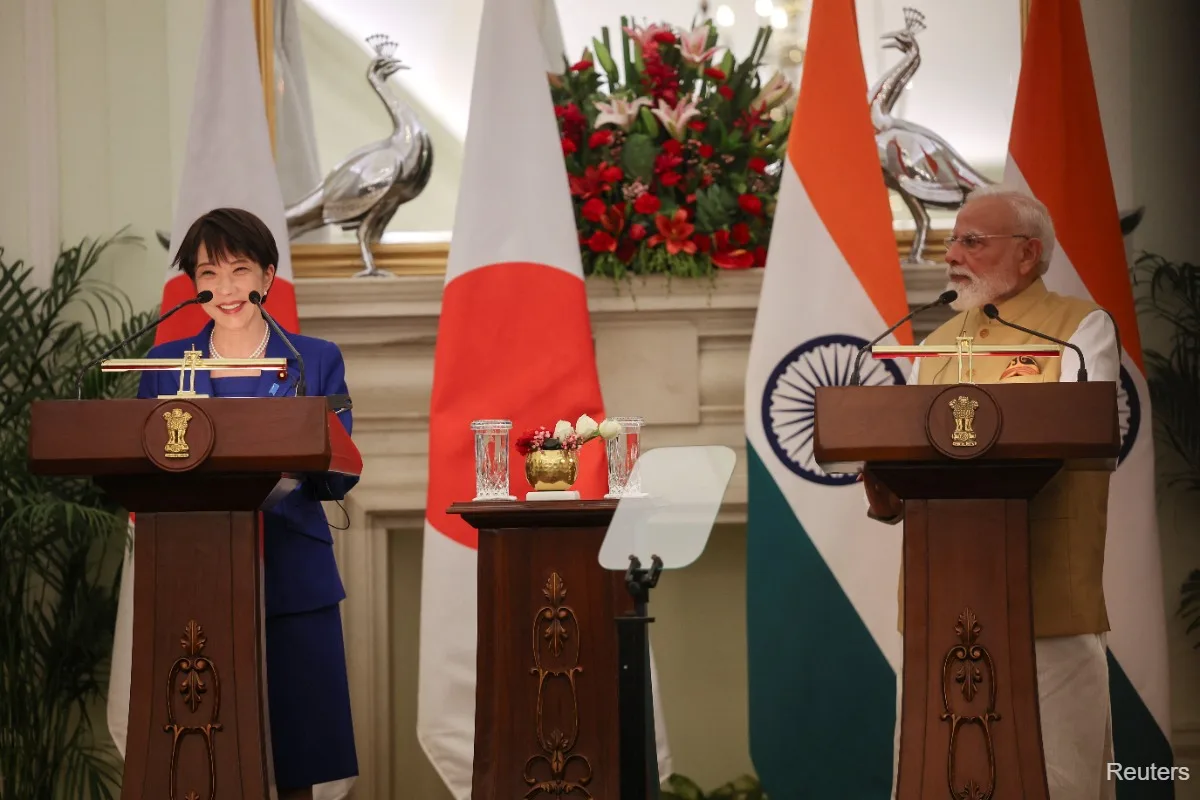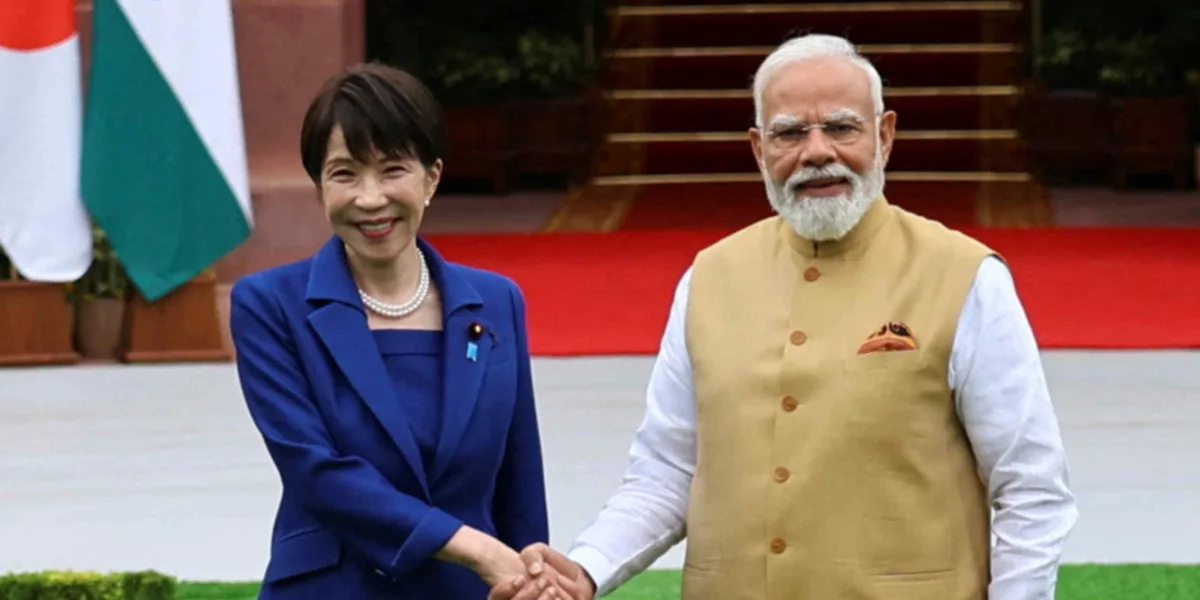
India and Japan signed multiple agreements on July 2, 2026, during summit talks in New Delhi, including their first defense co-development project pact [1, 2, 3, 4]. Indian Prime Minister Narendra Modi and Japanese Prime Minister Sanae Takaichi met to advance cooperation in artificial intelligence, metals, energy, and economic security [1, 2, 3, 4].
The two countries committed to a joint bio-gas initiative aiming to establish 1,000 bio-gas and organic fertilizer plants across India [1]. This will support sustainable energy and agricultural development.
Japan is a major investor in India. From April to December 2025, Japanese investments in India totaled US$3.2 billion [1]. Bilateral trade between the two nations hit US$27.5 billion in the fiscal year 2025/26 [1]. Japanese companies recently bought a 20% stake in India's Yes Bank for US$1.6 billion [1].
Modi highlighted the synergy in technology, stating, "The convergence of Japan's precision technology and India's software capabilities will give a new momentum and strength to global AI development." [1] Both countries, as Quad members, are expanding collaboration on supply chain issues and energy security, partly in response to China's growing regional influence [4]. Takaichi said, "By drawing on each other’s strengths, Japan and India can become stronger and more prosperous together. Amid a turbulent international environment, building such a mutually complementary partnership has become increasingly important." [4]
This summit built on the 10-year cooperation roadmap adopted during Modi’s visit to Tokyo in August 2025 [4]. The talks strengthened ties across defense, technology, and economic domains.
Next steps include implementing the bio-gas plant initiative and advancing defense technology co-development, aiming to reinforce strategic cooperation over the coming years [1, 2, 3].