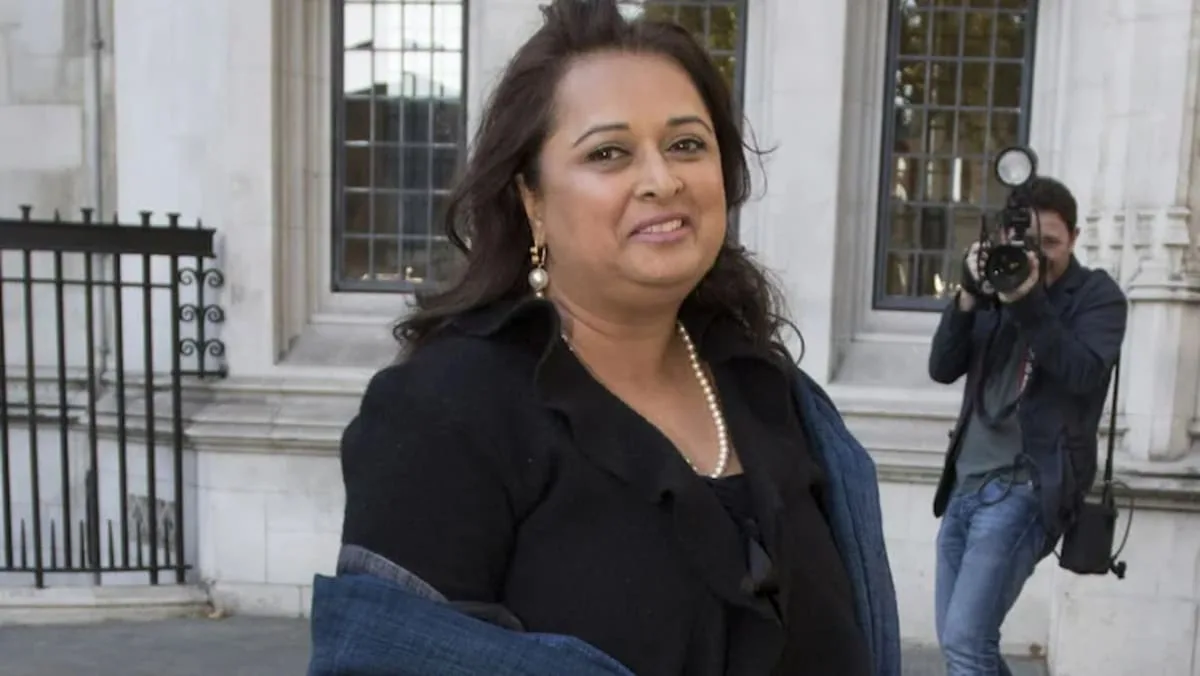
Varsha Gohil won a £6.6 million share of assets in her divorce settlement after a 23-year legal battle with her husband Bhadresh Gohil in the UK [1, 2]. She filed for divorce in 2002, citing adultery and unreasonable behaviour [1, 2]. Initially, Varsha accepted a £270,000 financial settlement and a family car, unaware that her husband had hidden much larger wealth [1, 2].
Bhadresh was convicted of money laundering, forgery, and conspiracy in 2011 and sentenced to 10 years in prison [1, 2]. Authorities froze £28 million of assets linked to him, raising suspicions that he had concealed wealth during the divorce proceedings [1, 2]. Varsha challenged the original financial settlement after a money laundering investigation uncovered the hidden fortune [1, 2].
In 2015, the UK Supreme Court allowed Varsha to reopen the settlement to consider the newly revealed assets [1, 2]. During prolonged litigation, a UK High Court judge ruled that around £6.6 million of the frozen £28 million should be considered marital property and allocated to Varsha [1, 2]. Justice Williams noted that "some of the assets came from legitimate businesses that" should be included in the divorce assets [2]. The judge also described Bhadresh's behaviour as "极度不诚实,其行为及后果属于最严重级别之一" (extremely dishonest with severe consequences) [1].
The Crown Prosecution Service argued the frozen assets were proceeds of crime and should be confiscated rather than divided in the divorce [1, 2]. Bhadresh denied ownership of the frozen assets in court but lost his appeals [1, 2]. The UK Court of Appeal rejected further appeals in 2026, formally ending the divorce litigation [1].
The case marks the conclusion of a legal fight spanning over two decades, establishing Varsha Gohil’s entitlement to a significant portion of the concealed wealth. The final ruling confirms that some assets tied to Bhadresh’s legitimate business activities must be factored into divorce settlements even amid criminal investigations [1, 2].