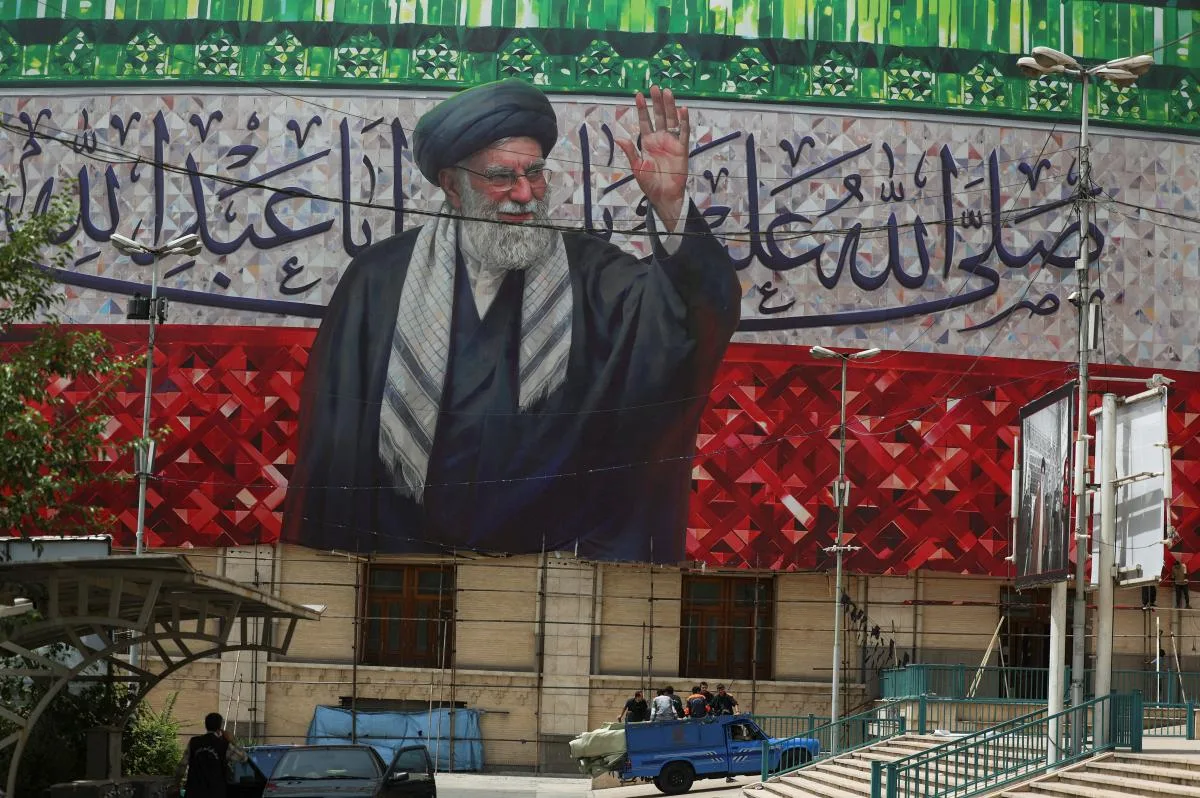
Iran began a six-to-seven-day funeral ceremony on July 4, 2026, for Supreme Leader Ayatollah Ali Khamenei, who was killed on February 28 in U.S. and Israeli airstrikes on his Tehran compound [1, 2, 3]. The funeral procession started at Tehran’s Grand Mosalla mosque and is scheduled to pass through major cities including Qom before concluding with burial at the Imam Reza Shrine in Mashhad on July 9 [2, 4, 3].
The coffin will also travel through Shiite holy sites in Iraq such as Najaf and Karbala as part of the ceremonies [2, 5, 4]. Iranian authorities expect up to 15 to 20 million mourners in Tehran during the events, with extensive logistics organized to manage transportation, accommodation, and food for the crowds [1, 4, 6, 3]. Tehran Mayor Alireza Zakani called the funeral potentially "the largest assembly in the history of the capital," reinforcing its scale [4, 3].
Khamenei, aged 86 at his death, was killed alongside several family members including his daughter, son-in-law, daughter-in-law, and 14-month-old granddaughter [1, 7, 5]. His son Mojtaba succeeded him as Iran’s third Supreme Leader but was severely injured and has not appeared publicly during the funeral [1, 7, 5]. Three other sons—Mostafa, Meysam, and Masoud—prayed beside his coffin [7, 5].
The funerals come after a ceasefire agreement between Iran and the U.S. signed in mid-June, which ended months of delays and allowed the public mourning to proceed [4, 8]. Security and logistics are managed by the Islamic Revolutionary Guard Corps and Basij paramilitary forces for crowd control [3].
Qom’s Friday prayer leader Ayatollah Mohammad Saidi said the "large public turnout... will, in effect, be another referendum for the Islamic Republic" [1]. Iran’s first vice-president Mohammad Reza Aref described the ceremony as "the most important event of this century and the most attended event since the 1979 revolution" [2]. Analysts note the funeral serves as both a religious ceremony and a political signal of regime continuity and defiance to adversaries [2, 4, 3]. Sanam Vakil of Chatham House said, "This is basically a political event portrayed as a religious one. It is designed to project legitimacy at home and deterrence abroad" [3].
The main procession in Tehran moved on July 6 from Imam Hossein Square to Azadi Square and then traveled to Qom and Iraqi holy sites by July 8 [3, 2, 5, 4]. The final burial at Mashhad is scheduled for July 9, concluding the national mourning period [2, 4, 3].