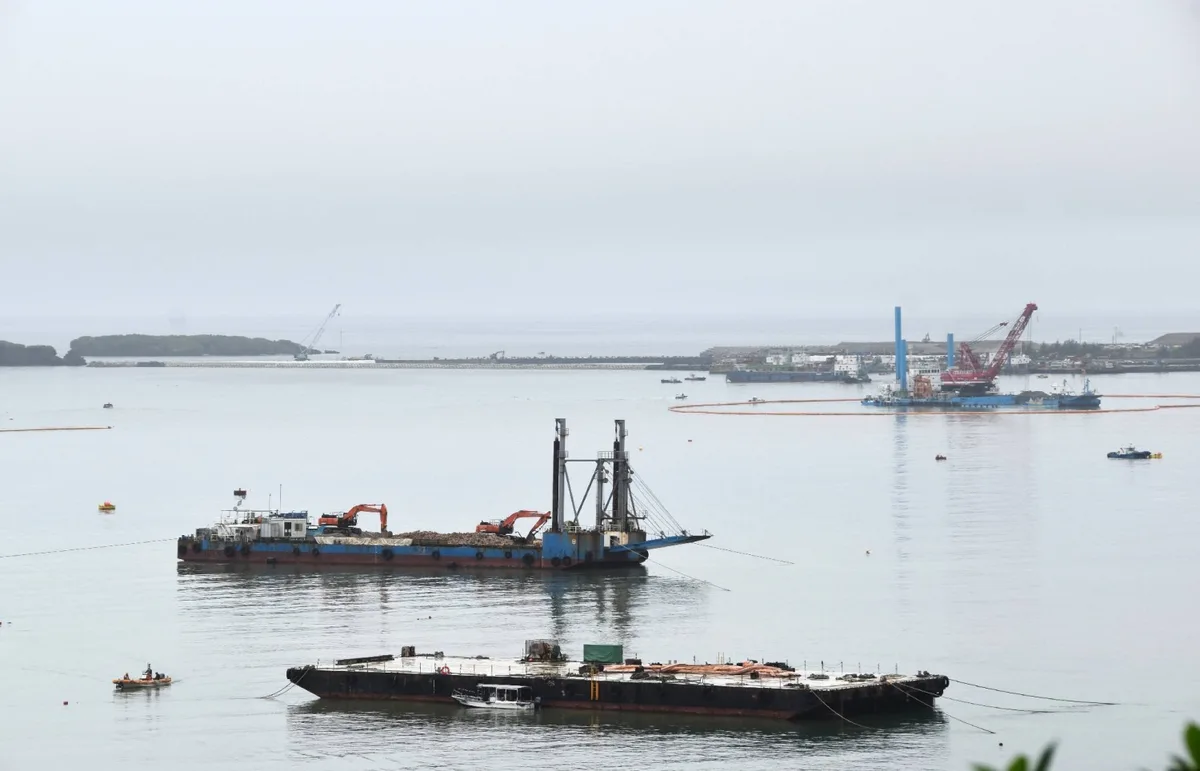
Japan's Defense Ministry began pouring earth and sand east of Cape Henoko in Okinawa on June 17, 2026, as part of the planned relocation of the US Marine Corps Air Station Futenma from Ginowan to Henoko [1, 2]. The work takes place in Oura Bay near Henoko in Nago city, extending reclamation efforts that began on the southern side of Cape Henoko in 2018 and are now largely complete [1, 2].
The landfill process has encountered delays due to soft undersea ground, requiring soil reinforcement measures such as driving approximately 71,000 sand piles deep into the seabed to stabilize the foundation [1].
Okinawa Prefectural Government and Governor Denny Tamaki oppose the relocation project, with Tamaki stating the facility "should be moved outside the prefecture rather than relocated within it" [1, 2]. Despite local resistance, the Japanese government has pushed forward with the plan.
The US Marine Corps Air Station Futenma currently located in the city of Ginowan will be shifted to the Henoko area to reduce the impact of the military presence on Okinawa's urban regions. The relocation is expected to conclude around 2033, with the full transfer of base facilities extending several years beyond that date [2].
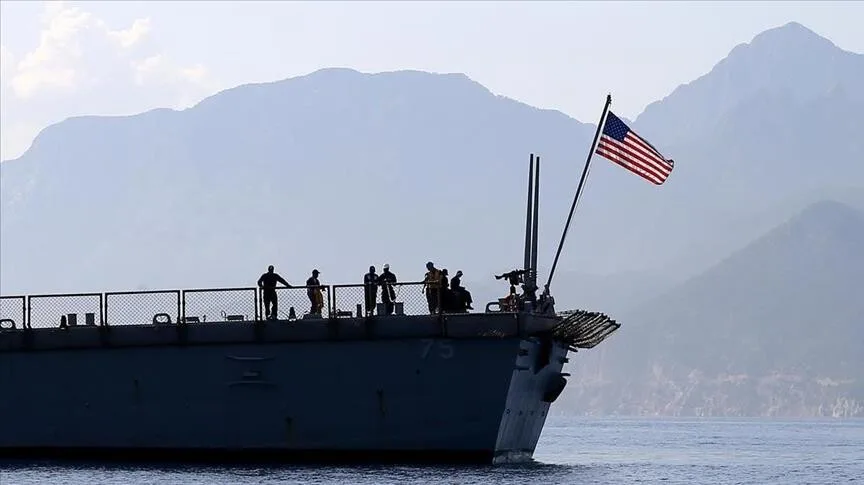
The United States maintains approximately 50,000 troops stationed across Japan under a bilateral security arrangement dating back to 1945, making such base reconfigurations important to the US-Japan alliance [2].
Landfill and reclamation began at the southern side of Cape Henoko in 2018, marking the start of this long-term construction effort [2]. The recent work east of Cape Henoko signals a key phase in preparing the site for the new base facilities.
The next major milestones will be soil reinforcement completion and continuation of landfill expansion, critical steps before building the planned air station infrastructure.