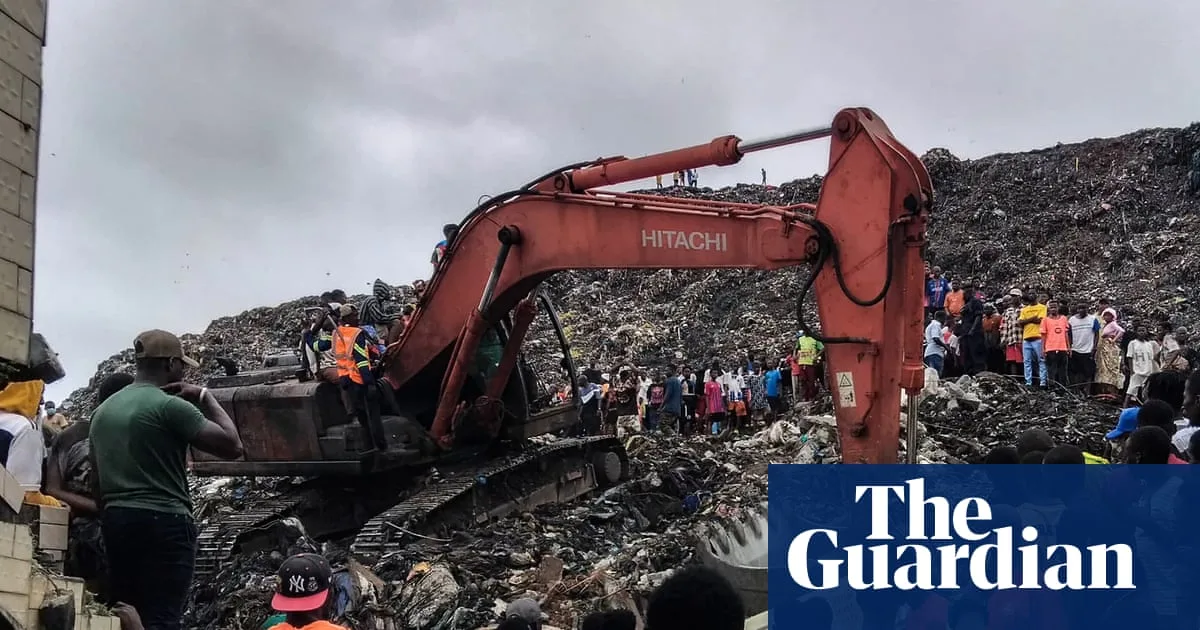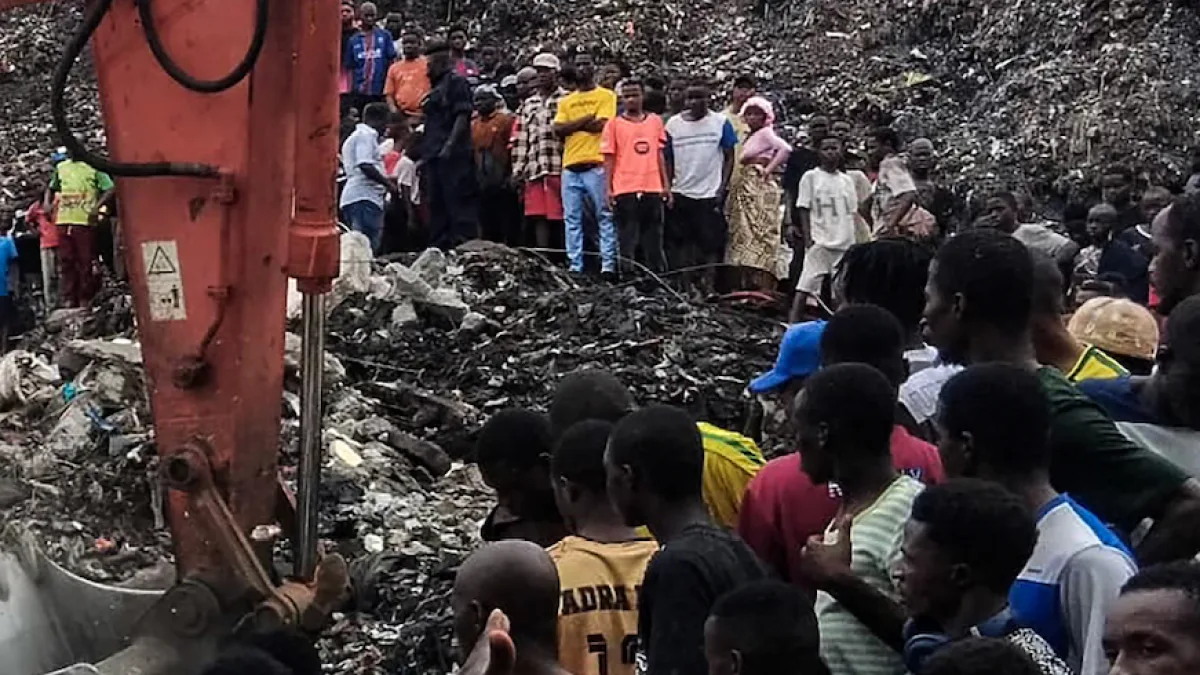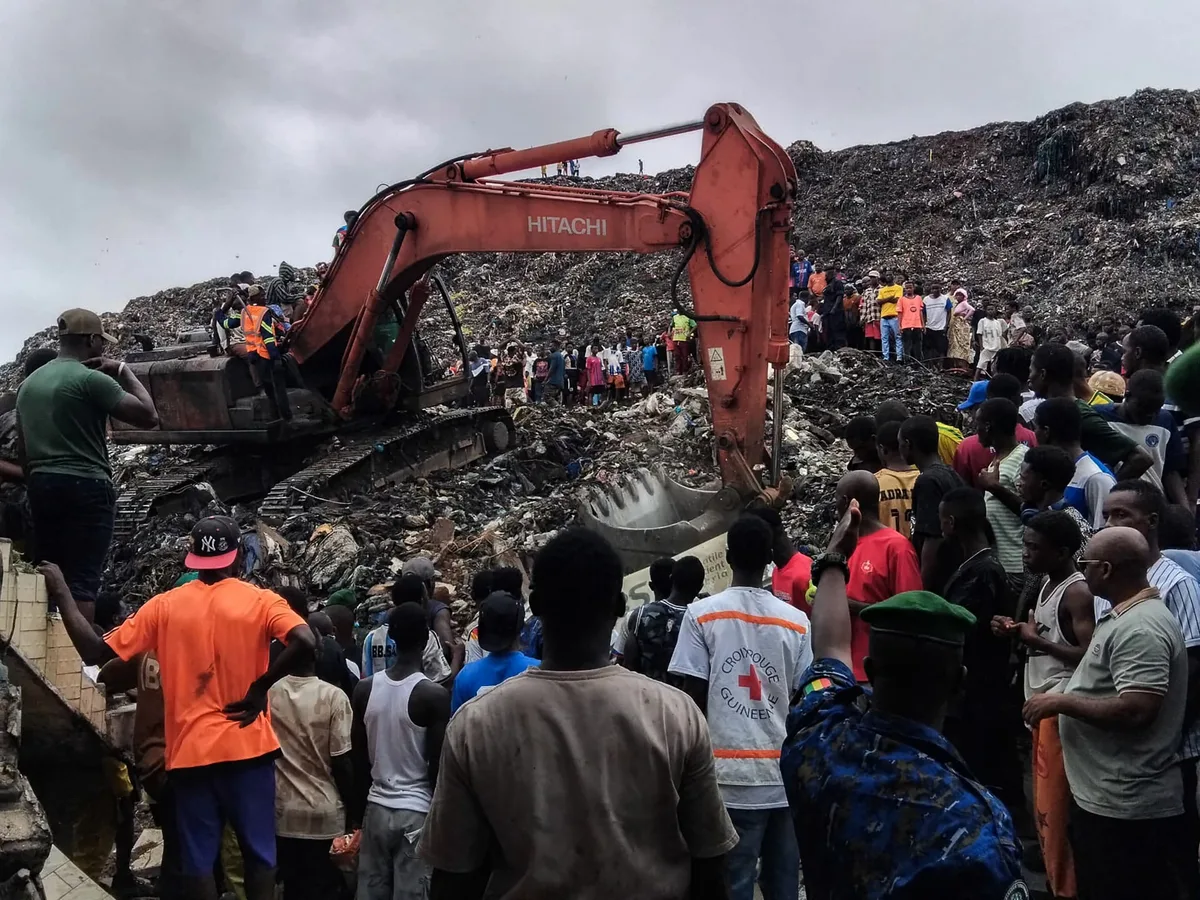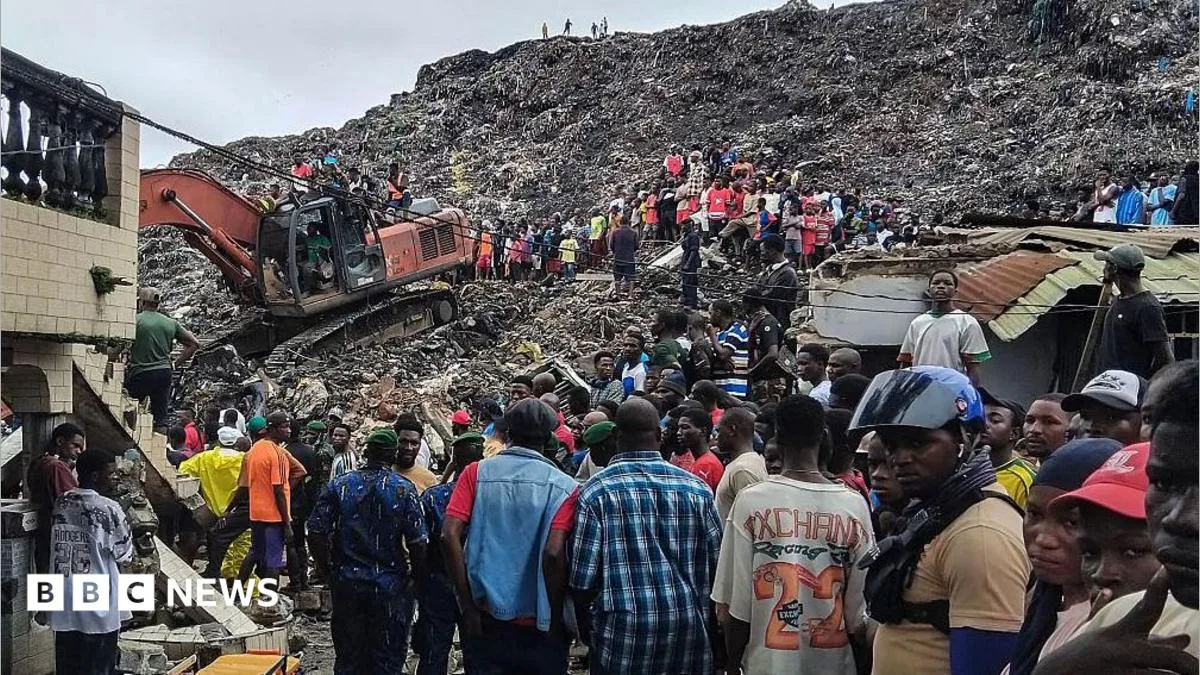
A landslide struck a large waste dump in the Dar-es-Salam area of Conakry, Guinea’s capital, around 2am local time on Sunday, August 23, killing at least 30 people and injuring about 22 others, officials said [1, 2, 3, 4].
The disaster occurred after heavy overnight rain caused the landfill to collapse. The landslide buried nearby shacks and tents and was reportedly large enough to topple a three-story building [2, 3, 4]. Six people were seriously injured while 16 others had lighter injuries [2, 3, 4].
The landfill site was already under government scrutiny. Authorities had issued eviction notices to residents and announced plans to close and relocate the dump due to safety concerns ahead of the rainy season less than a week before the collapse [2, 5, 3, 4]. Despite safety warnings, many people remained near the site.
Rescue operations included military personnel and the use of excavators to search for survivors and recover bodies. Prime Minister Amadou Oury Bah visited the scene later on August 23 to oversee the rescue efforts and assess the damage [1, 2, 3].
Local resident Cire Diallo lost five children in the tragedy and said, "I have lost all my children. All I can do is put my trust in God" [2]. Health officials reported recovering 18 bodies so far, with many taken to the morgue, according to Lancine Sylla [6].
Guinea suffered a similar landslide at the same landfill site in 2017, which killed 8 to 10 people [1, 4]. Authorities are now working to relocate the remaining families. Dienabou Touré promised, "We will ensure that the remaining families are relocated elsewhere" [4].
The provisional death toll initially reported was at least 22, but the government later confirmed 30 fatalities [1, 2, 5, 6, 7, 3, 4].