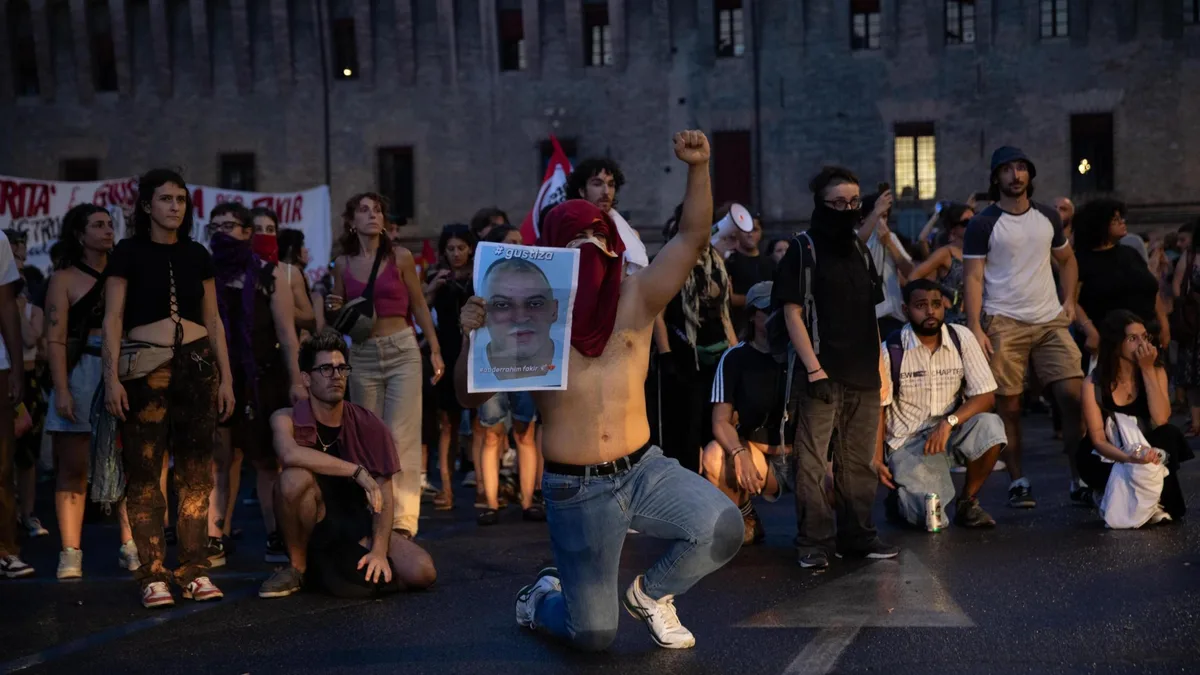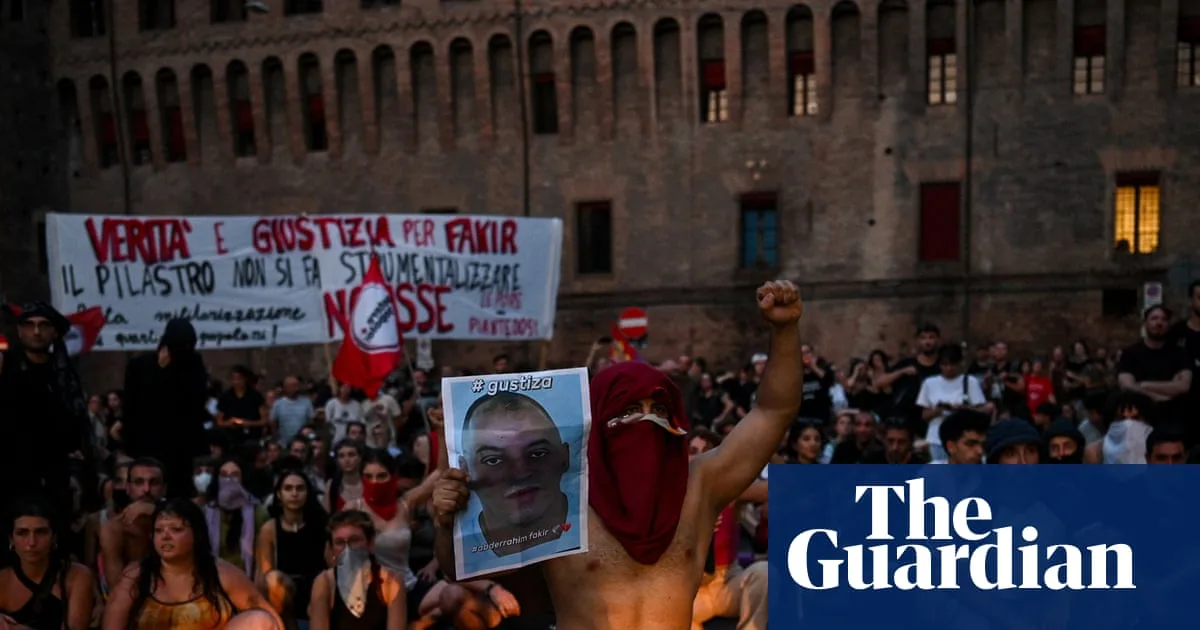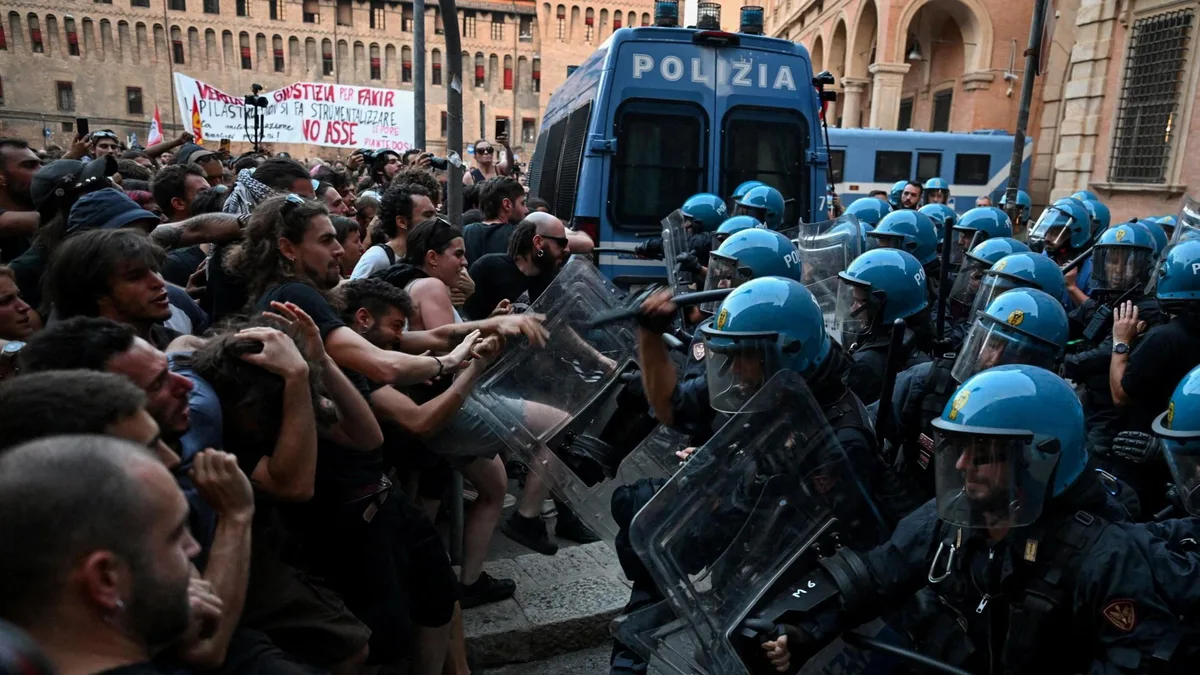
Abderrahim Fakir, a 42-year-old Moroccan-born man living in Bologna, died on July 19 while being forcibly restrained by police officers, prompting a criminal investigation and public unrest [1, 2, 3, 4]. Police responded around noon after reports of Fakir behaving erratically and kicking garage doors in Bologna's Pilastro neighborhood [1, 2, 4].
Video footage shows Fakir being held face down by two officers and a civilian as he screams for help and pleads for them to stop before losing consciousness [1, 2, 3, 4]. After Fakir stops moving, the officers used zip ties to restrain his wrists and ankles. Paramedics on scene realized he was unconscious only after the restraint ended [1, 2, 4].
Bologna prosecutors then opened a manslaughter investigation into the actions of the police officers and medical workers present during the incident [1, 2, 4]. Fakir's sister Khadija condemned the officers, saying, "You can't die like this. They killed him mercilessly, and I want the truth." She added, "The police have to protect us. If someone is agitated, you have to calm them down … not kill them like a dog." [1, 2]
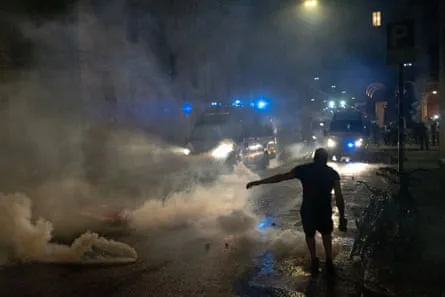
Thousands of people protested peacefully in Bologna on July 20, demanding justice for Fakir. About 100 protesters clashed with police, setting cars on fire and throwing firecrackers, which left 64 officers injured [1, 2].
Italian Prime Minister Giorgia Meloni called for an investigation into the case but condemned violence against law enforcement, stating, "Nothing can justify violence against law enforcement." Interior Minister Matteo Piantedosi defended the police and criticized those insulting them, saying, "Whoever makes insulting remarks against the police shows they have no trust in our law enforcement nor in our justice system [and] should look into what happened." [1, 2]
Fakir reportedly had pre-existing health conditions including asthma and heart issues, though the exact cause of death remains under investigation [2]. The case has drawn strong comparisons to the killing of George Floyd in the United States and has intensified debate on police accountability in Italy [2, 4, 5].
On July 21, Fakir's family lawyer and an Italian senator held a news conference highlighting police accountability concerns and detailing video evidence of the restraint [4]. Media analysis on July 23 described Fakir's death as a pivotal moment in Italy’s ongoing discussions on law enforcement practices [4, 5].
Officials continue to investigate the circumstances of Fakir’s death and the conduct of those involved.