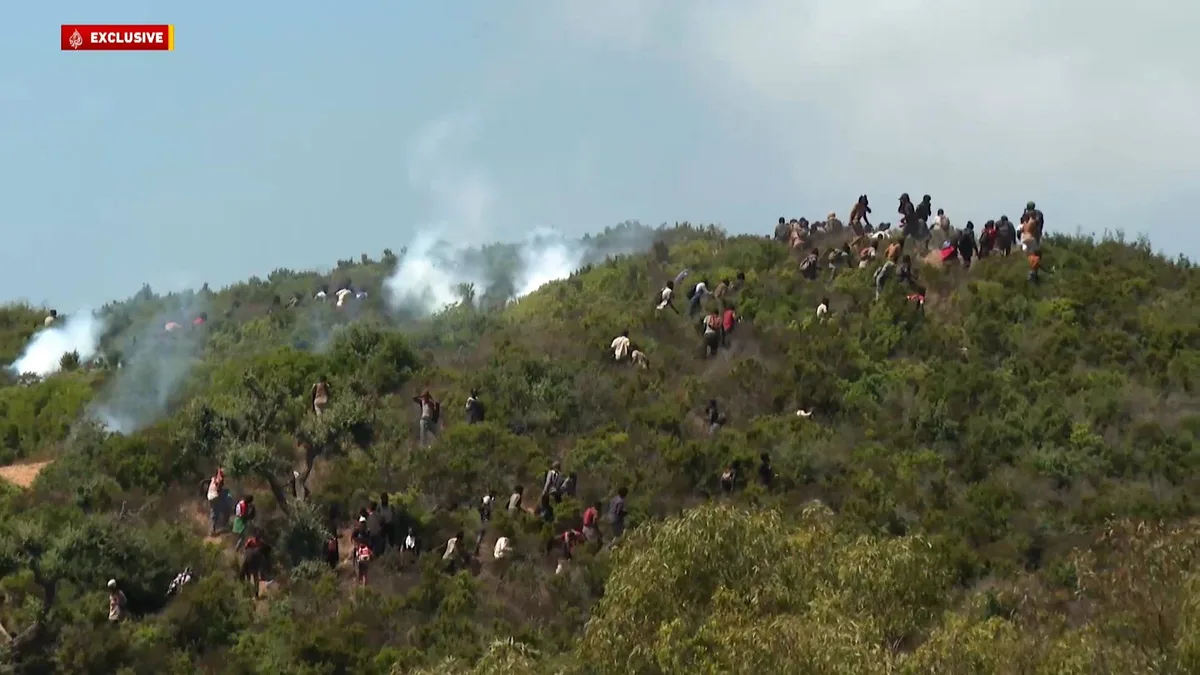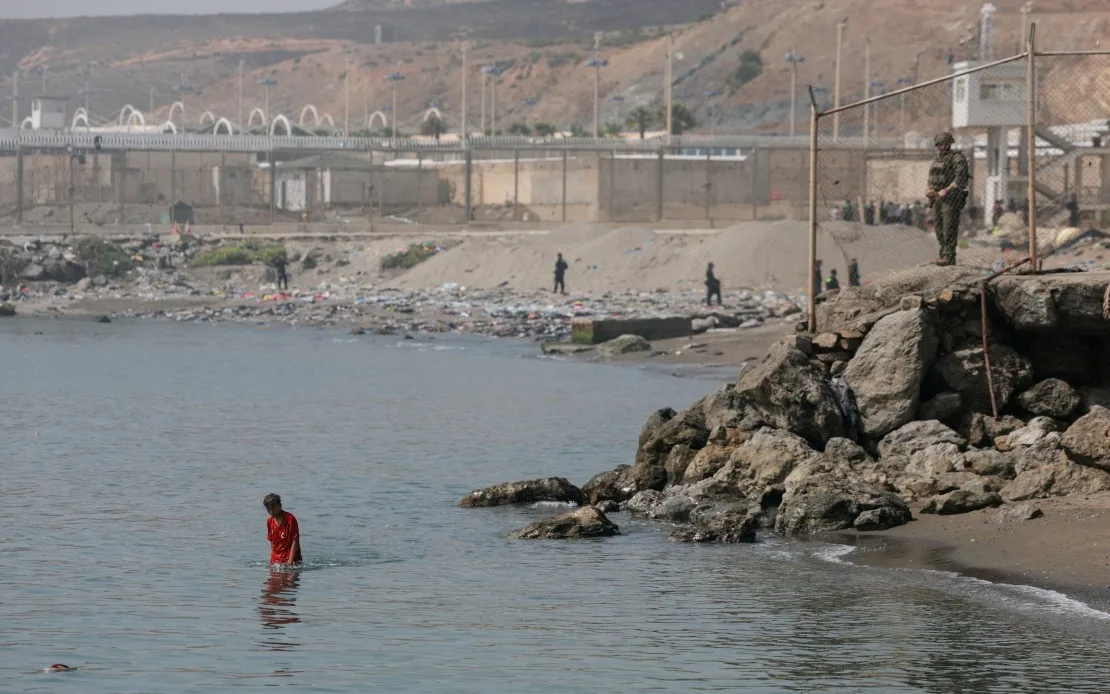
Around 300 irregular migrants, mostly from sub-Saharan African countries, gathered early on August 15, 2026, in mountainous areas near the Spanish enclave of Ceuta in northern Morocco in an attempt to cross the border [1, 2].
Moroccan security forces deployed intensively and in a coordinated manner around Ceuta and Melilla to prevent any mass crossing attempts [1, 2, 3]. Authorities mobilized significant personnel and advanced equipment, including surveillance drones and mobile units, to secure the area and stop the migrants from approaching or entering Ceuta. The operation was peaceful, with no violent confrontations or material damage reported [1, 2].
In the days before the attempt, Morocco had reinforced its security presence in the nearby city of Fnideq, conducting searches and heightening measures throughout the region to deter crossings [1, 2]. The migrants’ attempt happened on the exact date the Moroccan Interior Ministry had warned about in relation to anonymous social media calls urging a mass crossing into Ceuta and Melilla [1, 2].
Ceuta and Melilla are Spanish-administered cities on Morocco’s northern coast, but Morocco claims sovereignty over them [1, 2].
The larger migration wave at the border in early August had already resulted in a significant death toll. On August 8, 2026, Morocco’s National Human Rights Council reported 14 deaths related to crossing attempts, while Spanish authorities reported a substantially higher number of 80 fatalities [1, 2]. The total number of people trying to cross during the ongoing wave is disputed, with Moroccan officials estimating about 40,000 migrants and Spanish authorities saying it exceeded 70,000 [1, 2].
Despite heightened tensions, the heavy presence of Moroccan security in the Tarajal border region has restored temporary calm after recent escalations [3].
Moroccan forces continue to maintain strong border security to prevent further mass crossings and preserve stability in the enclave regions.