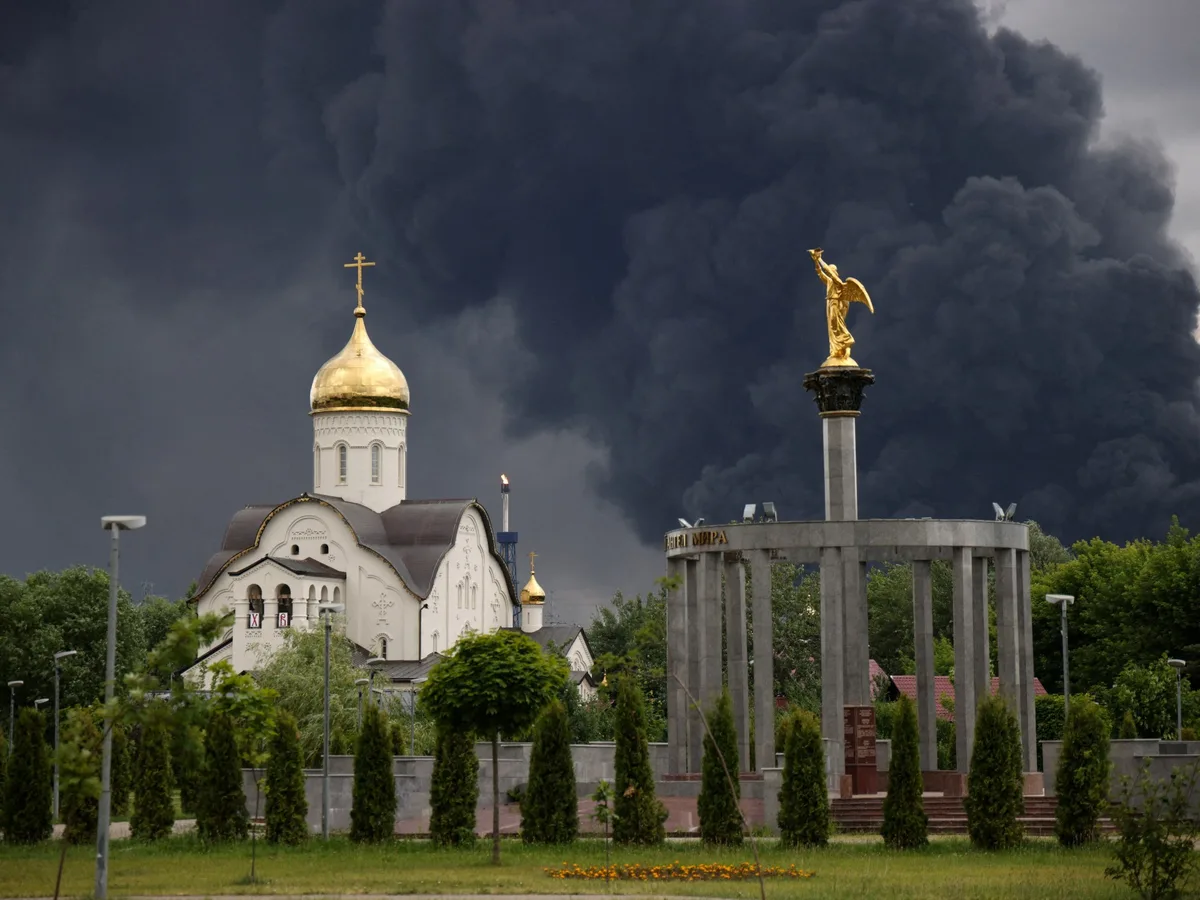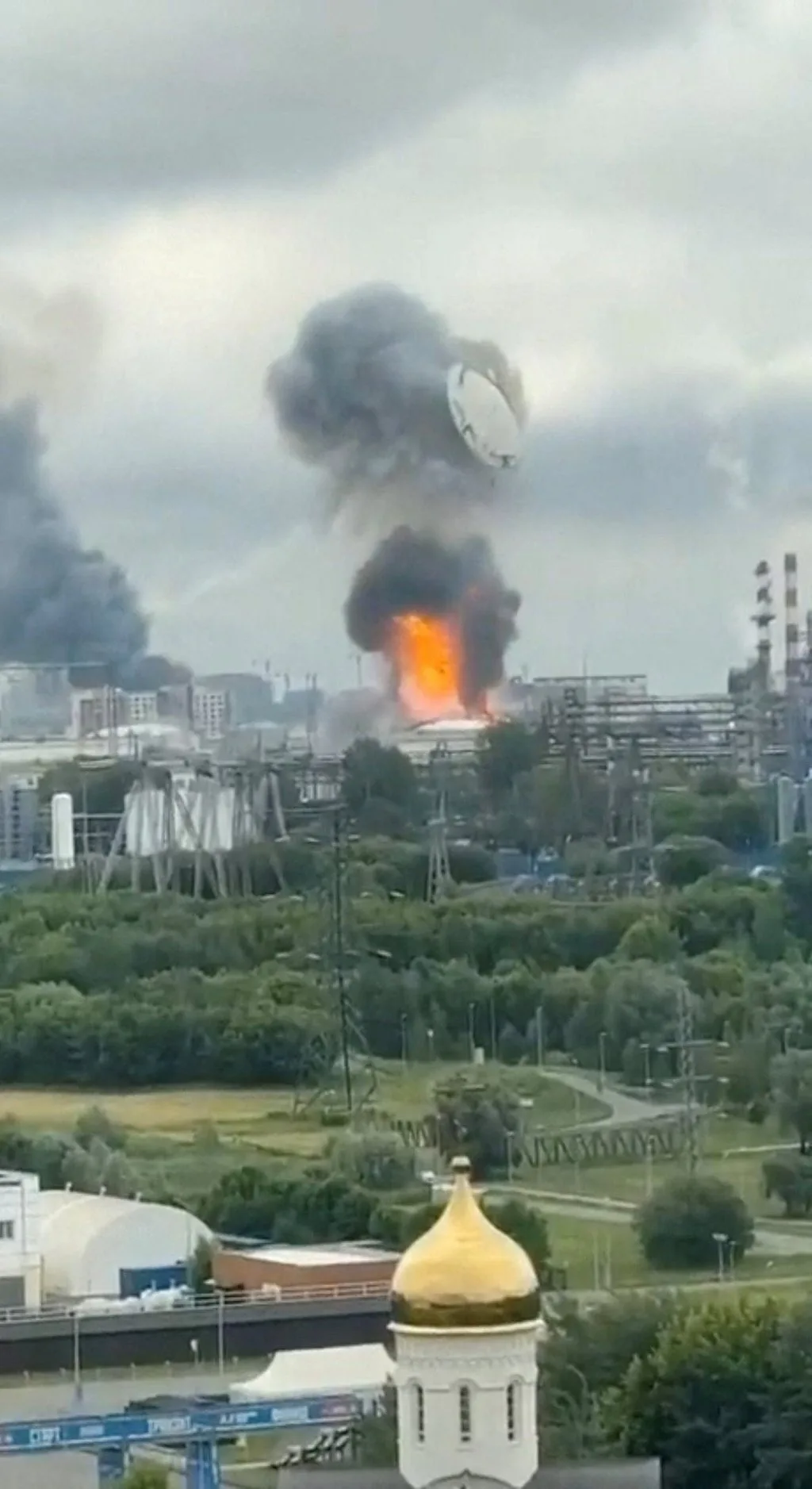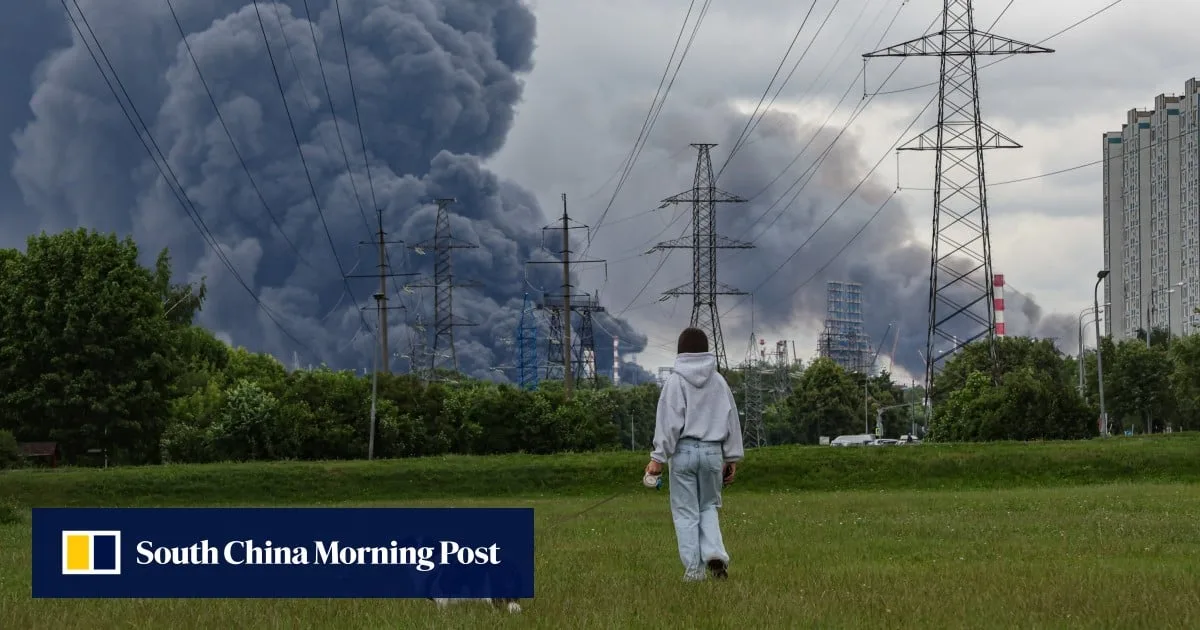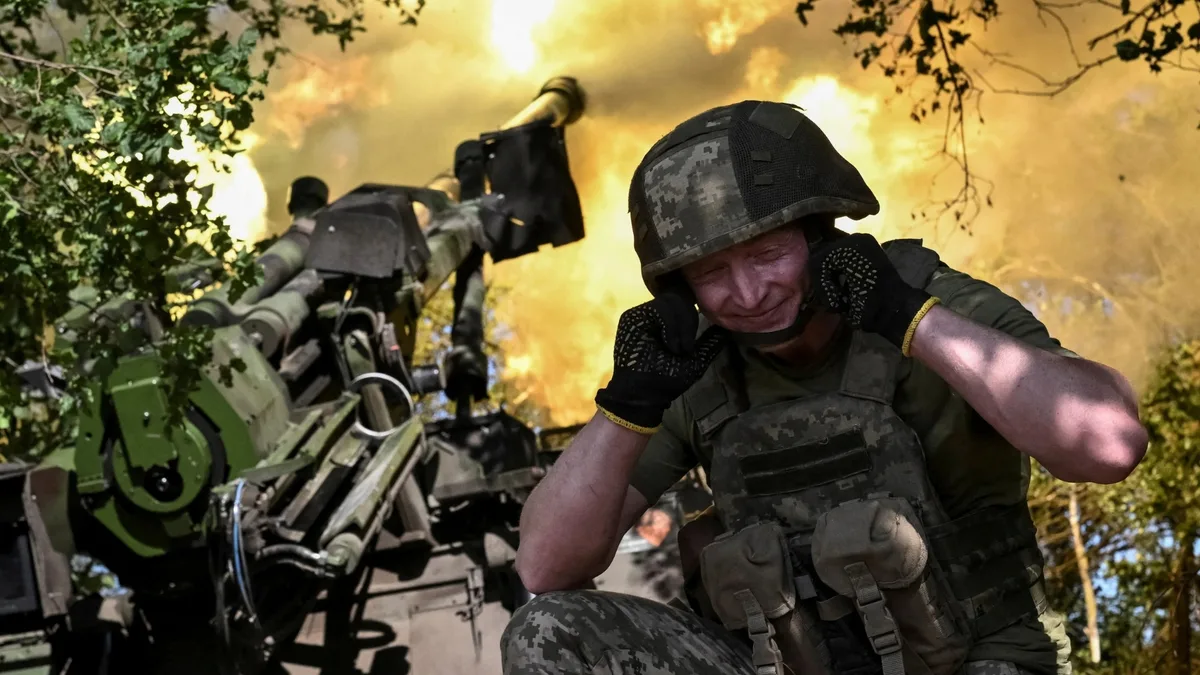
Ukraine launched a major nighttime drone attack on June 26, deploying more than 600 drones against 12 Russian regions, the Moscow area, annexed Crimea, and the Black and Azov Seas [1, 2, 3, 4]. Russia’s Defense Ministry said it intercepted 660 Ukrainian drones during the assault [1, 2, 3, 4]. The strike was among the largest since Russia’s full-scale invasion began more than four years ago [1, 4].
Debris from downed Ukrainian drones caused a fire at the Slavyansk-na-Kubani oil refinery in Russia’s Krasnodar region, killing one person and injuring another [5, 6, 7]. The refinery processes about 4 million tons of crude oil annually and supplies fuel oil, naphtha, and marine fuel for export [5, 6, 7]. Ukrainian President Volodymyr Zelenskyy said the strikes hit two Russian oil refineries, including one in the Yaroslavl region nearly 700 kilometers from Ukraine’s border [5, 6, 7, 4]. Russian officials have not confirmed damage to the Yaroslavl refinery but reported related road closures and airport suspensions [7].
Damage and injuries were also reported in Russia’s Tula and Novomoskovsk regions. Tula Governor Dmitry Milyaev called the drone attack "massive," adding it damaged a house and injured a woman in the Shchyokinsky district [2, 3, 4].
The attacks have caused fuel shortages and disrupted Russian military supply chains, placing additional strain on Moscow [1, 5, 2, 6]. Russian President Vladimir Putin acknowledged the impact, saying Russia is "going through a difficult period" due to Ukraine’s intensified drone campaign [5, 6].
Ukraine’s air force also stated it intercepted 177 of 189 Russian drones launched overnight during the same period [3, 4].
President Zelenskyy announced the launch of a 40-day campaign targeting Crimea’s infrastructure by drone strikes to increase pressure on Russia [8]. He also announced the release of 160 Ukrainian servicemembers from Russian captivity on June 26. "We continue bringing Ukrainians home from Russian captivity. Today, 160 servicemembers were released. All had been held since 2022," Zelenskyy said [4].
Russian authorities and regional officials confirmed ongoing effects from the drone attacks, including fires and transport disruptions near Yaroslavl as of June 27 [6, 7].