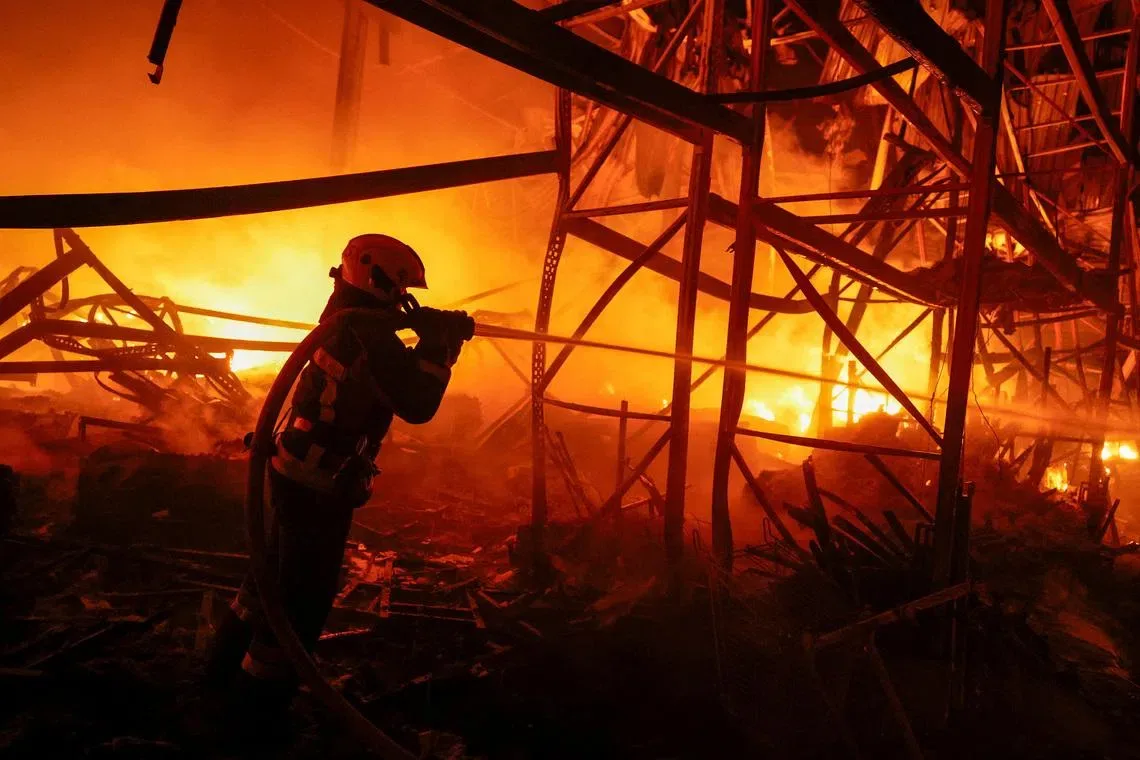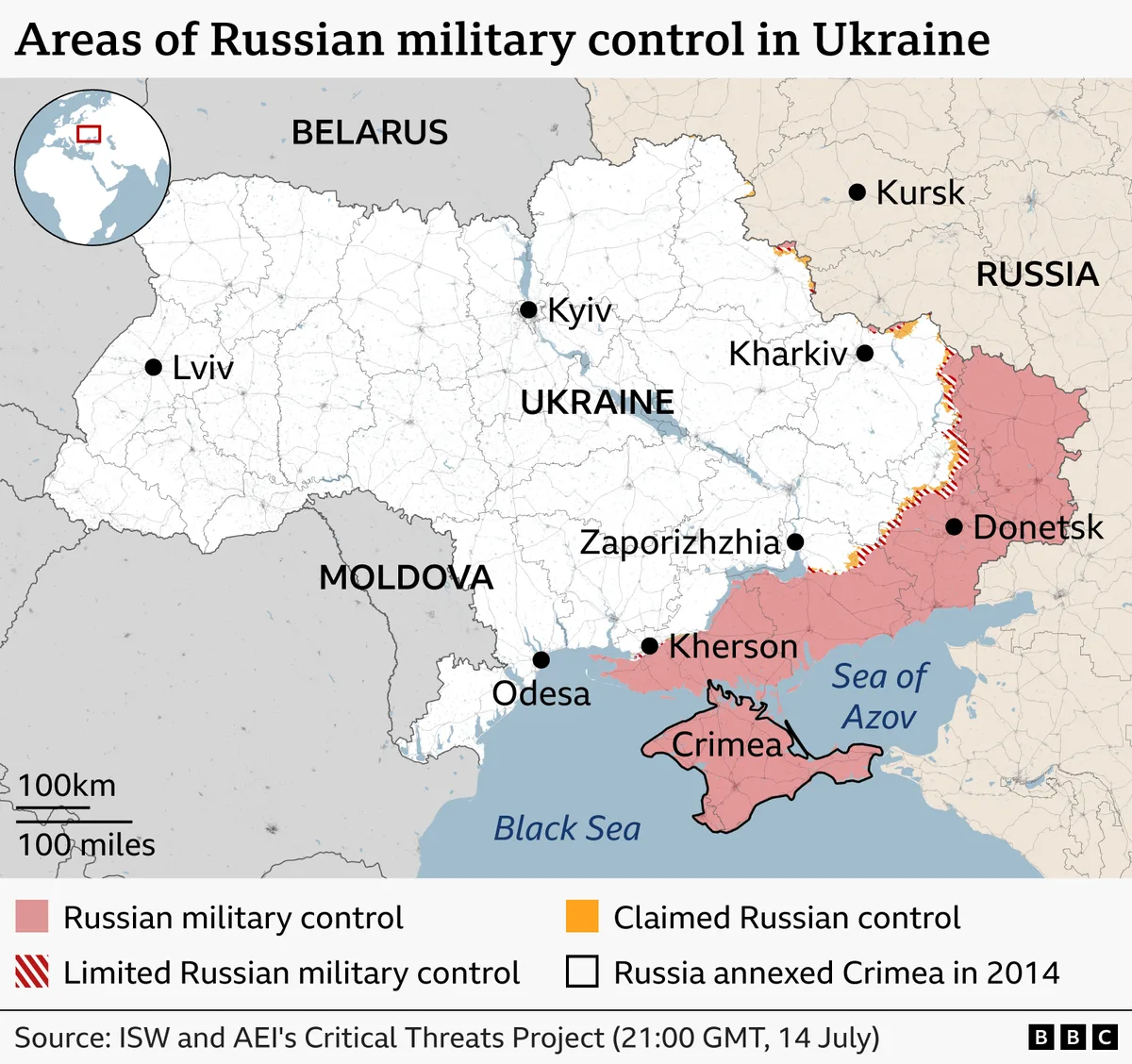
Three civilians were killed in a Russian attack on the Black Sea port city of Odesa overnight on July 14, hitting civilian areas, industrial sites, and port infrastructure, officials said [1, 2, 3, 4]. The Russian Defense Ministry confirmed it targeted port facilities used for unloading petroleum, oil, lubricants, and military cargo [1, 5, 3, 4].
The Odesa region has faced continuous Russian drone and missile attacks for five days through July 19, demonstrating a sustained offensive on key Ukrainian coastal infrastructure [1, 4]. Russia also claimed strikes on military and industrial facilities in Kyiv involved in drone production and storage [5].
Ukrainian drone forces responded by hitting 20 Russian vessels in the Black Sea on July 15, including 17 oil tankers, two gas tankers, and one tugboat, according to military reports and analysts [1, 3, 4, 6]. Ukrainian official Robert Brovdi noted, "The targets included two gas tankers and a tugboat" [3]. Over the past 10 days, Ukraine has reportedly struck 136 Russian vessels connected to Russia’s shadow fleet operating in the Black and Azov seas [6].
European Commission President Ursula von der Leyen arrived in Kyiv on July 15 to discuss plans for deeper defense cooperation. She said, "I will announce new initiatives to integrate our defence industries. So we can produce more, and faster" [1, 3, 4].
In political developments, Ukraine’s President Volodymyr Zelensky dismissed Prime Minister Yulia Svyrydenko, with a parliamentary vote on her resignation held on Tuesday. Serhiy Koretskyi is the probable successor [1].
Russian forces continue targeting vital Ukrainian infrastructure in the south and in Kyiv, while Ukraine presses its attacks on Russian naval assets in the Black Sea. The conflict in Odesa and surrounding waters remains intense as both sides carry out sustained military operations.