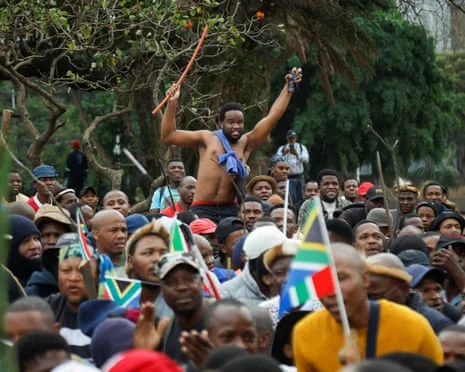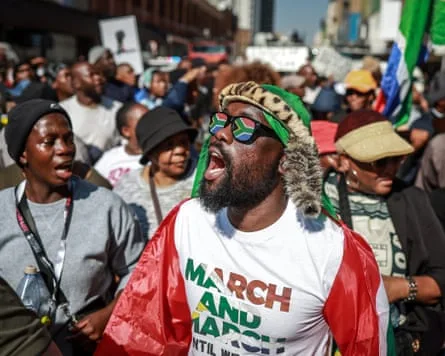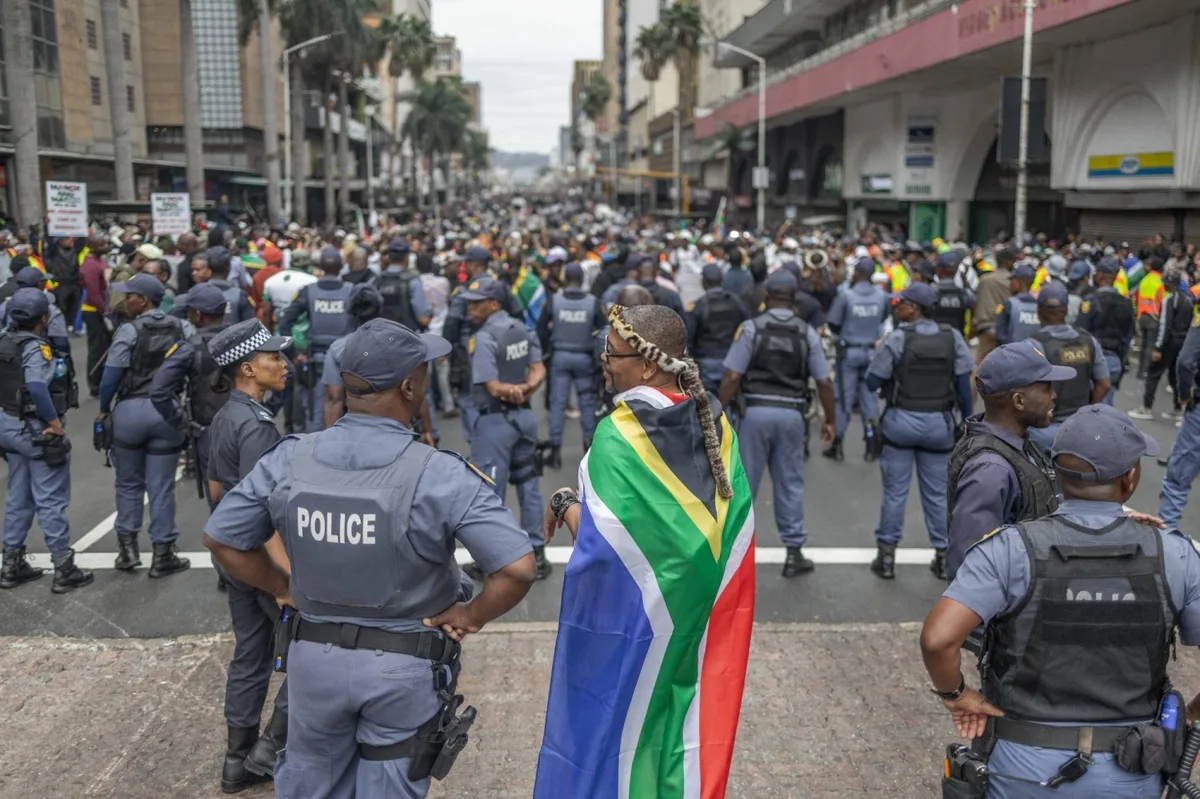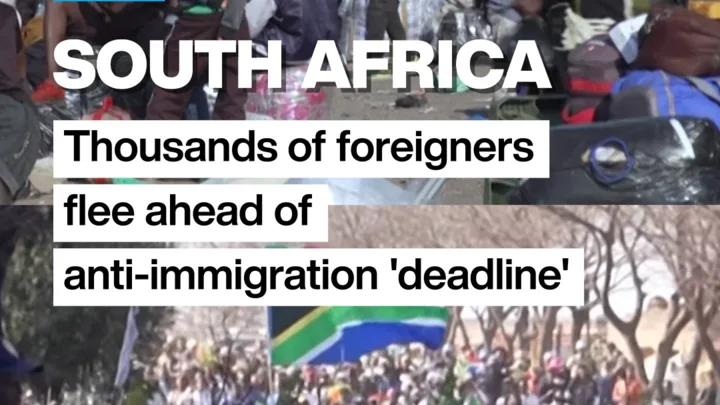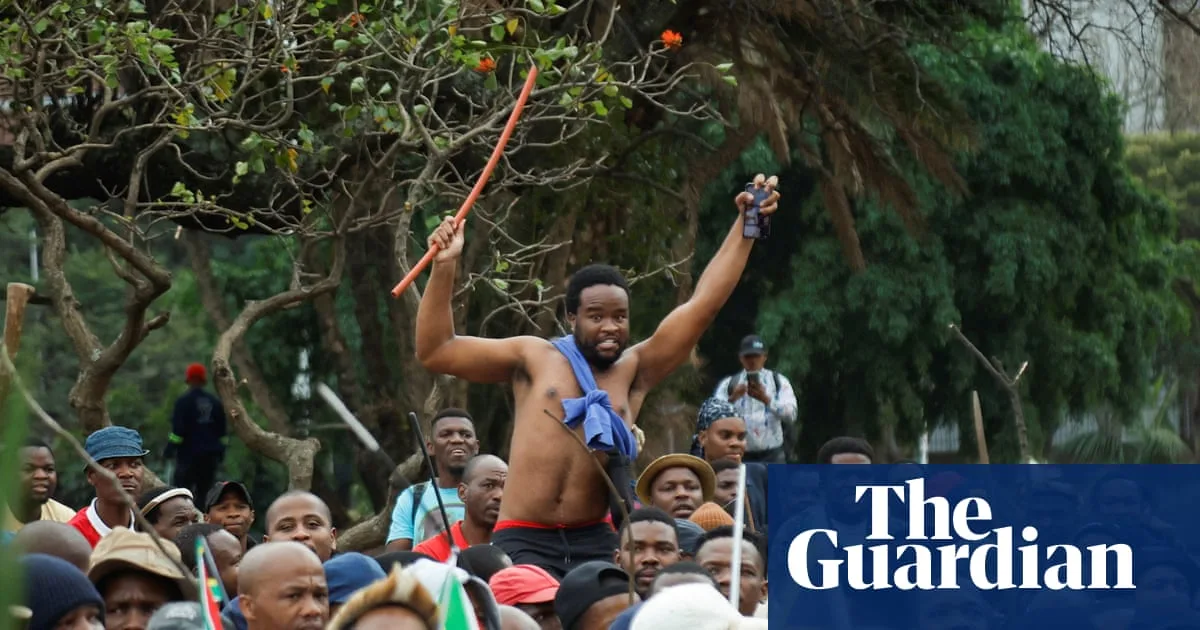
South African authorities deployed police and military units across major cities including Johannesburg, Durban, Pretoria, and Cape Town ahead of planned anti-migrant protests on June 30, 2026 [1, 2, 3]. The protests were organized mainly by March and March and a coalition of over 20 civil society groups demanding undocumented foreign nationals leave South Africa by an unofficial June 30 deadline [1, 2, 3].
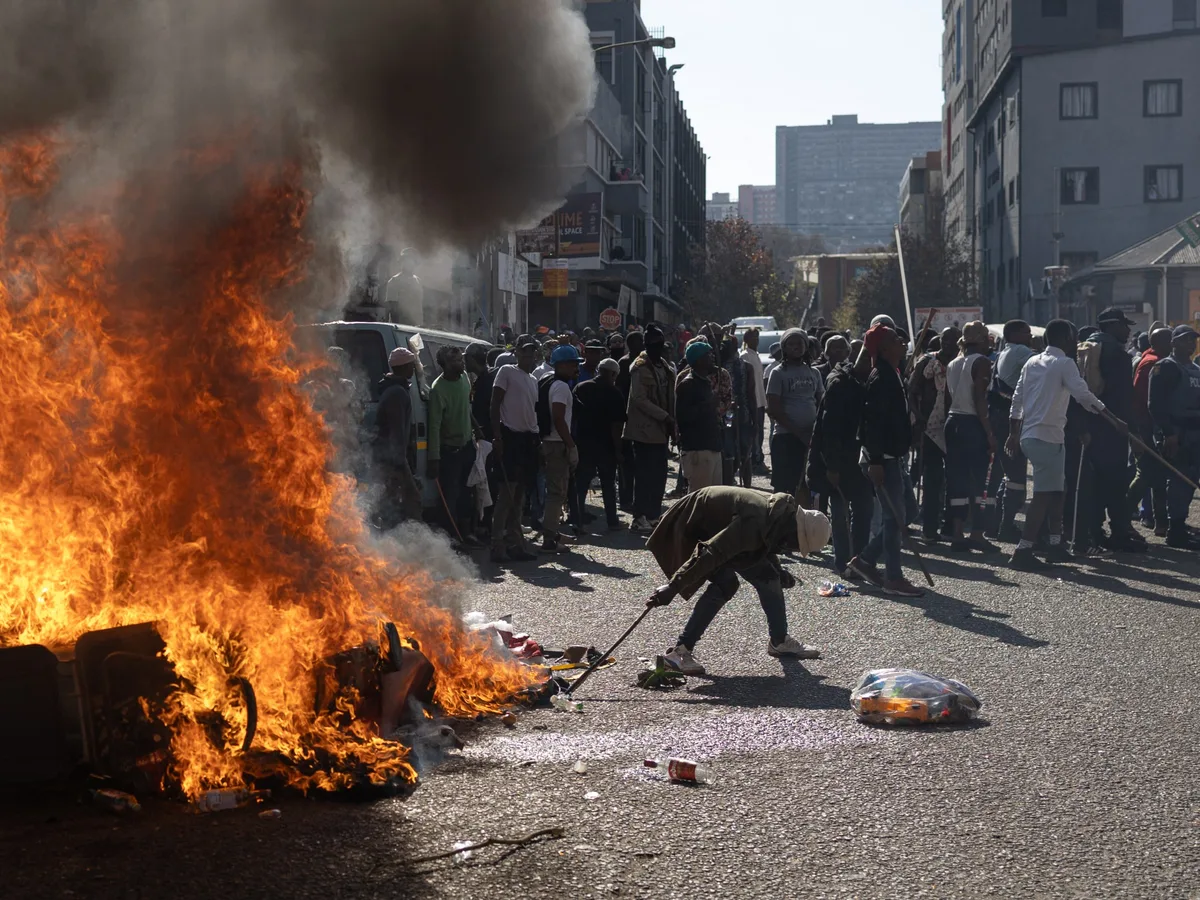
Thousands took part in about 120 marches nationwide, including 108 peaceful rallies and 12 that required police intervention [3]. Protesters chanted "Abahambe!" meaning "They must go!" in isiZulu and isiXhosa languages in Johannesburg and Durban [1, 3]. While mostly peaceful, the demonstrations saw isolated violence with incidents of looting and shootings [2, 3]. During looting in Alexandra township, Johannesburg, one person was shot dead and two others injured in a separate Hillbrow shooting [3].
Police arrested more than 900 people countrywide on charges including public violence, robbery, and immigration violations [3]. Arrests were concentrated in provinces such as the Western Cape (215) and the Eastern Cape (208) [3].
The protests followed months of anti-migrant attacks, with five Mozambican nationals killed prior to the demonstrations [1]. South Africa’s population stands at about 62 million, with African migrants accounting for an estimated 4 percent despite some claims of higher numbers [1]. The country has witnessed previous deadly anti-migrant violence, including 62 deaths in 2008 and more than 350 deaths during unrest in 2021 [1, 2].
Jacinta Ngobese-Zuma, leader of March and March, said, "We are not calling for violence … No one will be killed on 30 June and no looting will take place in our name" [1]. She added that demonstrations would continue weekly until the government enforces stricter border controls [3].
On July 1, President Cyril Ramaphosa met with protest leaders, acknowledging public concerns over illegal immigration and pressure on services but condemning vigilantism. He said, "South Africans have raised deep concerns about illegal immigration, border management, pressure on public services. … These concerns are real, and they deserve to be heard. Whatever the motivation, taking the law into one’s own hands is vigilantism and has no place in our constitutional democracy" [3].