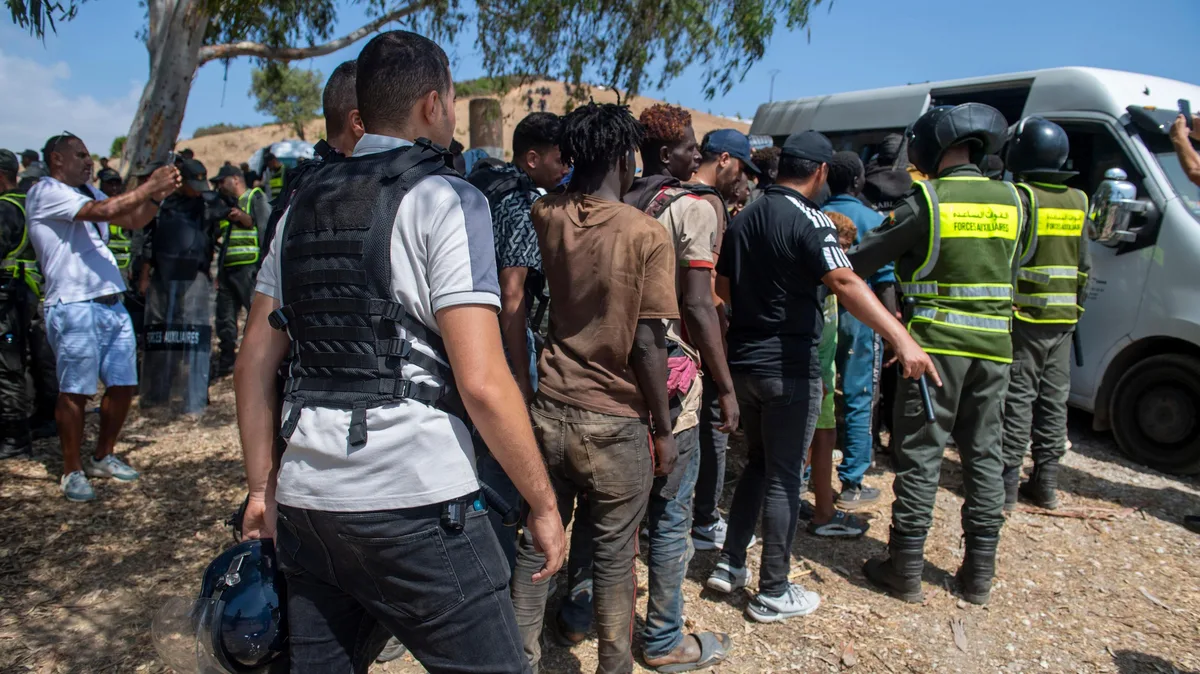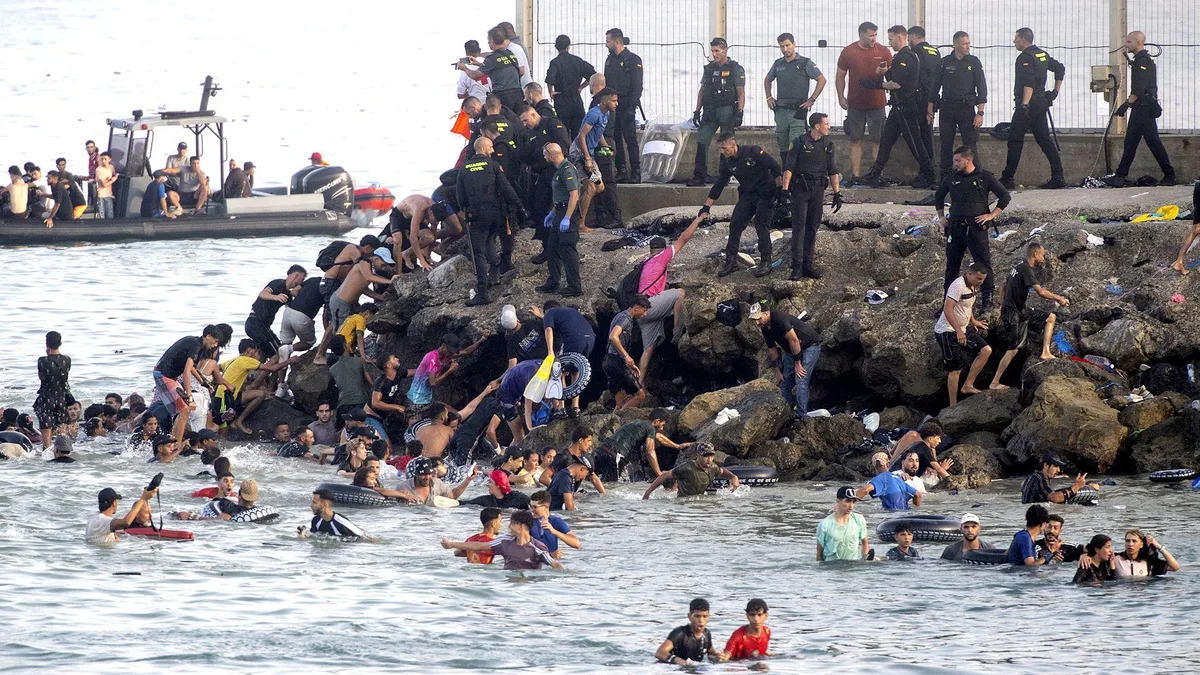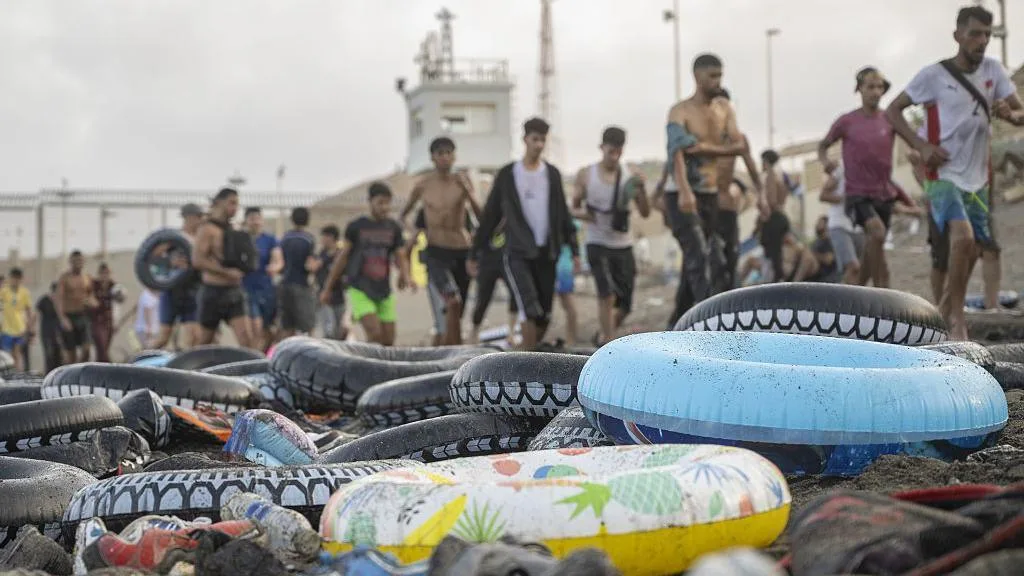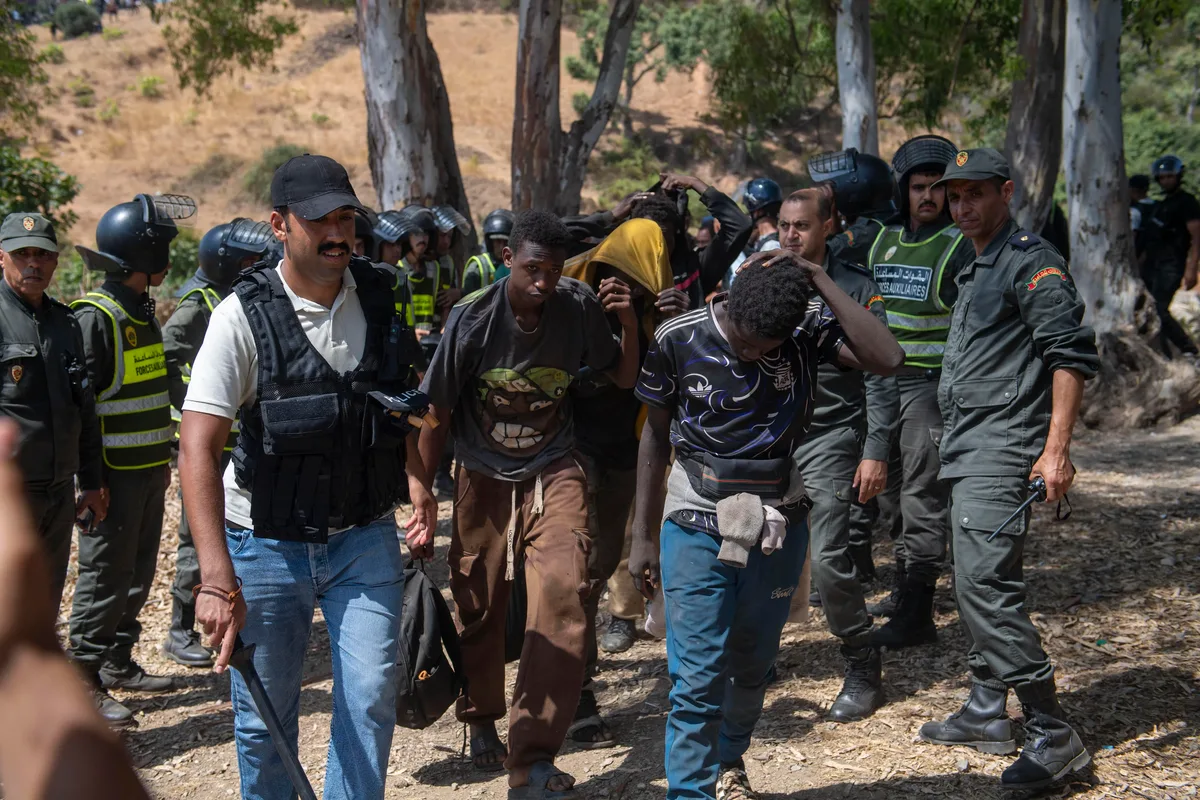
Moroccan authorities detained between 111 and 148 migrants attempting to cross into Spain's Ceuta enclave on August 15, 2026, after social media calls prompted a mass crossing attempt near the town of Fnideq, Morocco [1, 2, 3, 4, 5, 6]. Most detainees were from sub-Saharan Africa, with some Moroccan nationals also held; reports differ on Moroccan detainee numbers, ranging from 2 to 20 [1, 2, 3, 4, 5, 6].
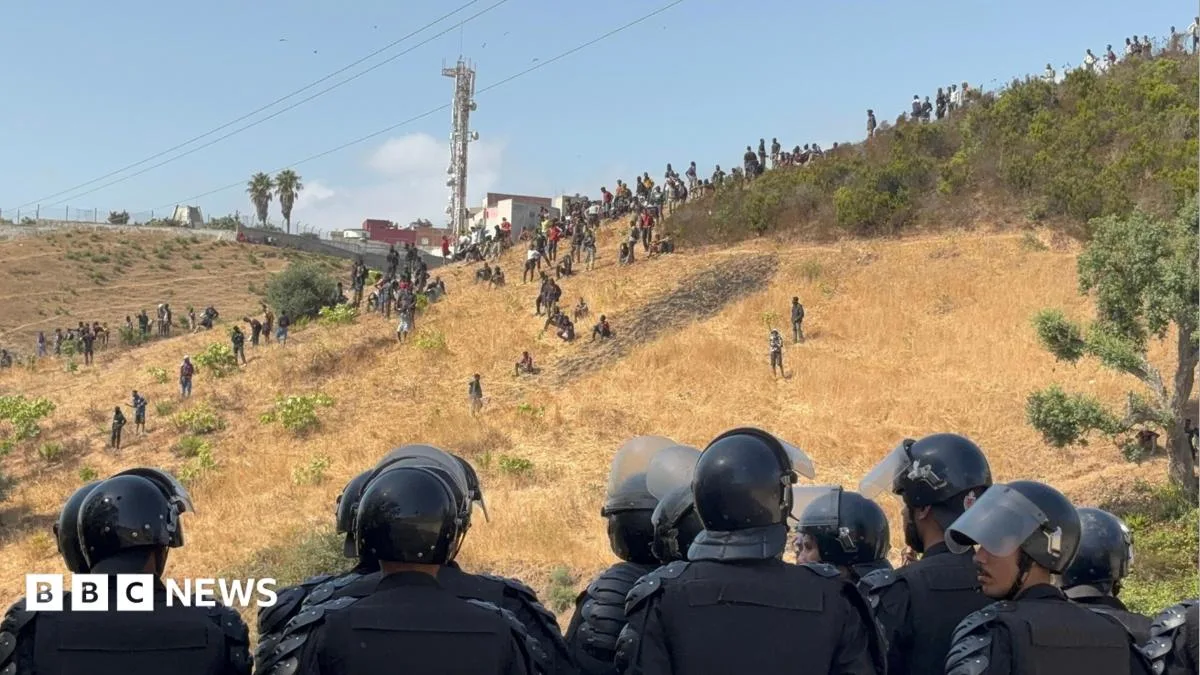
Moroccan police used tear gas and riot gear to disperse groups gathered about 3 kilometers from the Spanish border in Fnideq [1, 2, 3, 4, 5]. Migrants reportedly avoided main security checkpoints by taking mountainous routes toward Ceuta [4].
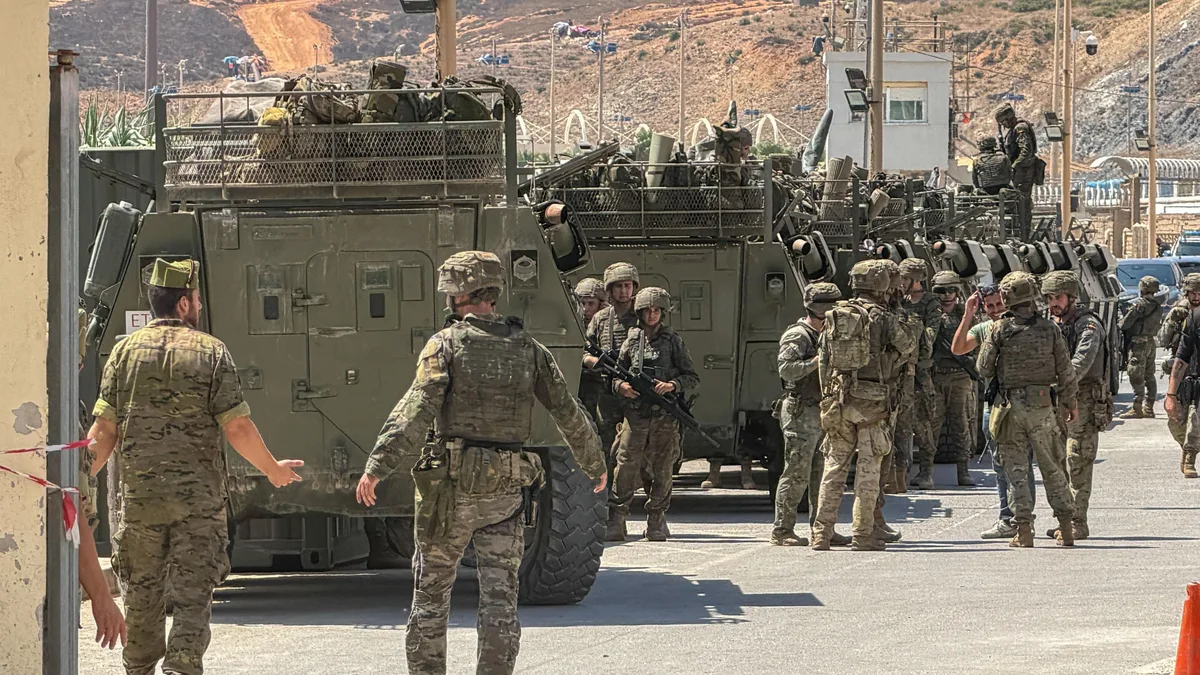
In anticipation of the crossing attempts, Morocco reinforced border security with new barbed wire, deployed additional personnel, intervention vehicles, and drones near the Ceuta and Melilla enclaves [7, 8, 5, 6, 9]. On the Spanish side, authorities deployed more than 1,500 security officers, installed maritime and floating barriers, and intensified patrols following the mass migrant influx in late July [1, 10, 2, 3, 9]. Spain's Interior Minister Fernando Grande-Marlaska vowed, "We’ll continue to deploy whatever personnel are necessary to restore normality as soon as possible and prevent events like those of July 30 from happening again" [2].
The mass crossing call came through anonymous social media posts, which Morocco’s Interior Ministry described as incitement punishable under Moroccan law. A ministry spokesperson, Rachid El Khalfi, said the posts posed serious safety risks and exploited migration issues [8]. Morocco warned it would prosecute organizers and participants.
This followed an unprecedented wave from July 29 to 31 when around 72,000 migrants entered Ceuta within hours, leading to at least 96 deaths [1, 10, 2, 3, 4, 9]. By mid-August, about 5,000 migrants remained in Ceuta after the influx [10, 2, 3, 9].
Tensions have risen within the European Union in response to the situation, with some countries suspending or questioning Spain's Schengen membership following the July crossings [1]. Spanish lawmaker Jaime de los Santos criticized the government’s handling, stating, "Sixteen days have gone by since Spain was invaded by more than 80,000 Moroccan citizens, and Pedro Sanchez is still hiding in La Mareta without giving any explanation," amid the ongoing crisis [4].
Morocco maintained a heightened security presence on August 15 to prevent further crossing attempts and manage detainees [1, 2, 3, 5, 6]. Spanish authorities continued to monitor the border closely after deploying reinforced security in mid-August [2, 3].