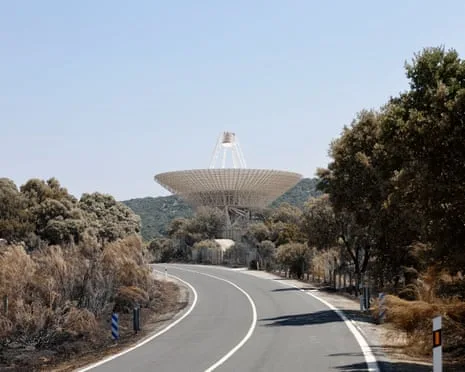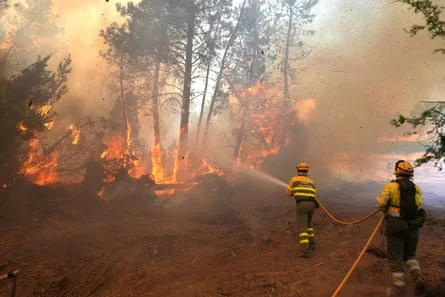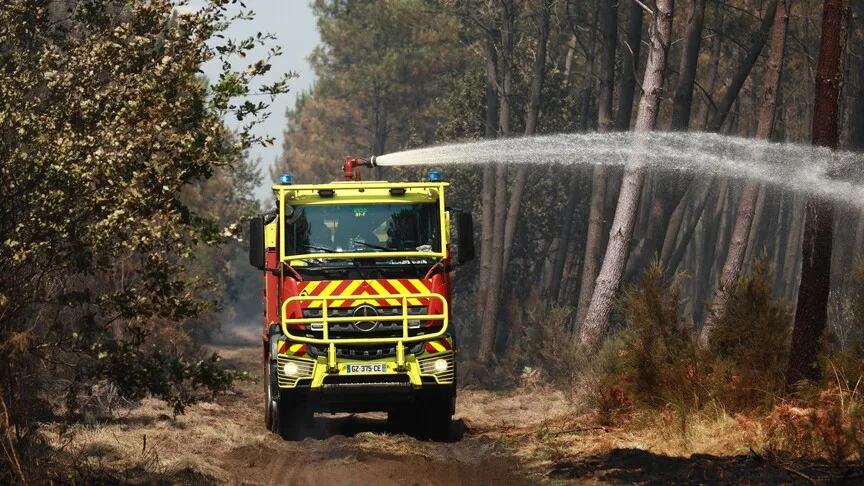
Spain faces a serious wildfire threat as millions prepare to watch the total solar eclipse crossing the country on Wednesday, August 12, 2026 [1, 2, 3]. Authorities warned that extraordinarily dry vegetation combined with an expected influx of viewers will increase the risk of wildfires. Minister Sara Aagesen said, "The vegetation is extraordinarily dry and the smallest spark or carelessness could lead to devastating forest fires" [1]. More than 1,000 people were evacuated as of Monday, August 10, due to major fires in the provinces of Castellón and Huelva [2, 3].
The wildfire near Tirig in Castellón province has burned around 684 hectares (1,690 acres) and forced the evacuation of about 900 residents [2, 3]. In Huelva province, a wildfire near Niebla broke out on August 7 and has scorched approximately 8,000 hectares (20,000 acres), prompting evacuation of 467 people [2, 3]. The town of Berrocal, devastated previously by a 34,000-hectare fire in 2004, is among those evacuated [2, 3].
July 2026 tied with July 2022 as the hottest month recorded in mainland Spain since 1961, with an average temperature of 25.7°C (78.3°F), 2.6°C above the 1991-2020 average [1, 2, 3]. It was also the driest July on record with just 4.3 mm of rainfall, about 26% of the normal precipitation [1]. These conditions have left vegetation highly vulnerable to fire.
To reduce fire risks during the eclipse period, authorities banned barbecues, fireworks, and parking on hard shoulders near dry vegetation [1, 2, 3]. The Valencia region closed natural parks and prohibited walking on rural footpaths as a precaution [1]. Police expect an additional 1.5 million car journeys on August 12, raising concerns about blocked emergency routes [1].
Hospitals are on alert for eye injuries caused by unsafe eclipse glasses after six brands failed safety tests and were withdrawn [1]. Jesús Meray, head of the Fernández-Vega ophthalmology research institute, urged people to wear approved glasses before, during, and after the eclipse, warning that looking directly at the sun can cause irreparable damage [1].
The total solar eclipse on August 12 will cross Spain within a roughly 200-kilometer wide path from A Coruña in the northwest to Mallorca in the Mediterranean, attracting millions of viewers [1]. Authorities continue firefighting efforts and monitor evacuation zones as the eclipse draws near [1, 2, 3].