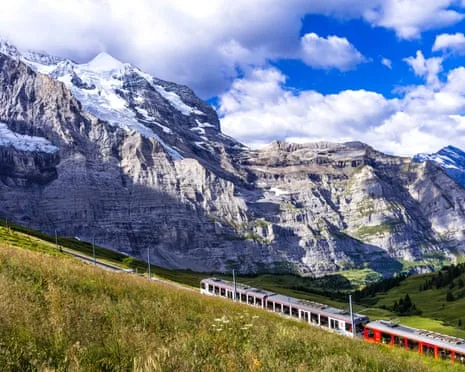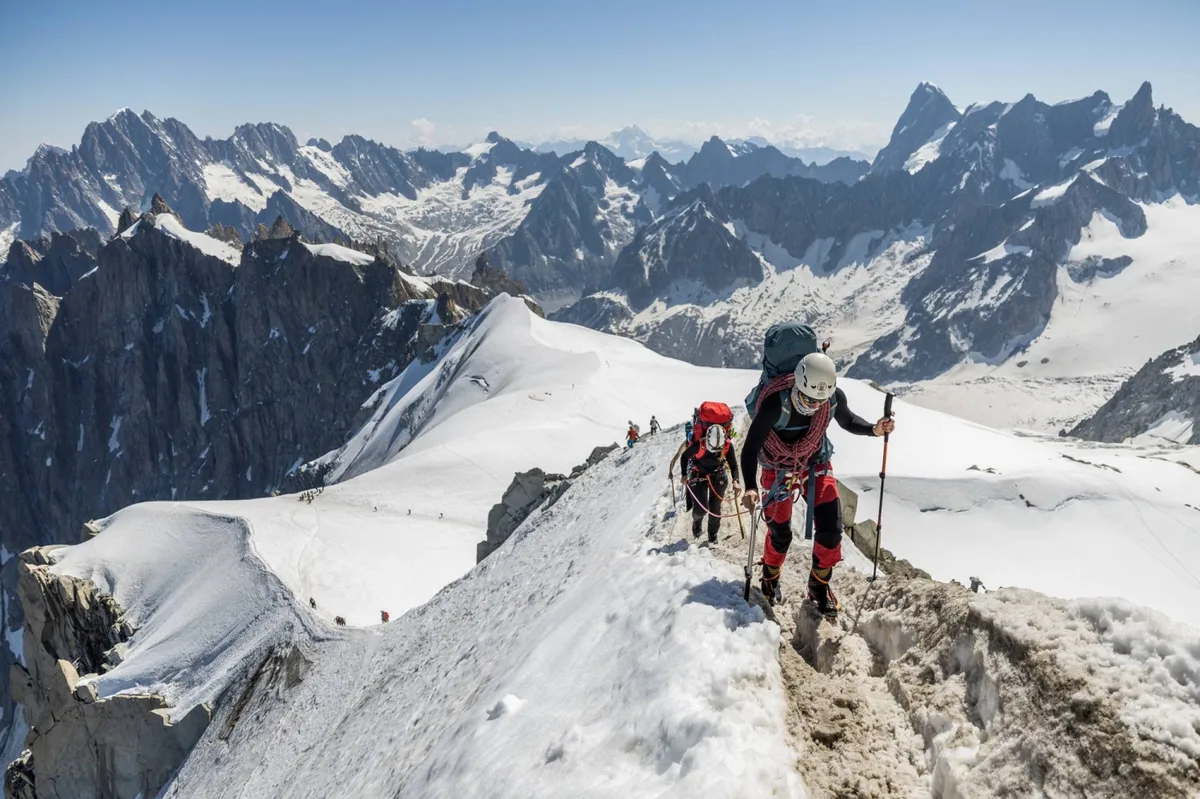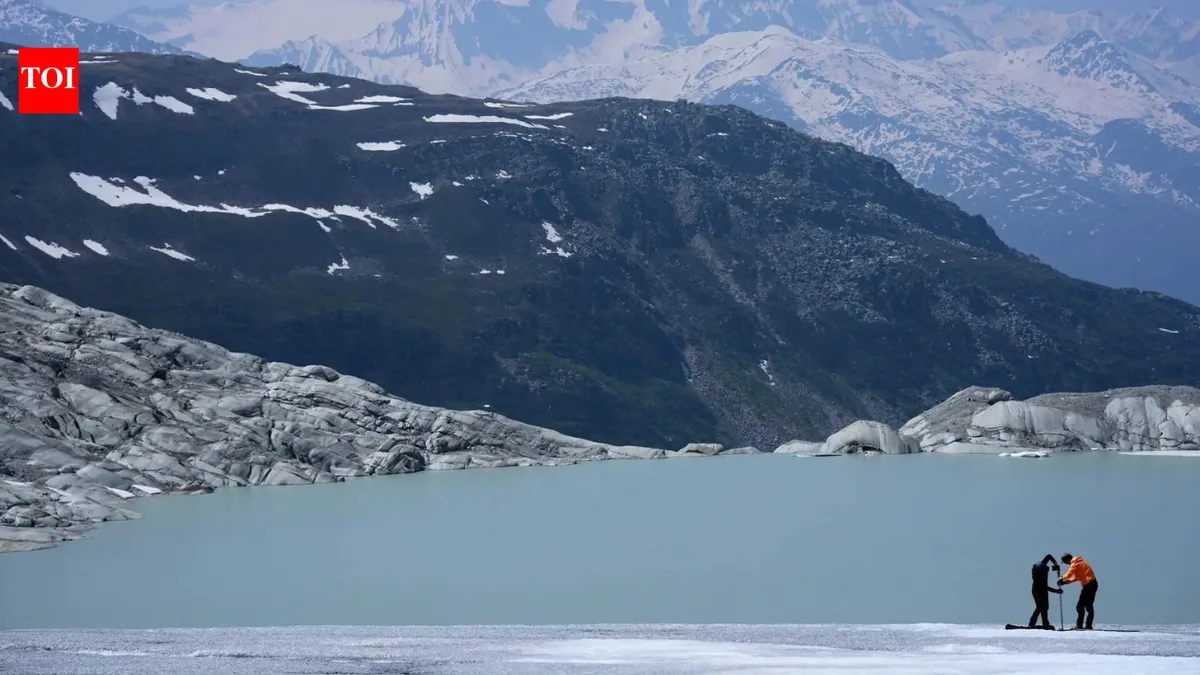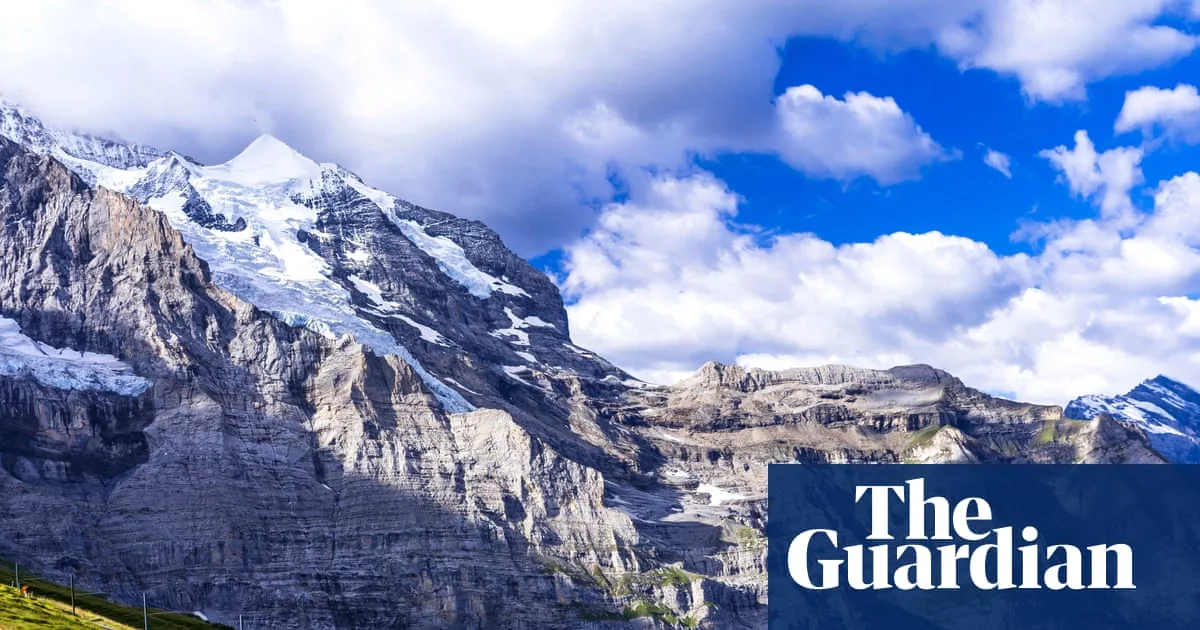
Swiss glaciers are expected to lose all the snow and ice accumulated over the previous winter by June 29, 2026, marking the second-earliest glacier loss day since records began in 2000 [1, 2, 3, 4]. The earliest was in 2022, when glaciers lost winter reserves by June 26 [1, 3, 4].
This year's early melting is driven by a severe European heatwave in June 2026, an earlier warm spell in May, and unusually poor snowfall over the winter [1, 3, 4]. Snowfall replenishment on Swiss glaciers was about 25% below the 2010–2020 average [1, 3]. Matthias Huss, Glacier Monitoring chief, said, "We're just seeing enormous ablation, ice melt rates and snow melt rates all over the Alps," emphasizing the abnormal timing of the melt [1]. He added, "We are three months too early compared to a healthy state," referring to historical mid-August glacier loss days [1].
Dust from the Sahara Desert arrived in March 2026, reducing snow reflectivity and worsening melt rates [1, 3]. Temperatures in the Swiss lowlands reached around 30C as early as May [4]. Huss noted, "Within just two weeks, Konkordiaplatz on Great Aletschgletscher has gone from snow-covered to bare ice. It's the timing that is worrying. This should occur one to two months later in the season." He warned, "All the high temperatures we are very likely to experience in July and August will lead directly to long-term glacier loss. We will certainly lose a large amount of ice this year." [4]
The Rhone Glacier alone lost about one meter of ice vertically over 10 days in late June [1, 3]. Swiss glaciers currently lose meltwater at a rate equivalent to filling an Olympic-sized swimming pool every six seconds [4]. The accelerated melting is contributing significant water flow to major European rivers including the Rhine and Rhone [1].
The ongoing glacier retreat reflects decades of warming in the Alps and follows a similar melt pattern to the record-breaking year of 2022 [1, 3]. Huss called the situation "truly exceptional," noting, "Only in 2022, when all glacier melt records were broken, did this day come earlier. Otherwise, this ranks second." [4]
Reports on June 27 confirm glaciers have lost all winter snow and ice or will do so by Monday, June 29 [1, 2, 3, 4]. Monitoring will continue through the summer melt season to track ice loss and river flows.