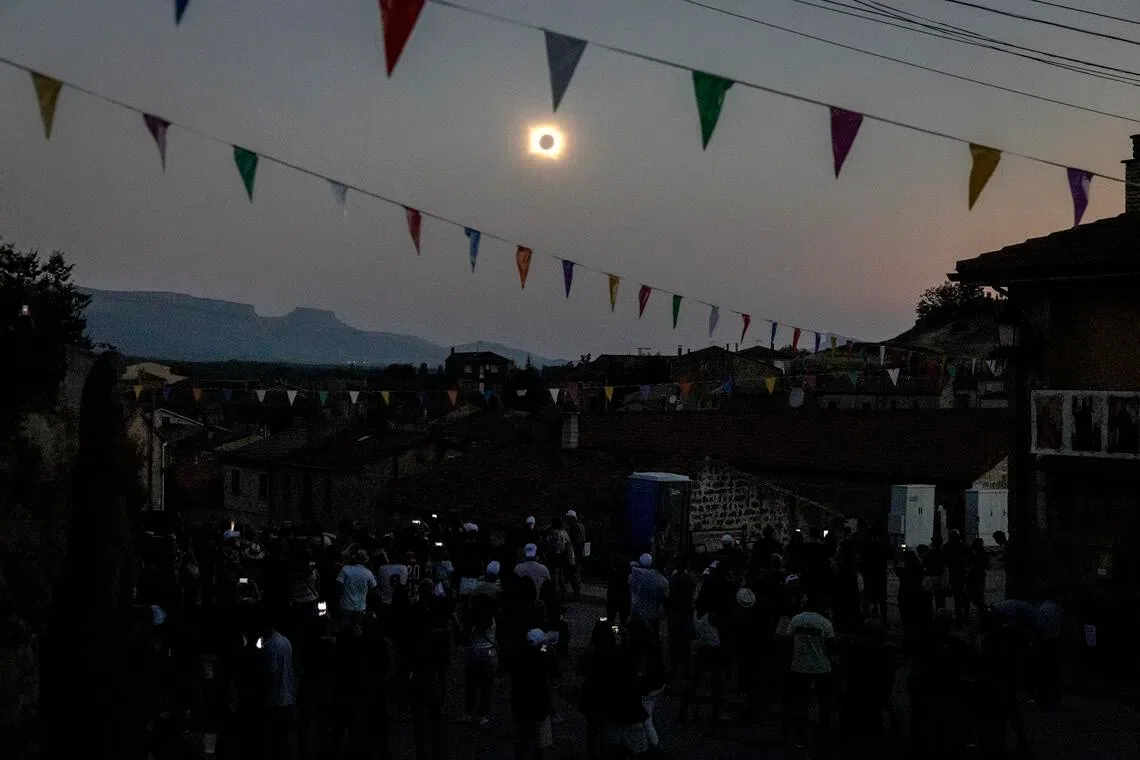
A total solar eclipse occurred on August 12, 2026, crossing northern Russia, Greenland, Iceland, northern Spain, and a small part of Portugal early in the day [1, 2, 3, 4, 5, 6, 7]. Iceland saw its first total solar eclipse in 72 years and the first visible from Reykjavik since 1433 [1, 2, 8, 9]. The eclipse's path also passed through northern Spain and the Balearic Islands, marking Spain's first total eclipse since 1912 [1, 10, 3, 7].
Millions traveled to witness the event firsthand. Spain expected up to 6 million visitors, while Iceland anticipated up to 80,000 tourists drawn by the rare spectacle [1, 2, 7, 8]. In Iceland's far west, totality lasted up to 2 minutes and 13 seconds [1].
NASA took advantage of the eclipse by flying a high-altitude WB-57 aircraft and launching balloons from Iceland to study atmospheric effects [1, 2]. The eclipse caused daytime darkness and brought noticeable temperature drops, along with quieter animal behavior in affected regions [1, 2, 3, 9].
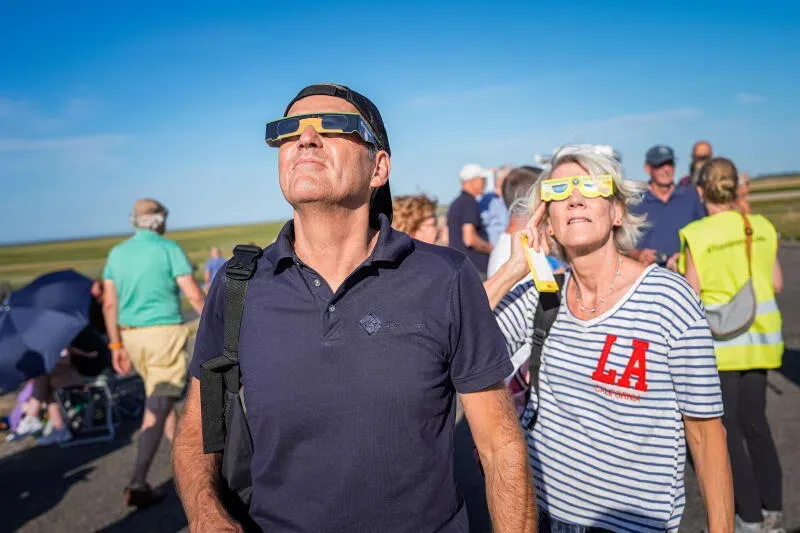
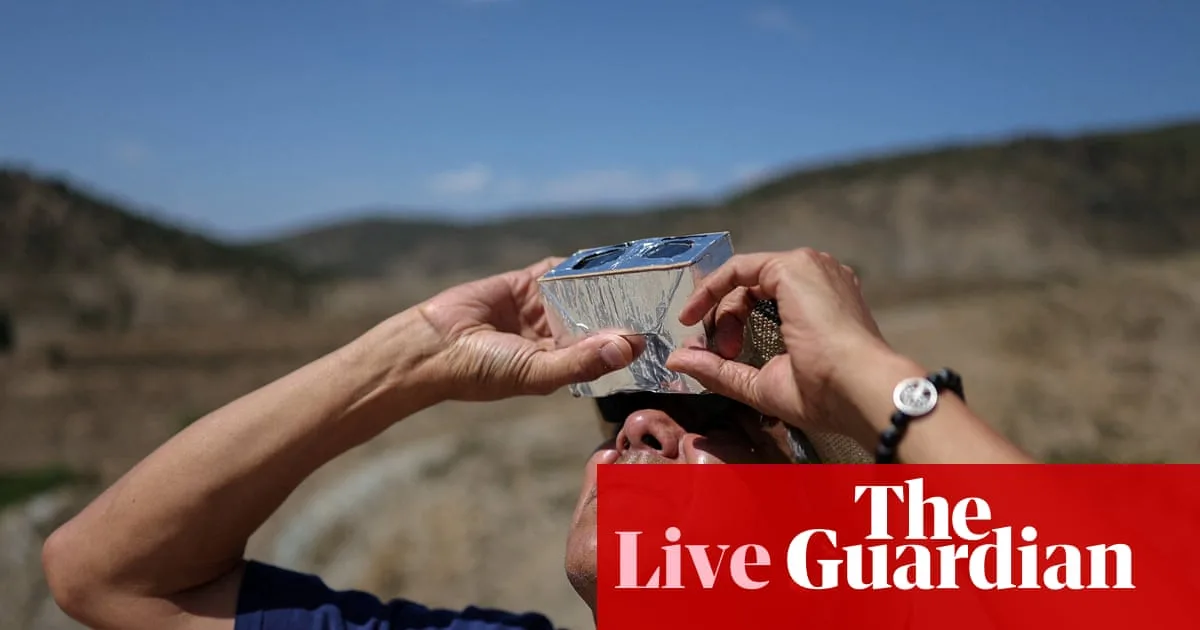
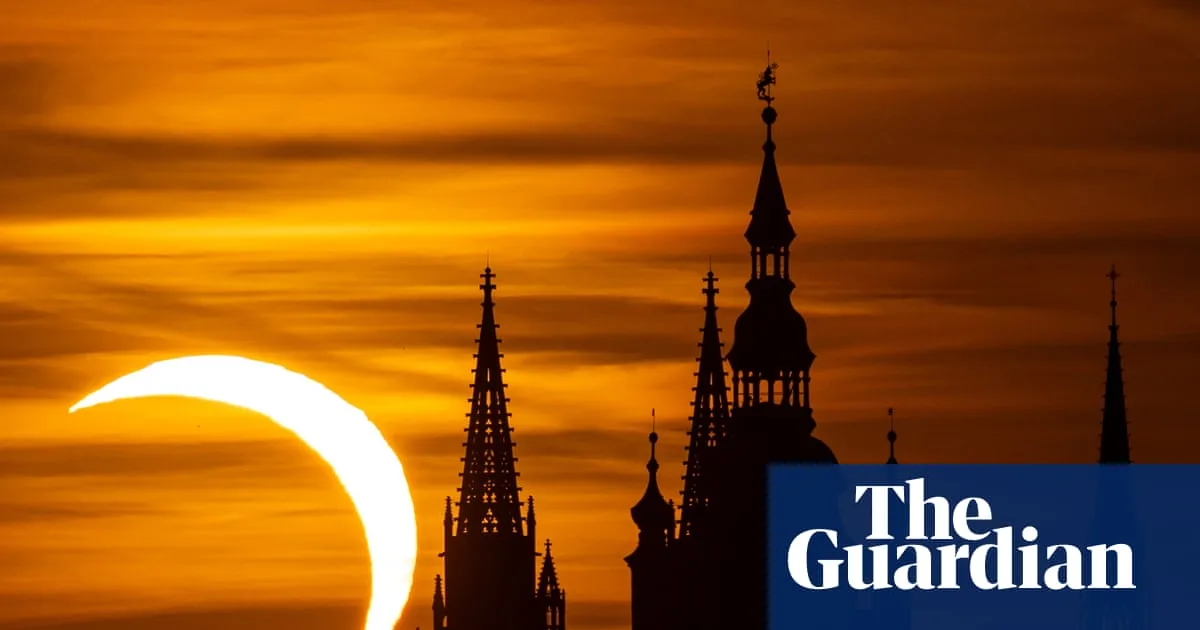
Other northern and western European countries, including the UK, France, and Germany, witnessed a substantial partial eclipse, blocking between 85% and 92% of the sun [11, 3, 7]. Some areas, including parts of Iceland and northern Spain, had heavy clouds and rain that reduced visibility [11, 3, 12].
Spanish authorities deployed 25,000 police officers and over 100 aircraft to manage crowds and fire risks around popular viewing sites [1, 7]. Safety campaigns across Spain urged caution during the event.
Cultural events complemented the eclipse. Iceland hosted a 10-hour eclipse-themed music festival featuring singer Björk, with a DJ set timed precisely to the moment of totality [1, 2]. Hotel rates in prime viewing areas of Iceland and Spain soared above $1,000 per night [6].
Thousands in the UK viewed a partial eclipse, though some called helplines with eye problems after unsafe viewing [11]. Sarah García Alonso, a reserve astronaut for ESA, said, "It was one of the most beautiful things I’ve ever seen in my life. It gave me goosebumps," while astronaut Pablo Álvarez Fernández called it "much more beautiful than what I had expected" [2].
The eclipse was part of the "Iberian Eclipse Trio," with total eclipses again in 2027 and an annular eclipse in 2028 [1]. On August 12 at 17:44 UTC, totality reached Iceland’s western coast near Keflavik and Reykjavik, lasting about 2 minutes in the far west [1, 7]. Later that evening, millions in northern Spain and the Balearic Islands saw the eclipse shortly before sunset [1, 7].