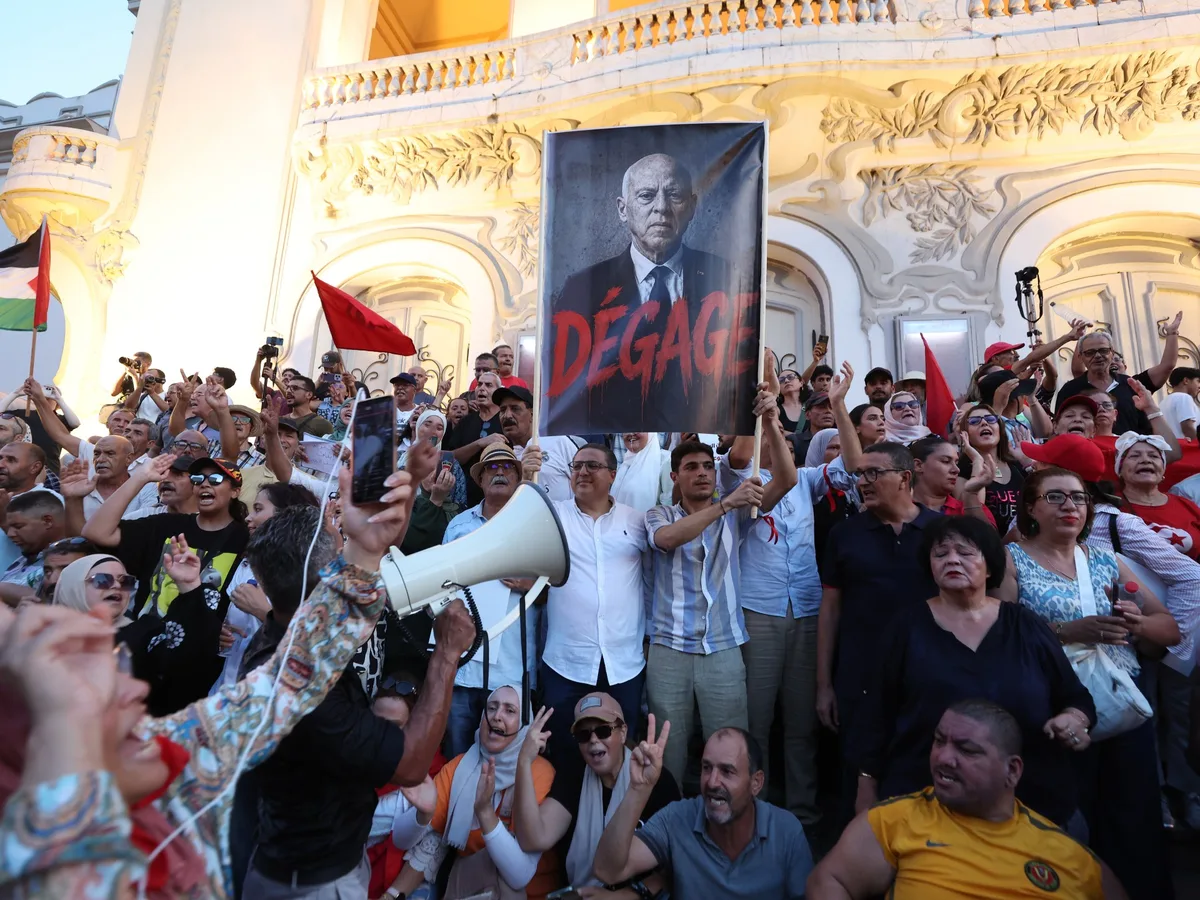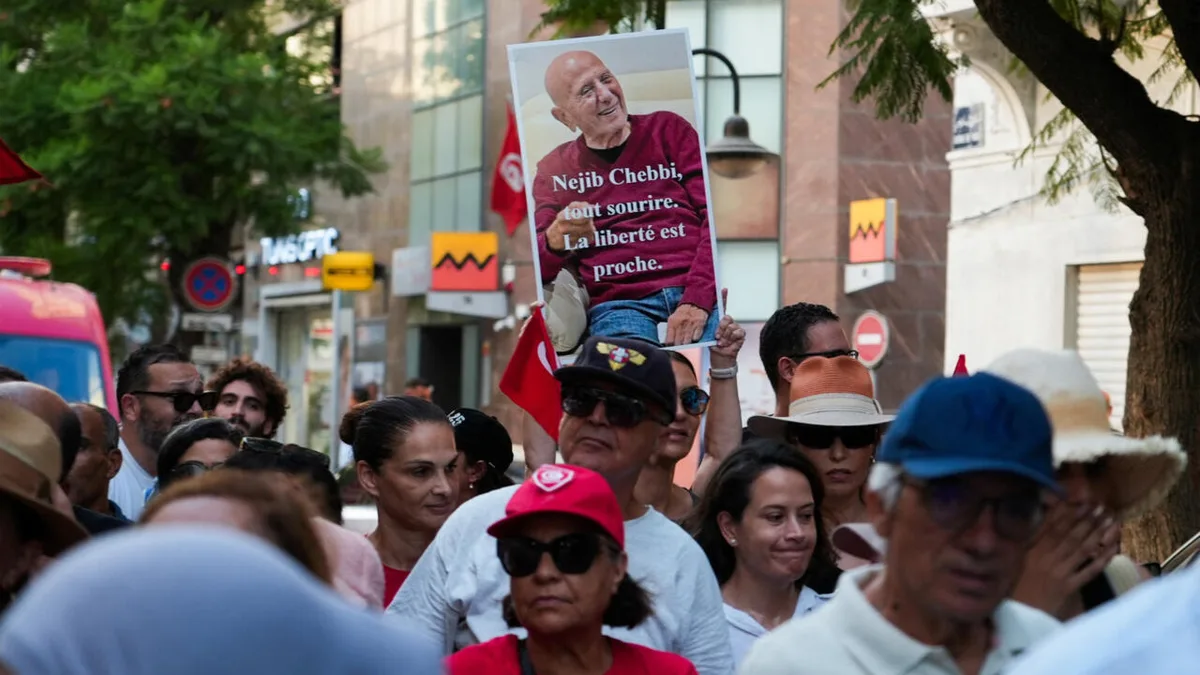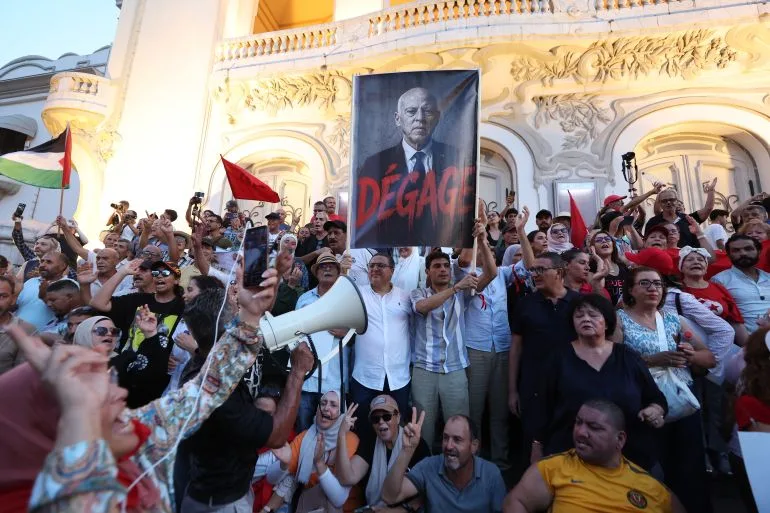
Tunisia’s highest court upheld prison sentences of up to 45 years for 40 opposition leaders, lawyers, businessmen, and activists on September 3, 2026, finalizing a case accusing them of conspiring to topple President Kais Saied [1, 2, 3]. Twenty of the accused fled abroad and were sentenced in absentia.
Notable figures sentenced include National Salvation Front leader Nejib Chebbi, who received 12 years, as well as Ghazi Chaouachi, Issam Chebbi, Jawhar Ben Mbarek, and Ridha Belhaj, each sentenced to 20 years. Politician Noureddine Bhiri was sentenced to 10 years [1, 2, 3]. The court’s ruling is final and cannot be appealed, closing out three years of legal proceedings.
The defendants faced charges of attempting to overthrow the president, with Tunisia’s justice minister stating that they "tried to destabilise the country and overthrow Saied" [1]. The opposition and legal representatives have rejected the verdicts, claiming the judiciary is not independent and labeling the cases as politically motivated attempts to silence dissent. Haifa Chebbi, a lawyer and daughter of Nejib Chebbi, said, "The ruling confirms that the judiciary is not independent. Opponents entered prison by political decision and will leave when Saied falls." [1]
President Kais Saied and his government deny allegations of political persecution. Saied said, "The judiciary remains independent and I will not become a dictator." [1] However, rights groups allege the president has controlled the judiciary since suspending parliament and seizing extensive powers in 2021. They cite his dissolution of the Supreme Judicial Council and dismissal of dozens of judges as evidence of judicial interference [1, 2, 3].
Lawyers said they received notification only on Monday for the Thursday hearing, leaving little time to prepare a defense [3]. Dalila Msaddek, sister of sentenced politician Jawhar Ben Mbarek, stated, "The legal battle is now over … what begins is a purely political battle." [3]
Most defendants were arrested in 2023 after being accused by Saied of being "traitors and terrorists" amid sweeping changes to the judiciary that year [1, 2, 3]. The Cassation Court’s September 3 ruling marks the last step in the legal process, making the sentences final and enforceable [1, 2, 3].