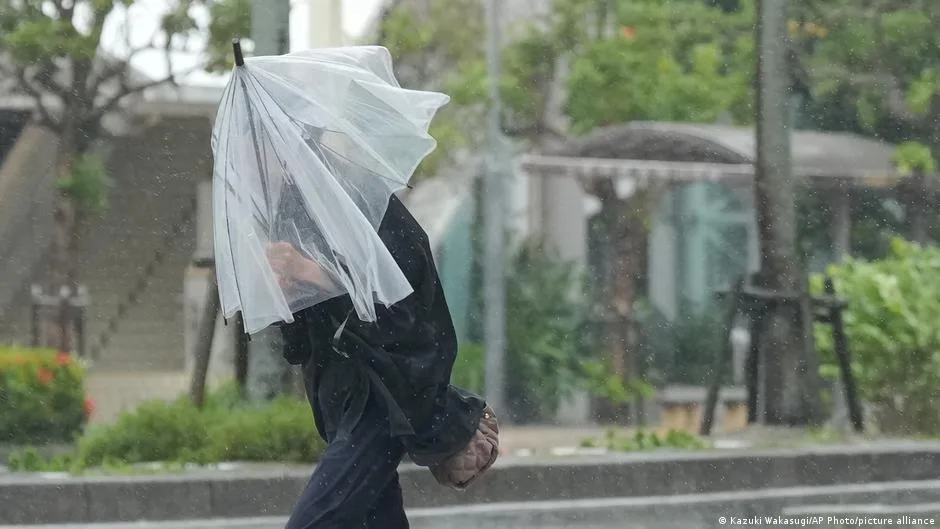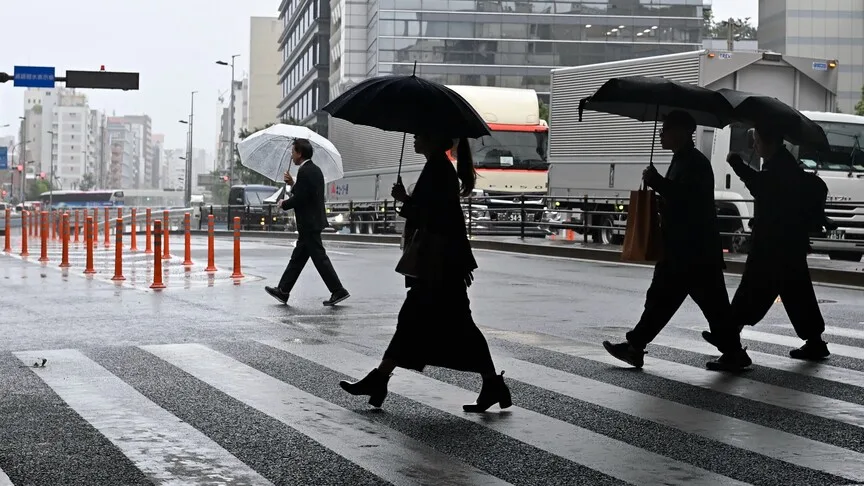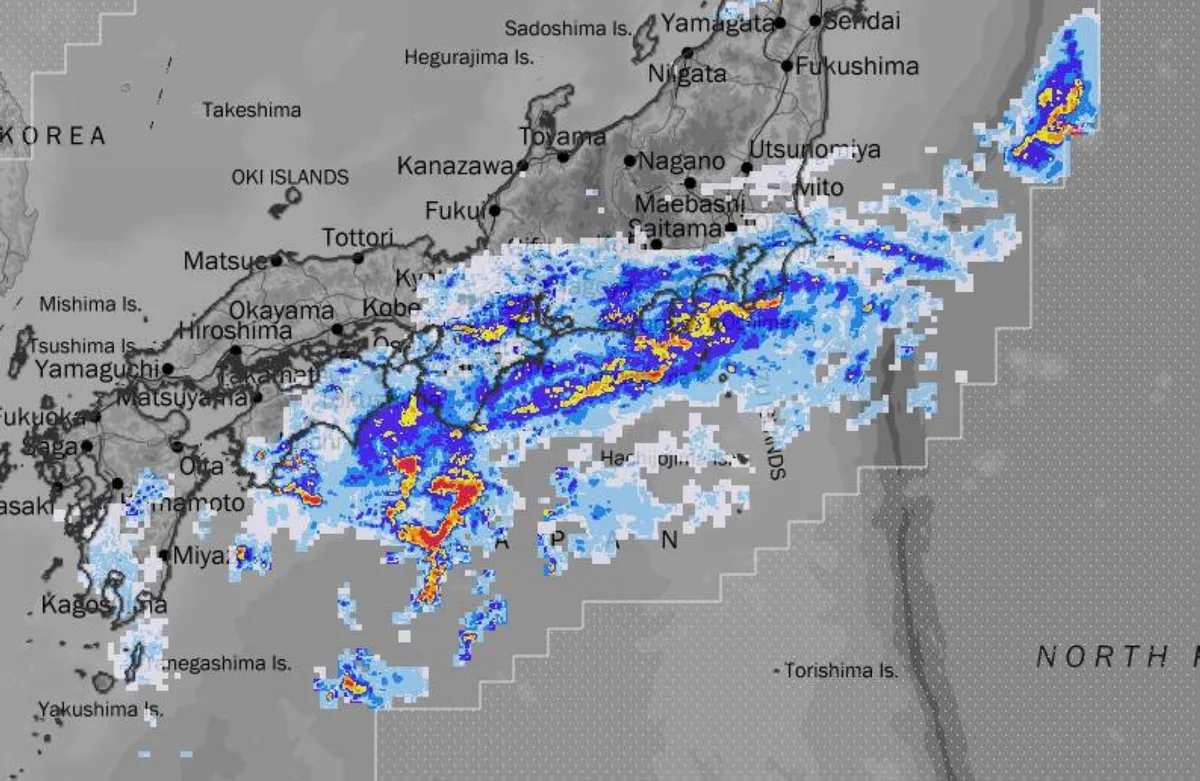
Japan faced disruptions from Tropical Storms Mekkhala and Higos moving from the southwest and east, respectively, bringing heavy rain and strong winds across the country [1, 2, 3]. More than 2 million residents across 13 prefectures in western Japan, including the Kinki and Kyushu regions, were ordered to evacuate as of Friday morning, the Fire and Disaster Management Agency said [3]. The Japan Meteorological Agency warned of landslides, swollen rivers, and flooding in low-lying areas due to heavy rain from both storms, urging the public to remain on high alert [2].
Flight operations suffered significant disruption with over 200 cancellations reported, among them 120 flights by Japan Airlines and All Nippon Airways at Okinawa and Kagoshima airports [1]. Train services in some areas were also suspended amid the deteriorating weather [1]. Major automakers Toyota and Nissan suspended production at some Kyushu plants due to storm-related road closures and safety concerns [1].
Tropical Storm Mekkhala was downgraded from a typhoon to a severe tropical storm but still brought wind gusts reaching 144 kilometers per hour as it approached Kyushu, expected to make landfall early Saturday morning [1]. Meanwhile, Tropical Storm Higos skirted southern Chiba Prefecture by 9:30 a.m. Saturday before moving northeast along the Pacific coast towards the Kanto region [2].
Heavy rainfall totals have been recorded in parts of western Japan over the past several days. Goto in Nagasaki Prefecture saw 600 millimeters from Tuesday to Friday, with Aso in Kumamoto and Ureshino in Saga each exceeding 500 millimeters [3]. Nearly 150 millimeters fell in Choshi, Chiba Prefecture, within 12 hours leading to Saturday morning [2]. Landslide alerts at Level 3 remain in effect for Shizuoka and Osaka Prefectures, and a Level 5 emergency safety alert was issued in Seika, Kyoto Prefecture after a landslide event [2, 3].
On Friday night, a magnitude 5.6 earthquake struck Yamanashi Prefecture, raising additional concerns about landslides amid the ongoing heavy rains [2]. Forecasts call for another 250 millimeters of rain in Shizuoka Prefecture and up to 200 millimeters in the Kanto region and Izu islands through Sunday [2]. The Kinki region could see 150 millimeters more rainfall [2].
Residents are urged to follow evacuation orders and monitor official advisories as the storms continue to affect western and central Japan over the weekend [1, 2, 3].