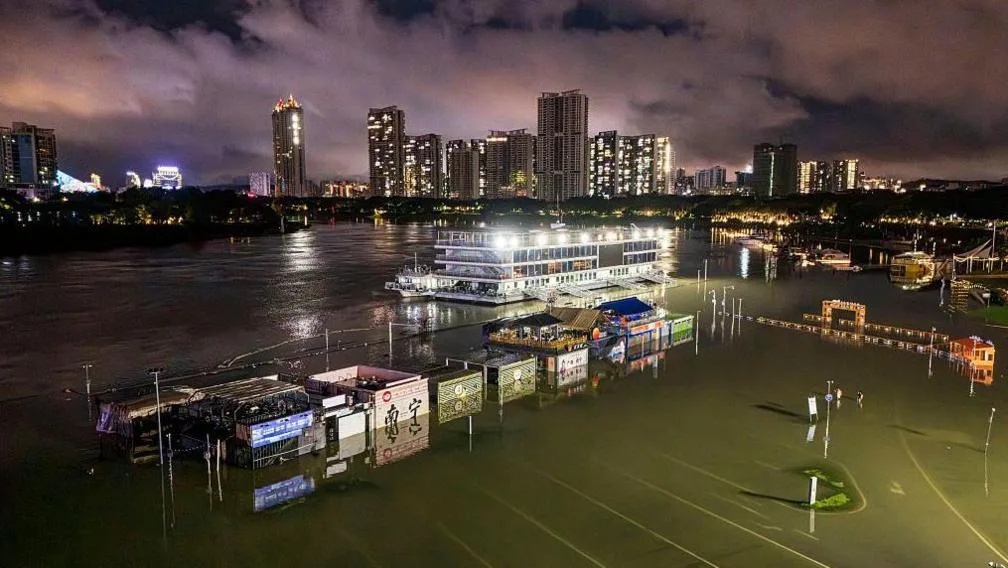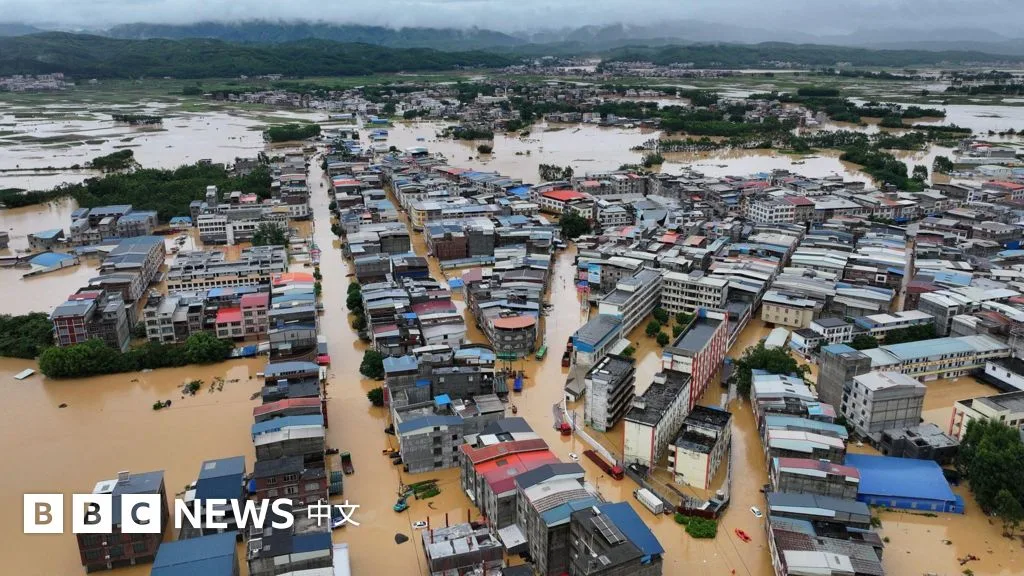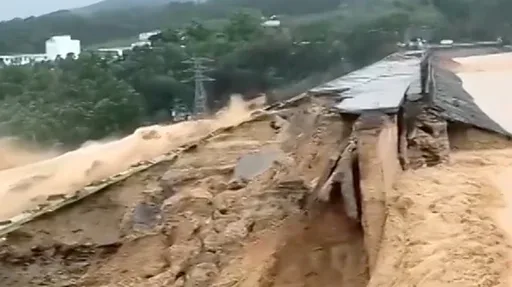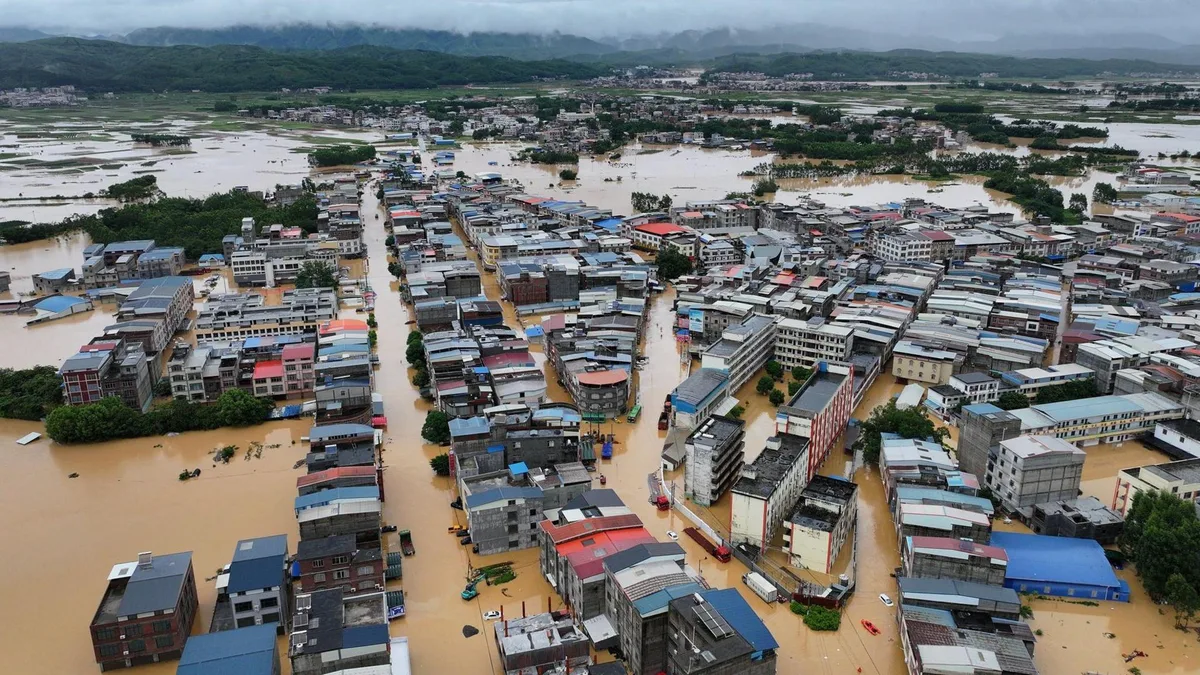
Typhoon Maysak swept through Guangxi province over the weekend, causing rivers to swell, dams to breach, and widespread flooding in Nanning and surrounding villages by July 6 [1, 2, 3]. Heavy rain began in Renhe village on July 5, quickly rising floodwaters submerged homes by early July 6, forcing residents to flee with little notice. Zhou, a villager from Renhe, said, "The floods happened so rapidly, the water just came so fast. The villagers didn't have time to take food with them when they were running away" [1].
At least 17 people died and hundreds were injured in Guangxi due to the typhoon and floods, with about 60,000 evacuated and at least 90,000 affected overall [1, 2, 3]. Some residents remain trapped on rooftops with limited food and supplies. One Guangxi resident described the overwhelmed rescue efforts: "Rescue came, but they can’t save everyone, there are too few personnel, and the lifeboats they brought were too small and couldn’t reach far" [2]. Another villager said some homes are surrounded by water but temporarily safe: "My father and others are safe for now, but they are surrounded by water" [2].
The typhoon also caused rare tornadoes and thunderstorms hundreds of kilometers away in Hubei province, where flying glass injured many students. An unnamed student said, "Many students were cut by flying glass. It was only when everything finally calmed down that I realized I had just experienced a disaster" [2].
Northern China also suffered extreme weather: flash floods killed two people in Tongliao, Inner Mongolia, while record rain caused three deaths in Fushun [2, 3]. The floods released snakes from farms in urban areas, raising safety concerns among residents [2, 3].
In response, President Xi Jinping ordered "all out" rescue and relief operations following the storms [1, 2, 3]. Authorities continue to conduct evacuations and relief efforts amid the ongoing flooding crisis.
Forecasters warn Super Typhoon Bavi is expected to strike China’s eastern coast between July 10 and July 11, potentially bringing more extreme weather shortly after Maysak [1, 2, 3].