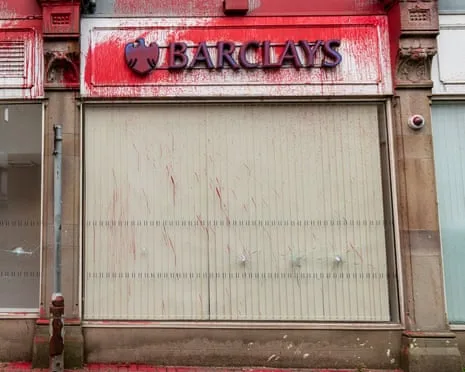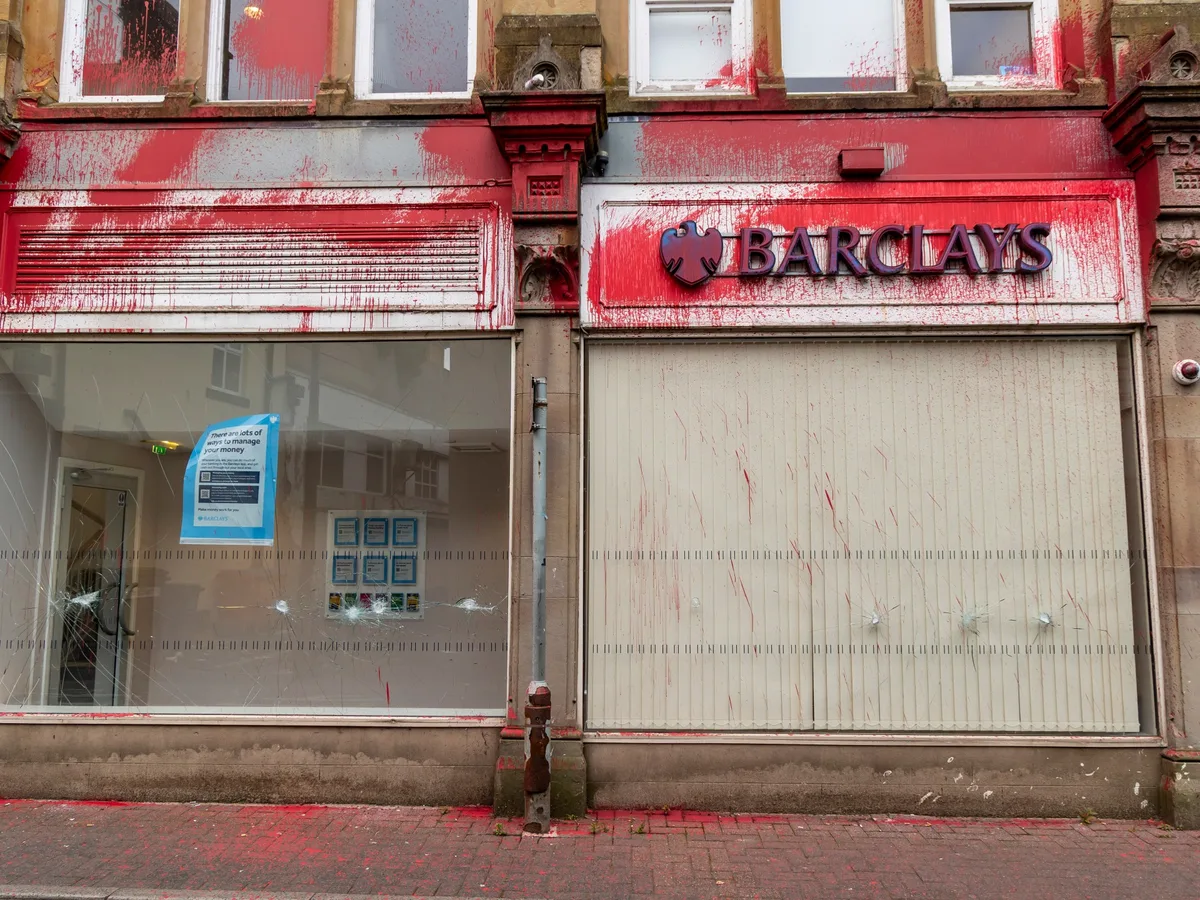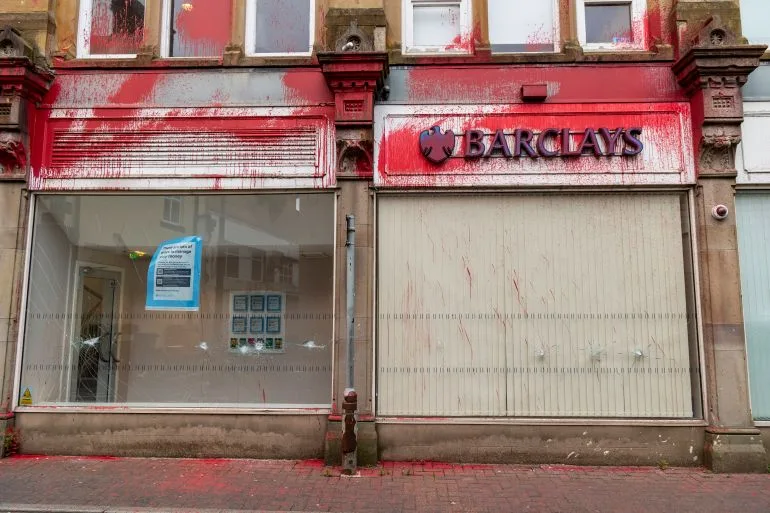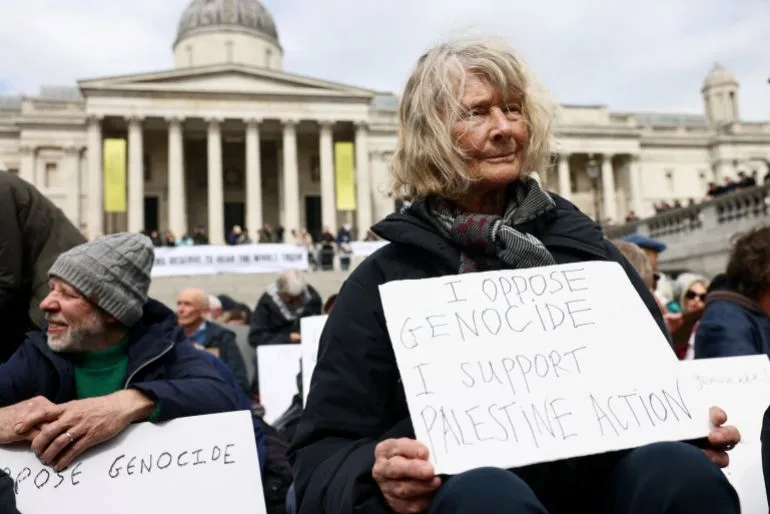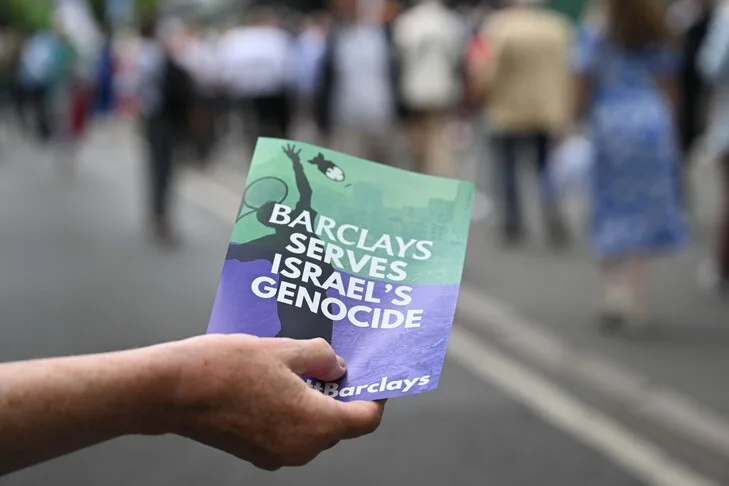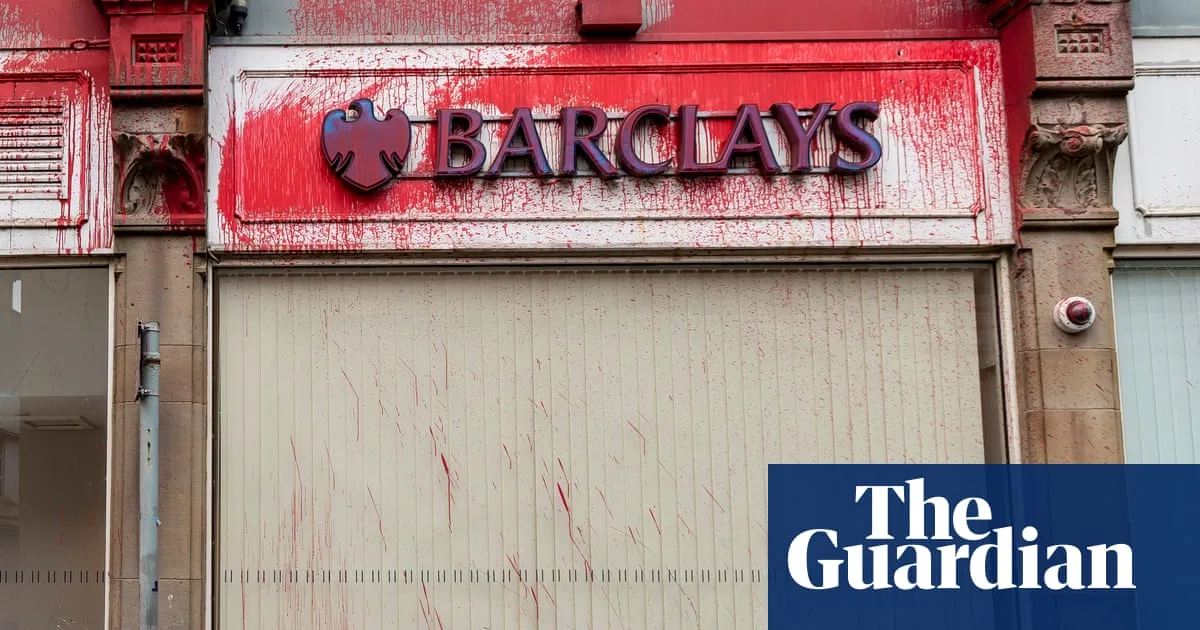
Five Palestine Action activists—Brendon O’Hagan, Amanda Kelly, Hmeera Atiqnisar, Mohammed Malik, and Alma Yaniv—were found guilty in June 2026 of causing over £200,000 in damage to a Barclays branch in Burnley during a protest in August 2024 against Barclays’ shares in Israeli arms firm Elbit Systems [1, 2, 3].
On August 21, 2026, a judge at Preston Crown Court ruled the activists would not be sentenced as terrorists because the damage did not meet the threshold under the Terrorism Act, and the targeted site was not a sensitive arms manufacturer [1, 3]. Judge Robert Altham said, "Whilst the damage is undoubtedly significant, I’m not satisfied it amounts to serious damage for the purposes of the Terrorism Act. Section 69 does not apply in this case" [3].
The judge rejected any terrorist connection to the offences after considering new information that arose during the trial [1, 2, 3]. Palestine Action was not designated a proscribed terrorist organization at the time of the August 2024 protest; the UK government added the group to the terrorist list only in July 2025 [2, 3].
Barclays sold all its shares in Elbit Systems by October 2024 and clarified any holdings before then were client-driven, not company investments [1]. The activists and the jury were not aware that terrorism charges might be applied until after the guilty verdicts [1, 2, 3].
Criminal lawyer Raj Chada said applying terrorism laws in this way "is very, very unusual and appears to be being used to target Palestine Action activists whose offence predates the banning of the group" [2].
Sentencing for the criminal damage charges is scheduled for September 4, 2026, at Preston Crown Court [2, 3].