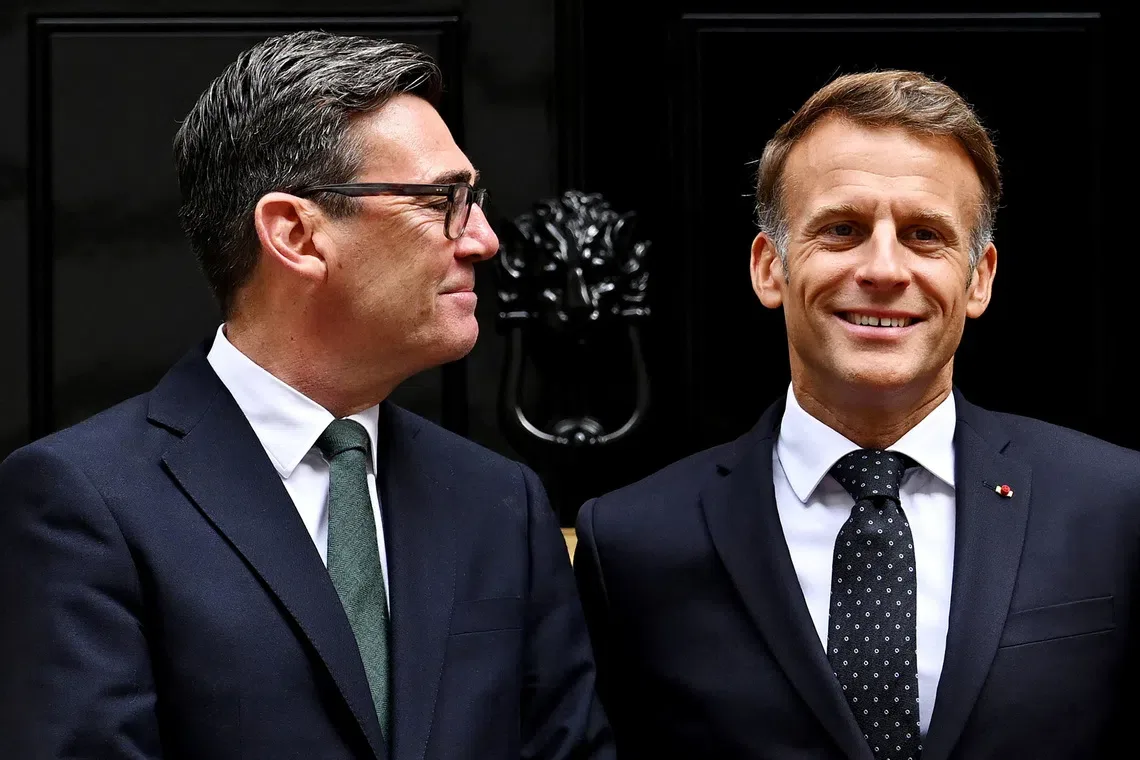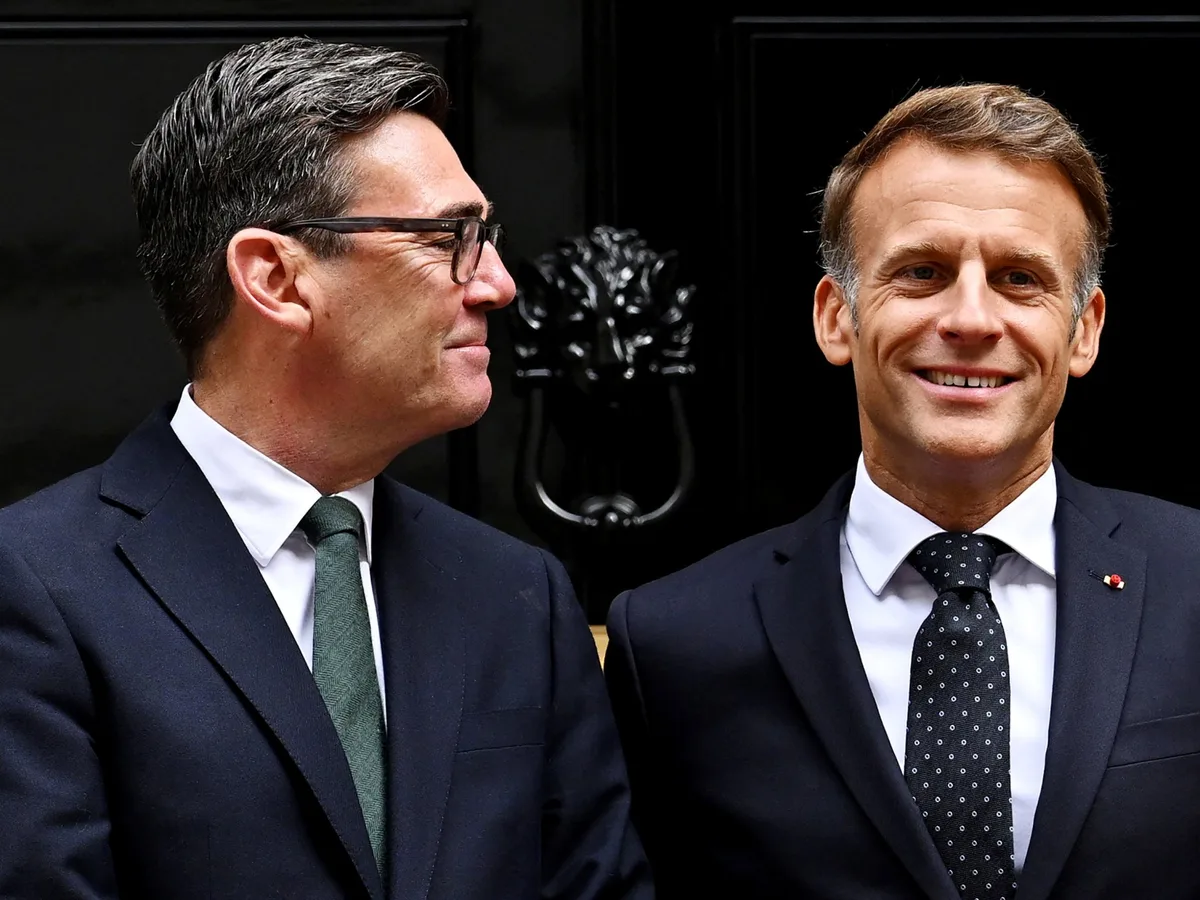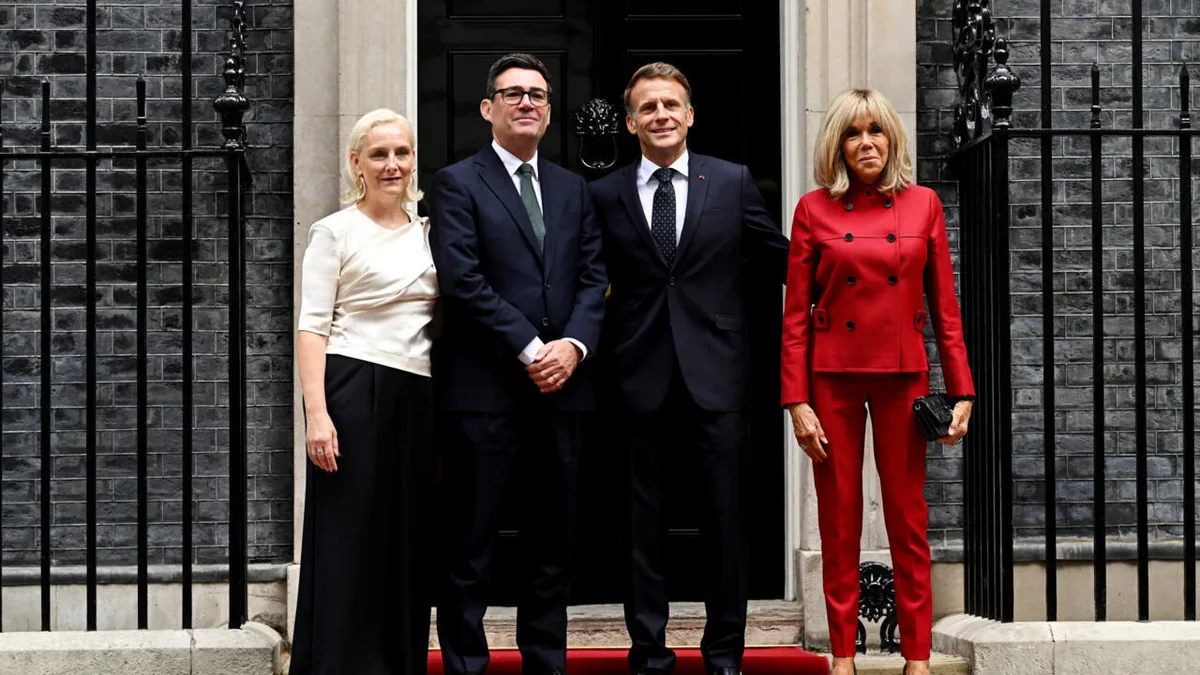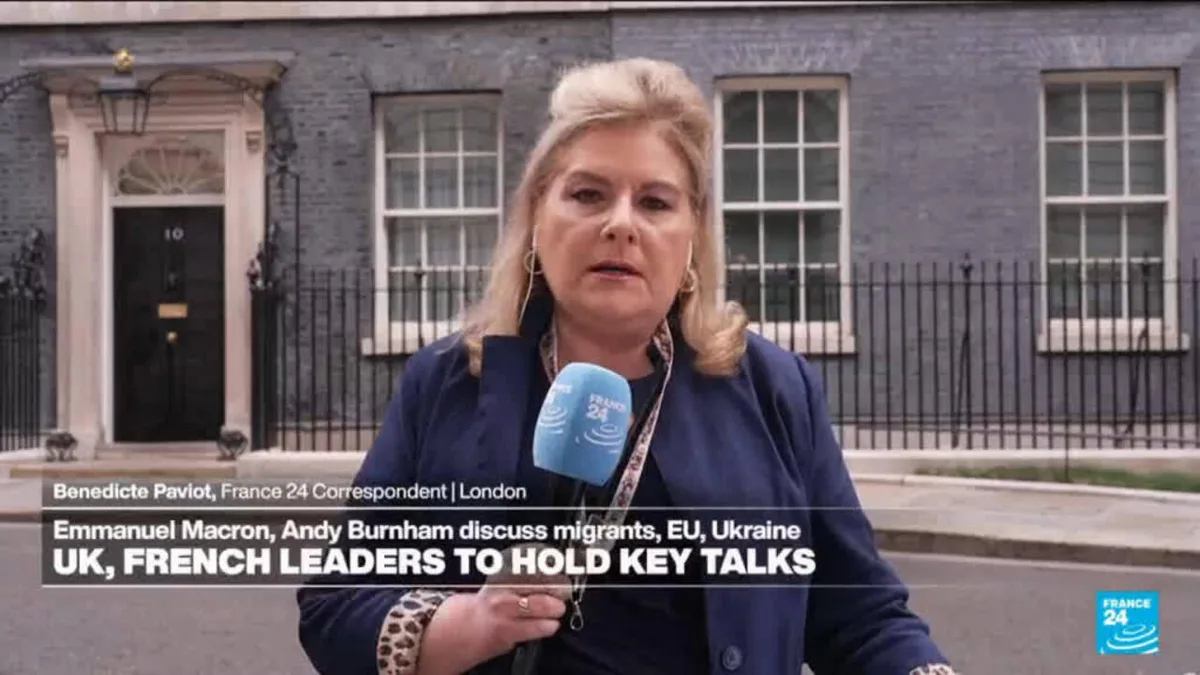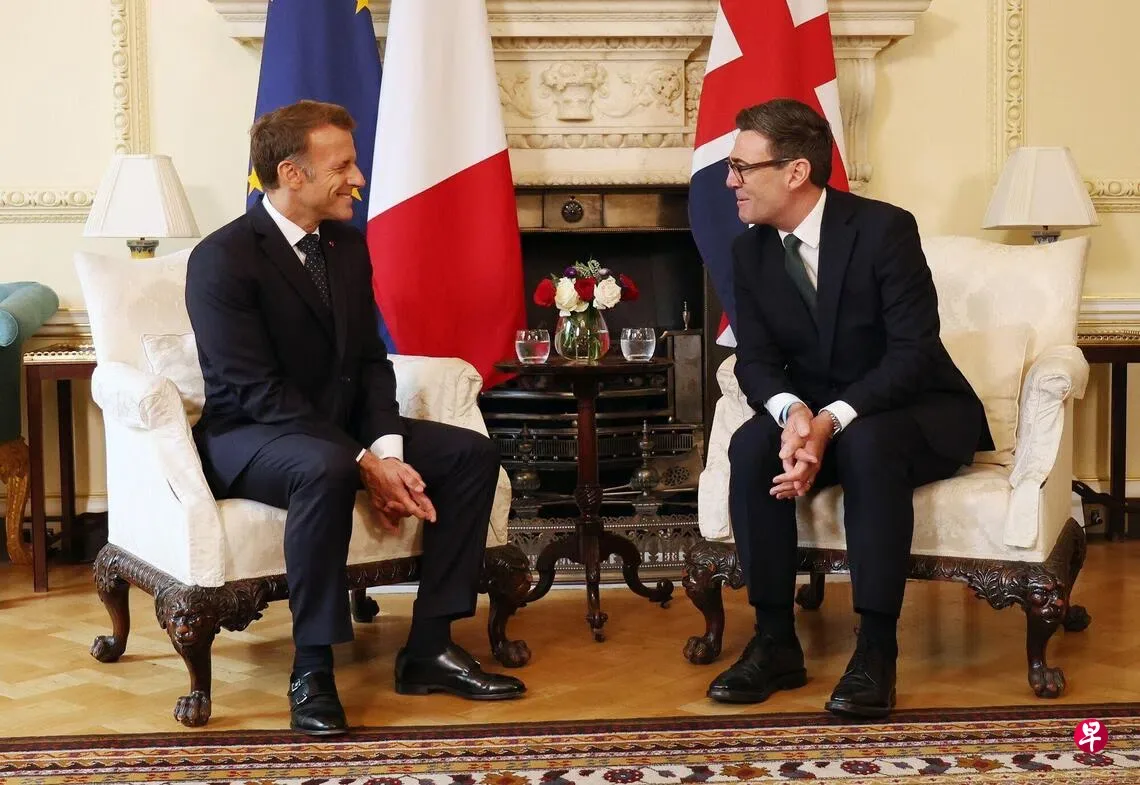
British Prime Minister Andy Burnham and French President Emmanuel Macron held official talks at Downing Street in London on September 3, 2026, focusing on advancing post-Brexit cooperation and strengthening economic ties between the UK and the EU [1, 2, 3].
Burnham highlighted concerns over the EU's Made in Europe agenda, warning it could pose significant challenges to UK industries such as steel. A UK government spokesperson said, "The Prime Minister set out how the Made in Europe agenda could pose significant challenges for UK industry" [3]. Macron emphasized commitment to closer relations, calling the meeting "a very important moment for relations between the two countries. I am here with a willingness and a commitment to get closer and closer" [3].
The leaders agreed on the importance of protecting their shared interests through cooperation [1, 2]. They also discussed migration across the English Channel, focusing on the rise of small boat crossings and the use of larger "mega dinghies" by migrants attempting the dangerous journey [2, 3]. As part of an earlier April agreement, Macron confirmed that France will deploy a surge team of 45 officers to western French beaches to help curb unauthorized crossings [3].
The UK government reported that arrivals of small boats have dropped to their lowest levels since 2020, showing progress in controlling Channel migration [3]. Burnham praised joint efforts with France, saying, "The progress we have seen this summer shows what can be achieved when the UK and France work together" [3].
The talks also briefly covered broader geopolitical topics such as the situations in Ukraine and the Middle East [2, 3]. Burnham, who took office as UK Prime Minister on July 20, succeeding Keir Starmer, has called for bolder UK-EU ties but opposes rejoining the single market, customs union, or restoring free movement of people [3].
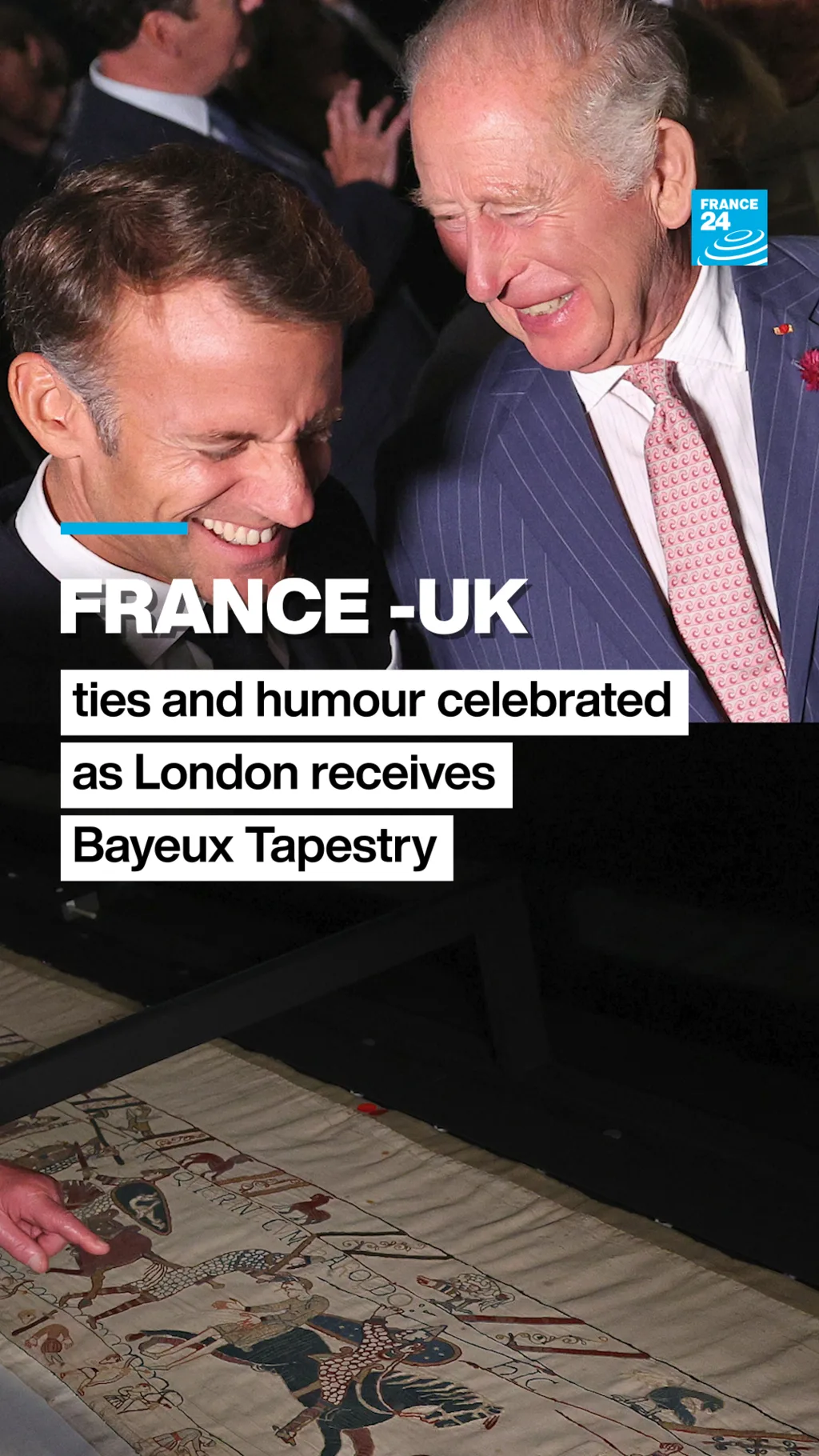
Burnham and Macron’s meeting followed a joint visit with King Charles III the day before to the British Museum to view the Bayeux Tapestry exhibition [1, 2].
The two leaders will continue to monitor cooperation outcomes and uphold the April deal on Channel security as France deploys the 45 surge officers to target unauthorized crossings in the coming weeks [3].