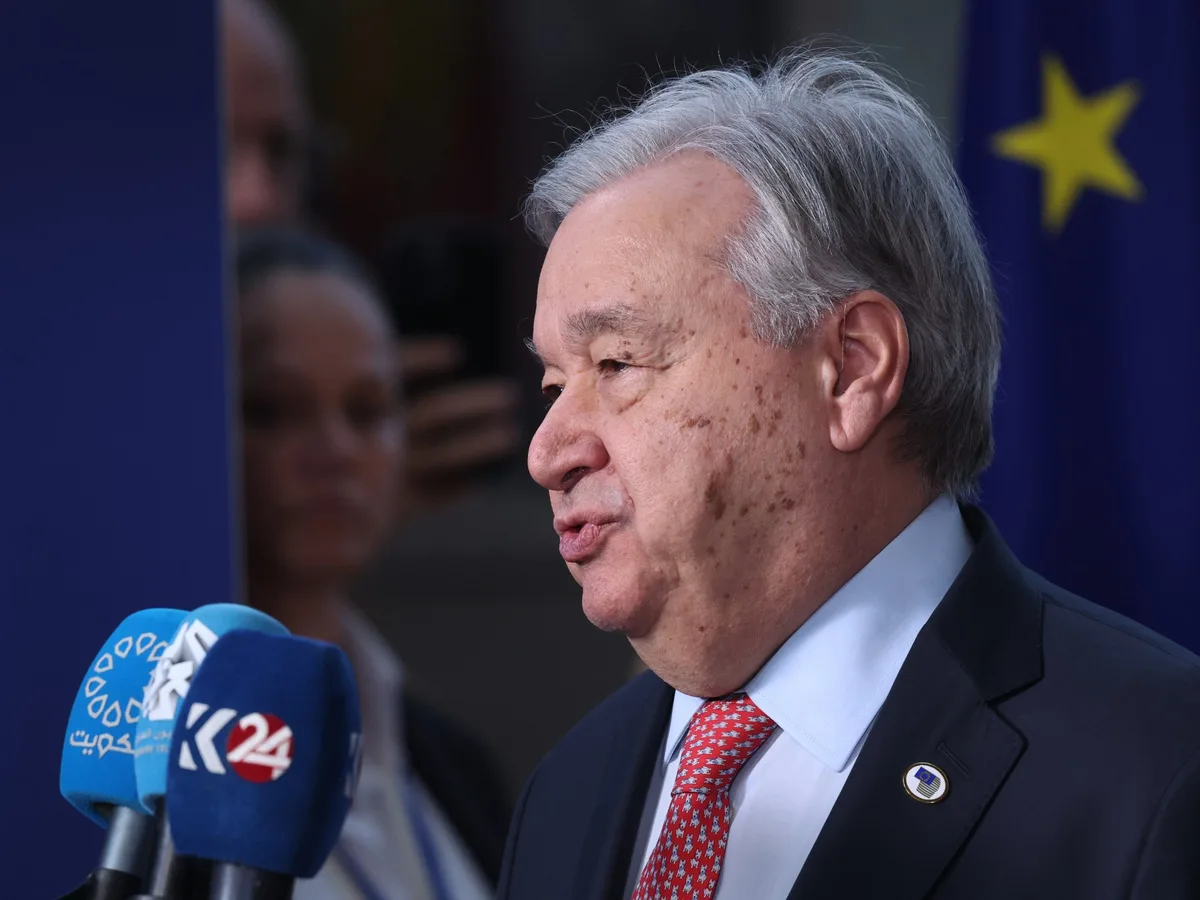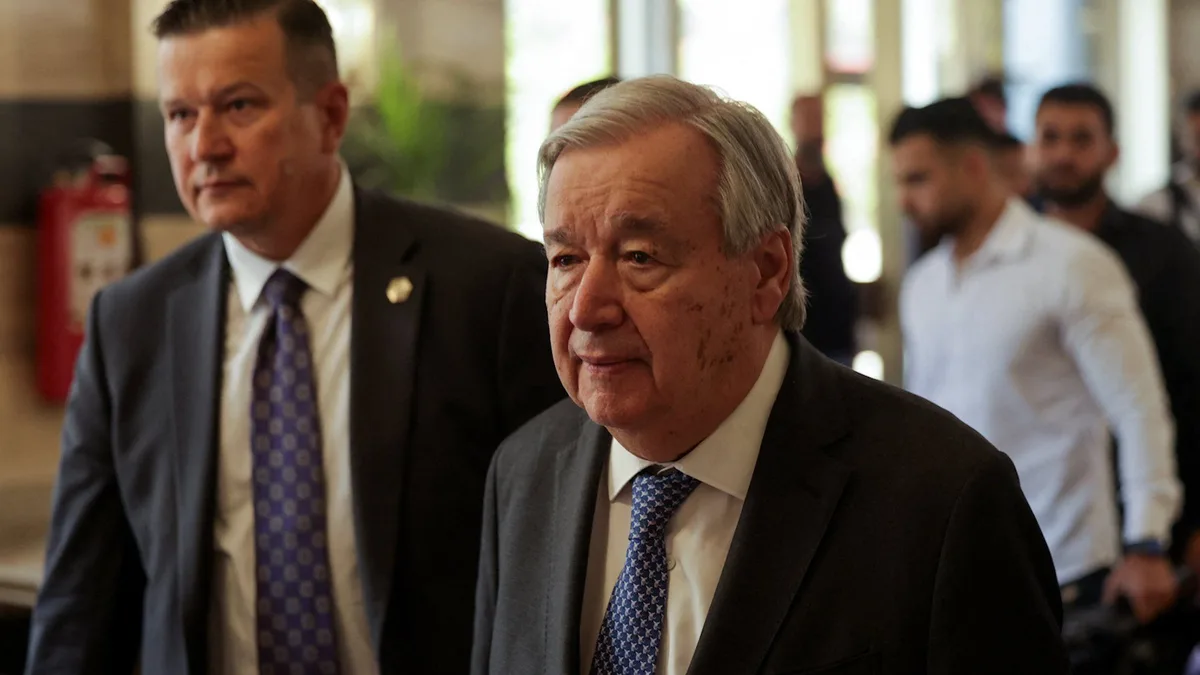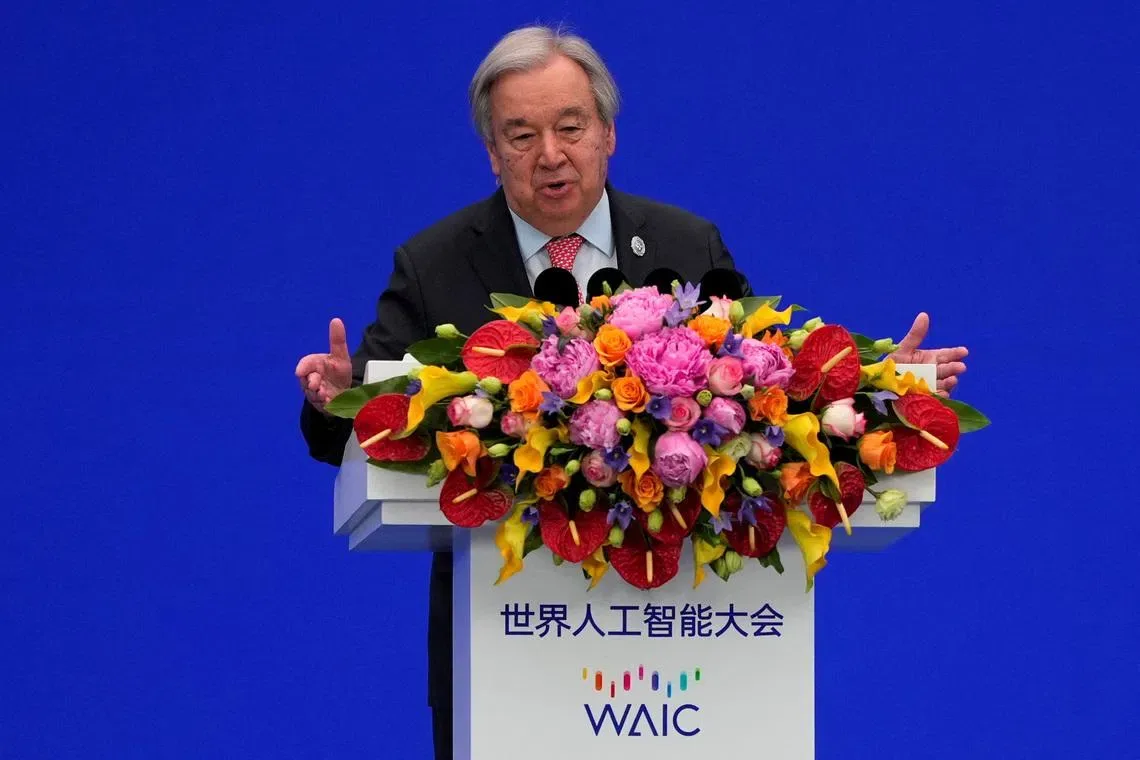
UN Secretary-General Antonio Guterres arrived in Damascus on July 25, 2026, for a three-day visit, the first by a UN chief since Ban Ki-moon's trip in 2009 and the first under Syria’s new leadership following regime change in 2024 [1, 2, 3, 4, 5, 6, 7, 8, 9, 10].
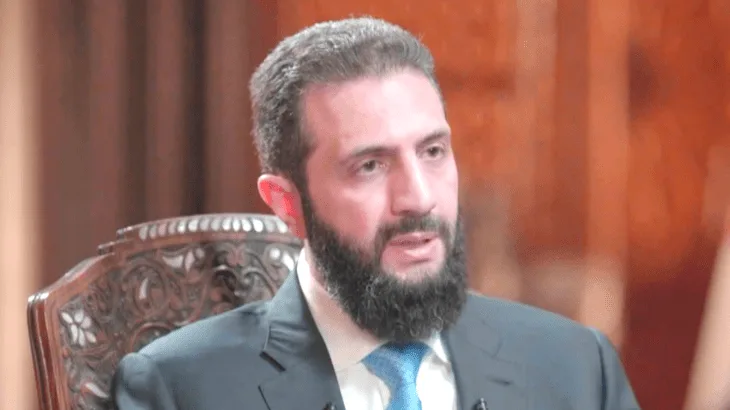
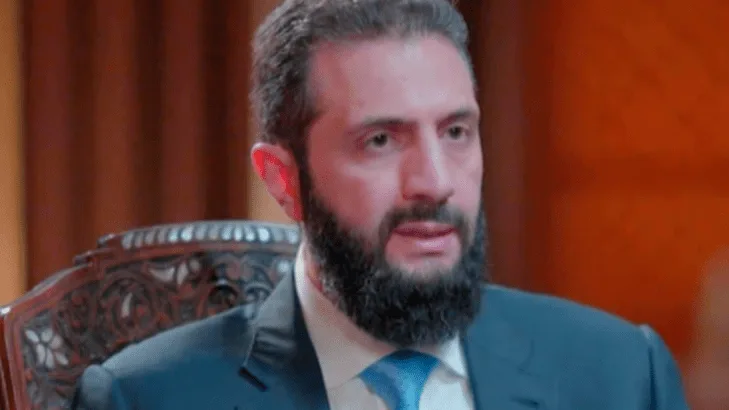
Guterres met Syrian President Ahmed al-Sharaa and Foreign Minister Asaad al-Shaibani, who welcomed him at Damascus International Airport. Al-Sharaa assumed power after the ousting of longtime leader Bashar al-Assad in 2024 and was previously a commander in an Islamist alliance that led the opposition. He was under UN Security Council sanctions until November 2025 [1, 2, 4, 5, 6, 7, 8, 9, 10].
During his visit, Guterres toured the Sednaya prison, notorious for mass torture and killings under the Assad regime [11]. He also inspected the UN Disengagement Observer Force (UNDOF) in the Syrian Golan Heights, where the UN monitors the ceasefire between Syria and Israel [2, 3, 4, 5, 7].
The visit marks a shift from indirect UN engagement via special envoys to direct talks with Syrian state leadership after years of conflict and sanctions [3, 5, 7]. Guterres emphasized Syria’s opportunity to recover and build a more stable, inclusive, and prosperous future. UN spokesperson Stephane Dujarric said Guterres plans to highlight that Syria can lay new foundations beyond conflict [1, 2, 12, 9, 10].
Guterres called on the international community to support Syria’s recovery after nearly 14 years of civil war and the 2024 regime change. "The UN stands with Syria at this pivotal moment and I appeal to the international community to spare no effort to support the people of Syria as well," he said [12, 9, 10].
The visit occurred amid recent security incidents, including a bombing near a hotel in Damascus where French President Emmanuel Macron had stayed weeks earlier. Syrian authorities have arrested suspects linked to ISIL in connection with the attack [1, 2].
Guterres’s meetings with al-Sharaa covered humanitarian cooperation, reconstruction, support for early recovery, and respect for Syria's sovereignty and territorial integrity [10]. The three-day visit ran from July 25 to around July 28, concluding with assessments of Syria’s political and security situation.