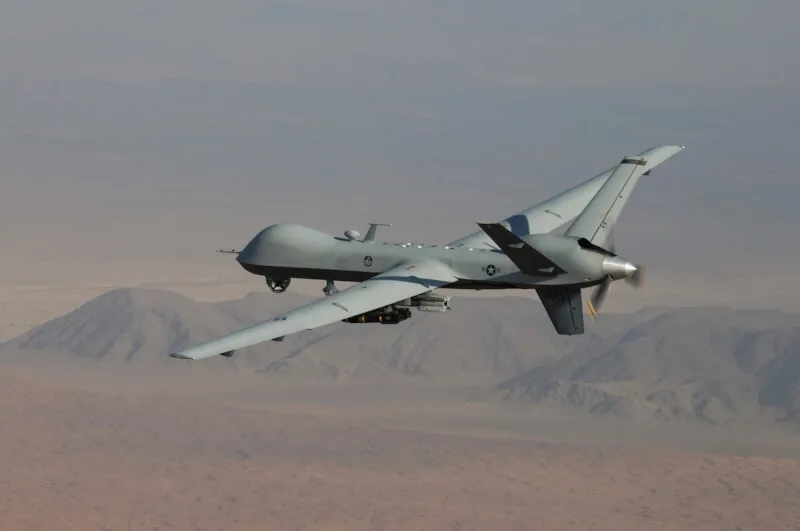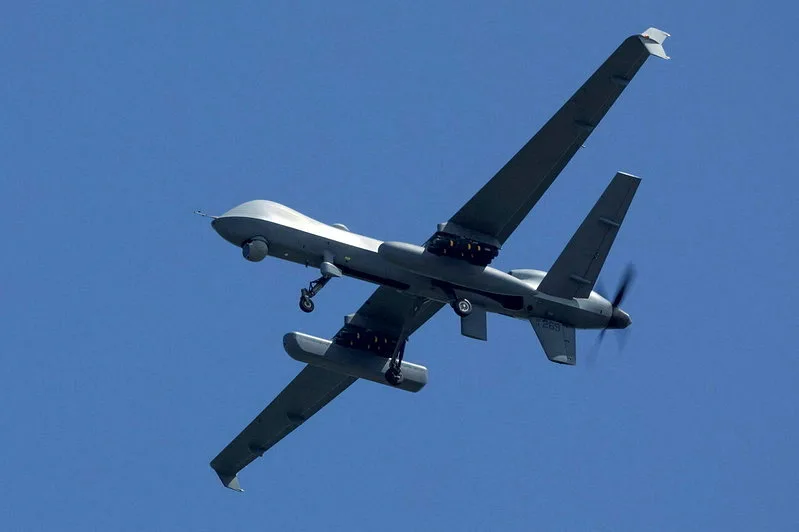
The US military has lost at least 45 MQ-9 Reaper drones during the war with Iran, amounting to roughly 25% of its total MQ-9 fleet, according to multiple US officials and reports published on August 13, 2026 [1, 2, 3, 4, 5]. Before the conflicts, the military operated approximately 185 MQ-9 Reaper drones, including 165 assigned to the Air Force and 20 to the Marine Corps [1, 3, 5].
The Air Force's Reaper drone count fell from about 165 to around 135 by May 2026, as disclosed by Air Force Lt. Gen. David Tabor during a Senate briefing [1, 3]. "I am concerned about these losses; the Air Force is looking at ways to rapidly replenish the Reaper fleet," Lt. Gen. Tabor said [1]. In contrast, Marine Corps Lt. Col. Joshua Benson confirmed that the Marine Corps’ 20 Reaper drones, mainly deployed in the Asia-Pacific region, have not suffered any losses so far [1].
MQ-9 Reaper drones, which cost between $30 million and $50 million each depending on configuration, have been heavily used around the strategic Strait of Hormuz [1, 2, 3, 4, 5]. Their slow speeds and low-altitude flight profiles increase vulnerability. Some drone losses were due to crashes following lost communications with operators, though the exact breakdown between shoot-downs and crashes remains unknown [1, 2, 4, 5].
The financial impact of the lost and damaged drones likely exceeds $1.3 billion USD (approximately 416 billion New Taiwan dollars) [1, 2, 3, 5]. The US military is exploring options for rapid fleet replenishment and plans to supplement the MQ-9s with lower-cost swarm-enabled armed surveillance drones [1].
On August 13, US Central Command announced plans to form the "Hawk Strike Task Force," a multinational drone strike unit in the Middle East. CENTCOM Commander Gen. Michael Kurilla stated the task force "will expand on the success of the Scorpion strike force using suicide drones in multi-domain operations" [5].