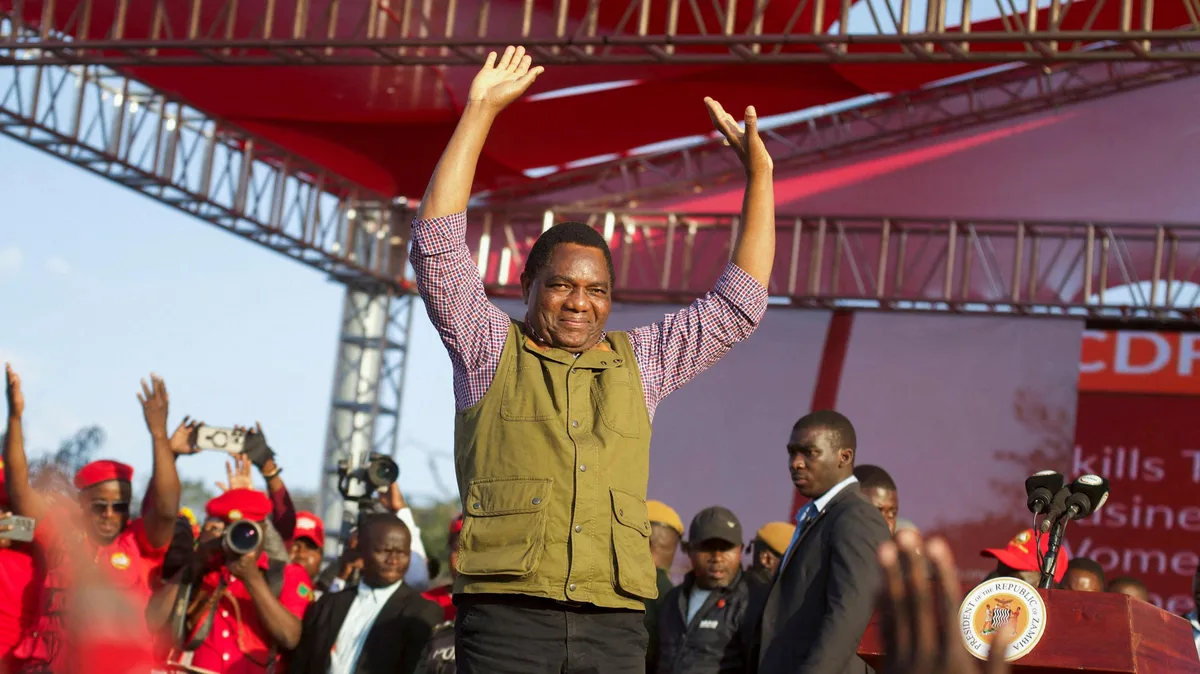
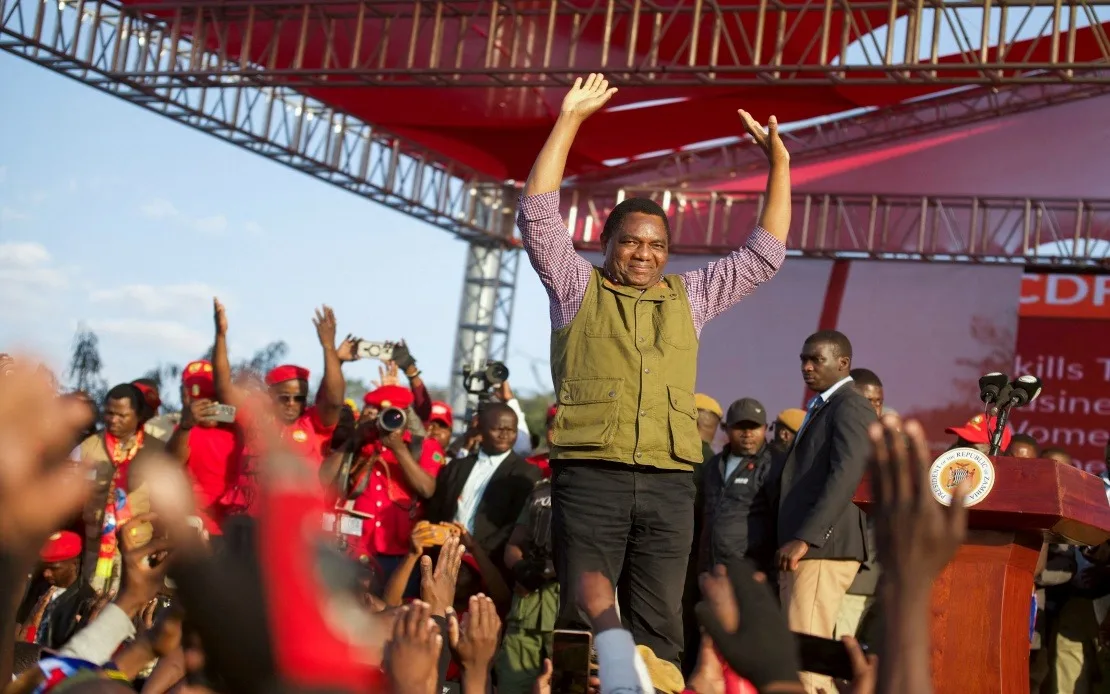
Zambian President Hakainde Hichilema won re-election on August 13, 2026, securing approximately 60% of the vote to win a second five-year term [1, 2, 3]. He received between 2.9 million and 2.97 million votes, with a final tally reported as 2,965,326 votes [2, 3]. His main challenger, Brian Mundubile, gathered roughly 1.8 to 1.86 million votes, about 38% of the total [1, 2, 3].
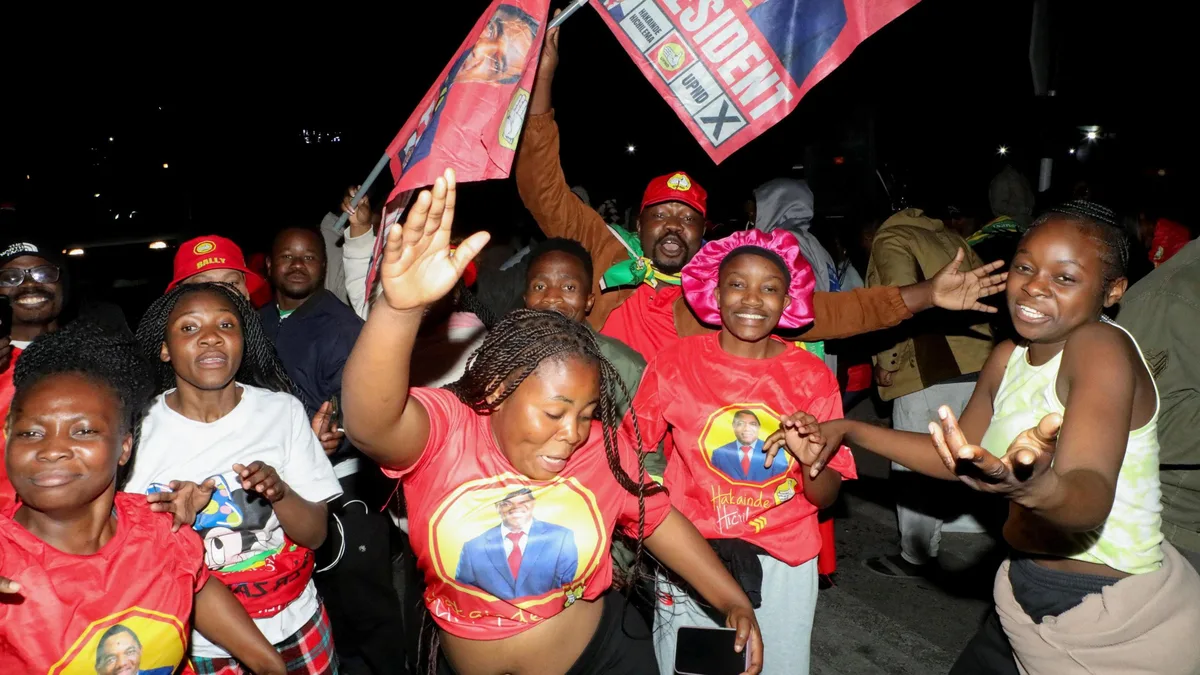
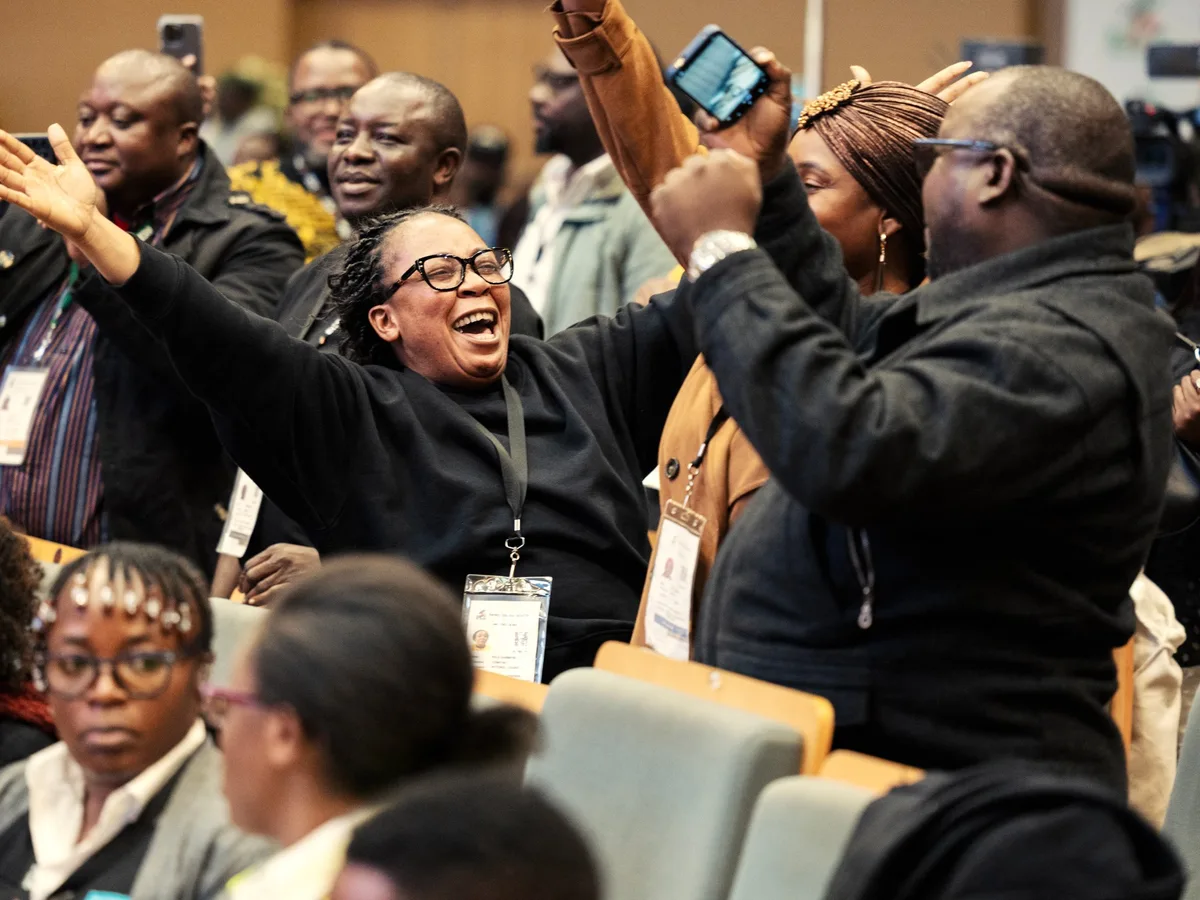
Following the announcement of the results on August 18, supporters of Hichilema’s United Party for National Development (UPND) celebrated in Lusaka [1, 2]. Hichilema thanked voters, saying, "Thank you, Zambia. We are truly humbled by the trust you have placed in our hands to hold our nation’s highest office and be your servant once more" [2]. Collins Maoma, UPND national chairperson, added that "The people of Zambia have demonstrated once again their confidence and belief in your leadership" [2].
However, Mundubile and his alliance raised concerns about voting irregularities, discrepancies in vote counting, and alleged military involvement at polling stations and tallying centers [1, 3]. The opposition described a raid the day after the election as an attack. On August 14, authorities conducted raids on opposition figures’ homes, including Mundubile’s, alleging an insurrection plot [1]. Mundubile condemned the raids, stating, "So they came in to kill us" [1]. Hichilema's election agent disputed the opposition’s claims about the raid and military interference [1].
The head of the Electoral Commission, Mwanagala Zaloumis, said the remaining uncounted votes from a few constituencies would not materially affect the outcome [2]. Hichilema vowed to work for all citizens, including those who supported his opponents, and to continue economic reforms focused on attracting investment in Zambia’s copper sector [1, 3].
The Electoral Commission officially declared Hichilema president-elect on August 18 after finalizing the vote counts [1, 2, 3].

![Supporters of Zambia’s President Hakainde Hichilema take to the streets of Lusaka to celebrate his re-election for a second term after defeating opposition challenger Brian Mundubile [Jean Mandela/Reuters]](/uploads/2026/08/18/8ad2e05f57844cbff9d164ec.webp)
![Supporters of Zambian President Hakainde Hichilema celebrate his re-election in Lusaka on August 18, 2026, after the Electoral Commission of Zambia announced the results [Gianluigi Guercia/AFP]](/uploads/2026/08/18/eccda9874abe1fb6ac9f38fc.webp)