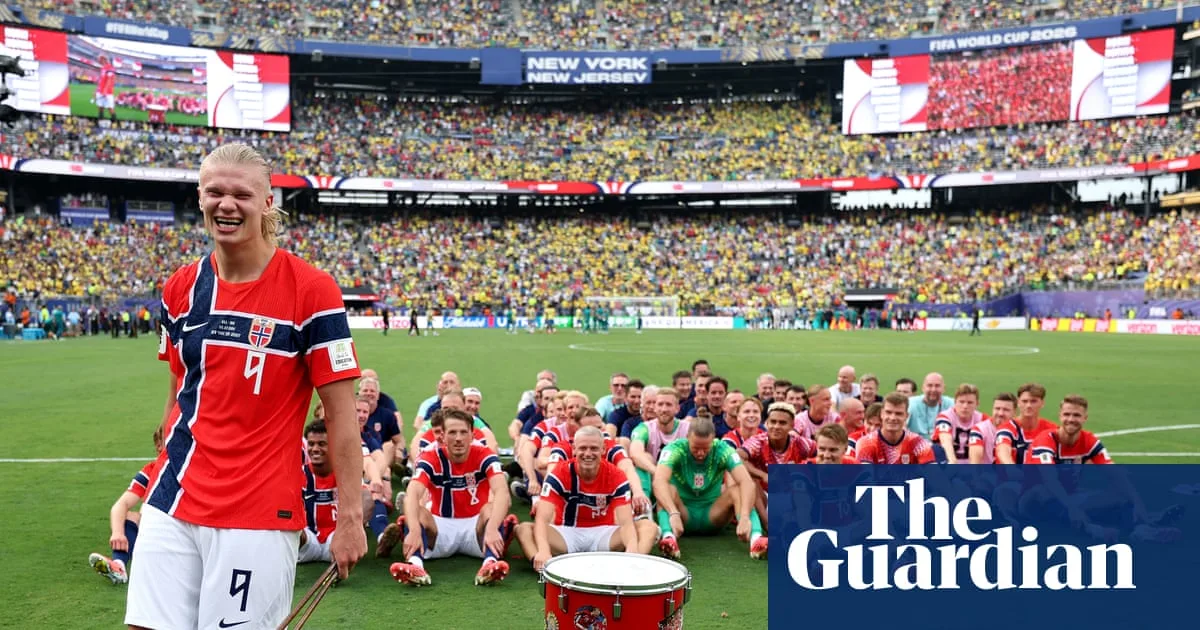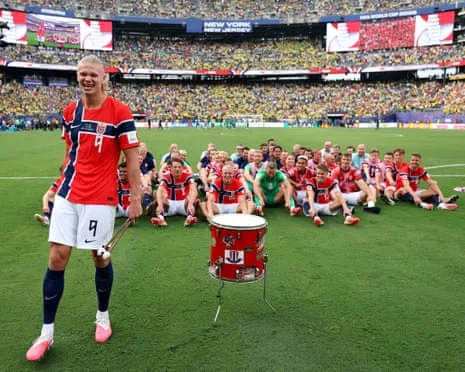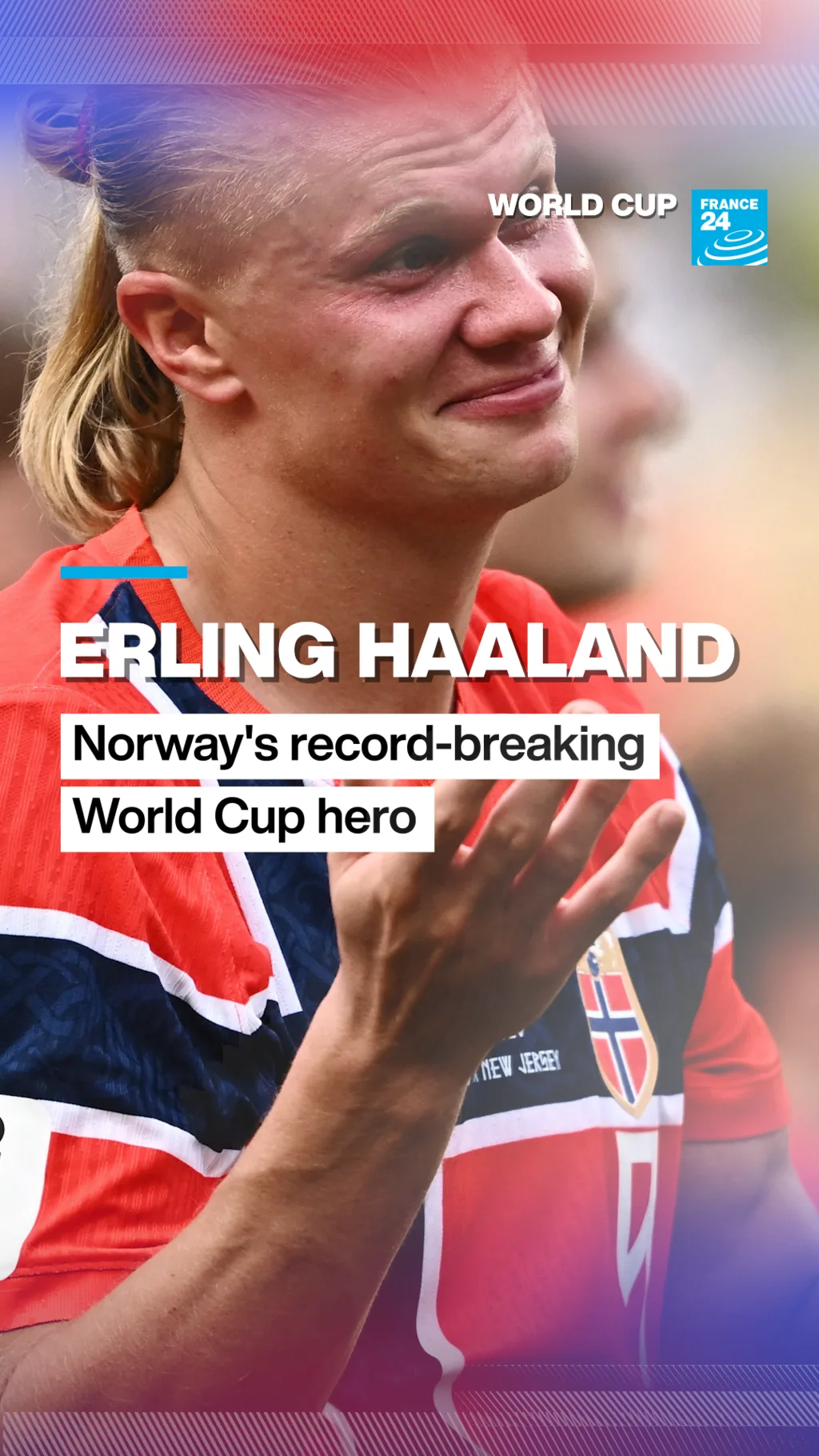
Erling Haaland emerged as the most viral player of the 2026 World Cup, with massive increases in online searches and social media activity during the tournament [1]. Haaland entered the event with a strong fan base in Norway and Manchester City. He also enjoys support from Leeds United followers due to his birthplace and upbringing there [1].
During the first week of July 2026, TikTok searches for "Haaland" in the UK surged by over 300%, making him the most searched World Cup player on the platform at that time [1]. Searches for "Haaland best moments" rose even more dramatically, increasing by 1,300% week on week. Meanwhile, over 14,000 combined social media posts used the hashtags #Haaland and #ErlingHaaland, representing a 500% month-on-month rise overall [1].
Despite his viral popularity, Haaland still trails global icons Lionel Messi and Cristiano Ronaldo in total social media posts, with #Messi used in 25 million posts and #Ronaldo appearing in 22.3 million, compared to fewer for Haaland [1].
Haaland actively engages with his online following by posting memes and humorous photos on Instagram, Snapchat, and TikTok. His Snapchat account alone has amassed 4.7 million subscribers [1].
Among the viral content circulating about Haaland was a widely shared video showing him flinching at his own reflection in a restaurant. That clip turned out to be an AI-generated deepfake, originally posted in mid-June 2026 by Chinese comedian Jin Long on TikTok [2].
In China, Haaland has become a meme sensation known as "Habao," fronting commercials and attempting to learn Mandarin. He has garnered millions of followers on Chinese platforms Douyin and Weibo [2]. This AI-created content and deepfake meme culture demonstrate a new form of sports stardom where fan creativity and social media define an athlete's online persona [2].
The viral surge during early July extends a steady trend of online interest in Haaland, who maintained his status as the most searched World Cup player across UK TikTok that week [1].