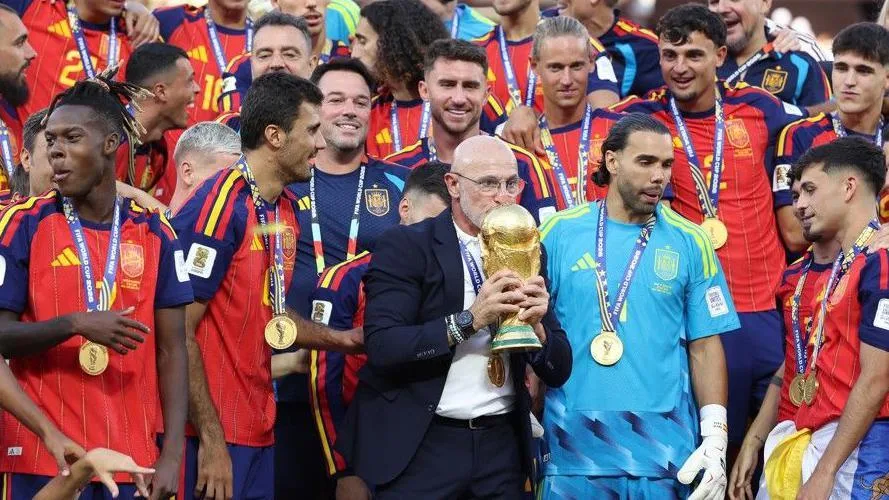
Spain defeated Argentina 1-0 after extra time in the 2026 FIFA World Cup final at MetLife Stadium in New Jersey on July 19, 2026 [1, 2, 3, 4, 5, 6]. Ferran Torres scored the winning goal in the 106th minute of extra time to secure Spain’s victory [2, 7, 4, 8, 6]. Argentina’s Enzo Fernández was sent off in the 93rd minute after receiving a second yellow card for a foul on Pau Cubarsí, marking the first red card issued in a World Cup final since 2010 [1, 2, 3, 4, 8, 6].
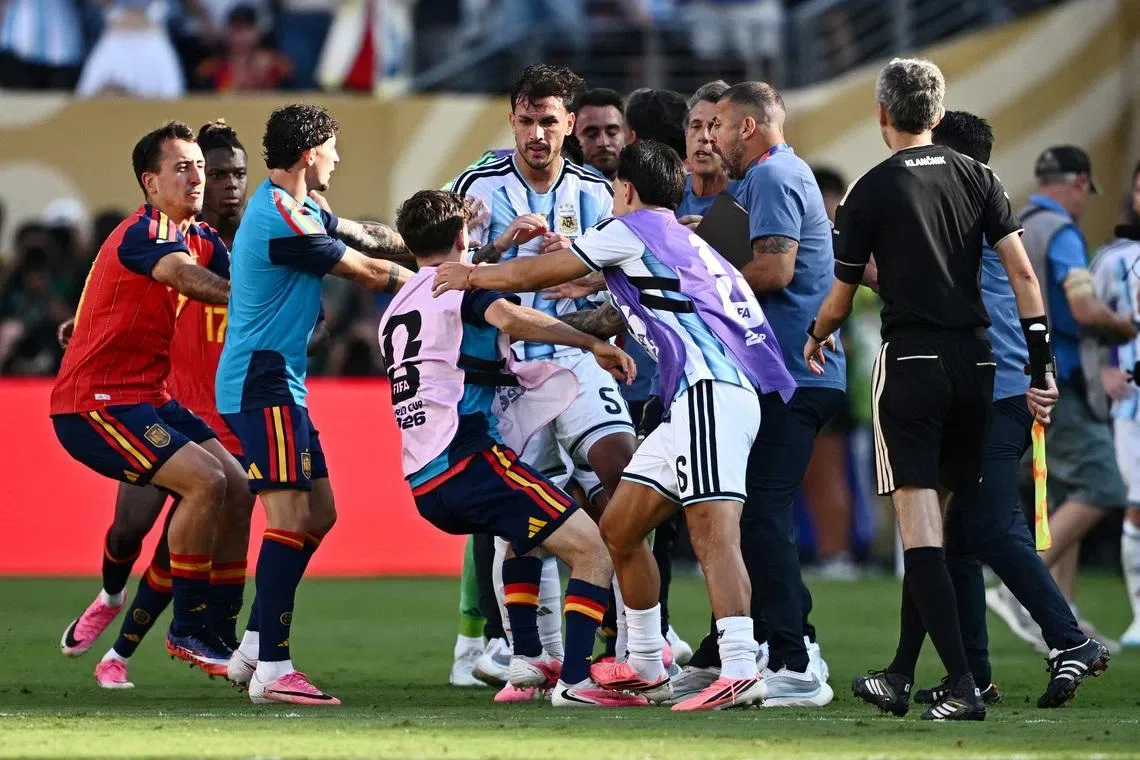
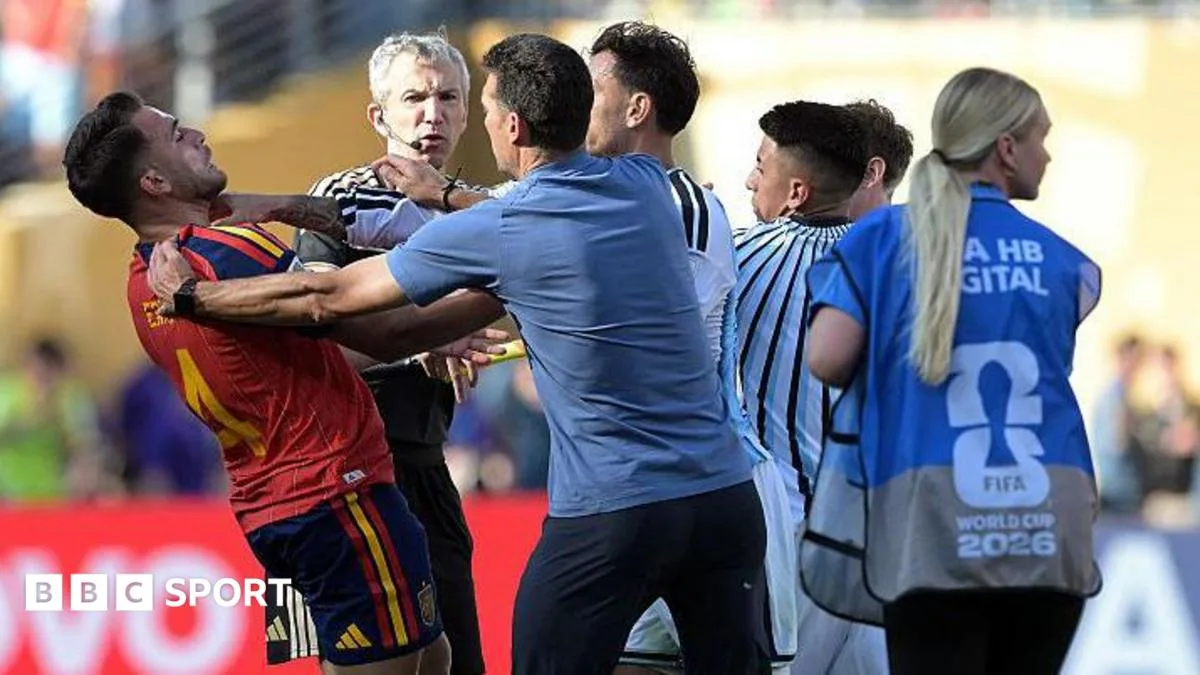
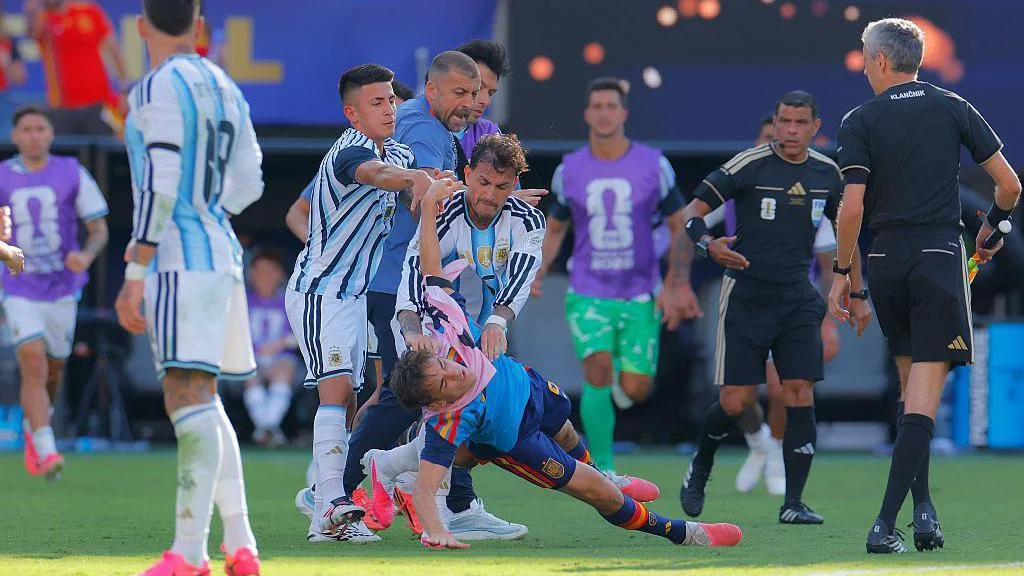
At the final whistle, a brawl erupted involving several Argentina players, coaches, and members of the Spain team[s1-s7,s9,s10]. Argentina players Leandro Paredes, Nahuel Molina, Thiago Almada, and assistant coach Roberto Ayala were involved in the physical altercations. Ayala was seen allegedly striking Spain’s Dani Olmo[s1,s4-s7,s9,s10]. Molina appeared to strike Spain captain Rodri in the stomach, igniting much of the trouble [1, 3, 9, 10, 6]. Paredes was initially reported to have been shown a red card by referee Slavko Vincic for pushing Eric Garcia but FIFA later confirmed no formal disciplinary action was recorded at that time [1, 9].
After the fight broke out, players from both teams had to be physically separated, with Argentina coach Lionel Scaloni attempting to calm his players [2, 7, 10, 6]. Former player Alan Shearer commented on the incident saying, "Paredes threw two or three haymakers into someone's face. He went for them. There is no place or space for that." [1].
On July 20, FIFA announced it had appointed a Disciplinary and Ethics Prosecutor to investigate potential breaches of the FIFA Disciplinary Code related to the post-match incidents [2, 7, 3, 4, 8, 9, 10, 6]. FIFA’s statement noted the probe follows an assessment of relevant match reports in line with article 36 of the Disciplinary Code [4]. The players and staff involved in the brawl could face bans of up to two years under FIFA rules [5].
FIFA is also investigating Argentina’s display of a political banner during their semifinal win over England stating "Las Malvinas son Argentinas," which violates FIFA prohibitions on political statements at matches [1, 3, 9, 5].
The disciplinary process has no set timeline for conclusion, and further details or sanctions are expected after FIFA completes its review [2, 7, 3, 4, 8, 9, 10, 6].