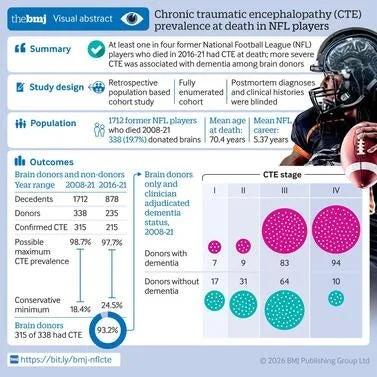
Among 878 former NFL players who died between 2016 and 2021, 235 donated their brains for research, and 215 were diagnosed postmortem with chronic traumatic encephalopathy (CTE), a degenerative brain disease linked to repeated head impacts, the study reported on August 25, 2026 [1, 2, 3]. Researchers estimated CTE’s minimum prevalence at 24.5% among all deceased players, with a possible maximum of 97.7% [1, 3].
Dementia was common in players with CTE, increasing sharply at more severe stages; dementia rates ranged from about 22.5% in early stages to 90.4% among those with Stage IV CTE [1, 3]. Daniel Daneshvar, a lead researcher, stated, "We and others have shown that in NFL players, specifically, there is about a four times higher rate of death from neurodegenerative disease than the general population" [1].
Daneshvar noted that most head impacts contributing to CTE occurred before NFL careers, at collegiate, high school, and youth levels. "The bulk of the head impacts that these former NFL players experienced didn’t occur at the NFL level. They occurred at the collegiate level ... and at the high school level and in many cases the youth level," he said, adding these cumulative hits increased risk [2].
The NFL has limited contact practices since the 2011 Collective Bargaining Agreement and agreed to a $1 billion settlement in 2016 related to concussion lawsuits [1, 2]. An NFL spokesperson said, "The NFL continuously strives to make the game of football safer, including by implementing strategies to reduce concussions and head impacts. The NFL remains committed to ensuring that the NFL community has access to a robust - and expanding - set of resources to enhance their physical and mental well being" [1].
The NFL Players Association called the study "a sobering reminder that football carries real risks, and those risks can have lasting consequences for players and their families," urging action across the football ecosystem [3]. Some notable former players who died by suicide and had CTE found postmortem include Junior Seau, Dave Duerson, and Aaron Hernandez [2].
Daneshvar emphasized the need for treatments, stating, "These data, alongside my experience treating NFL players with dementia in clinic, indicate that we need to dedicate resources towards developing a cure" [3].
The study was published in The BMJ on August 25, 2026 [3].