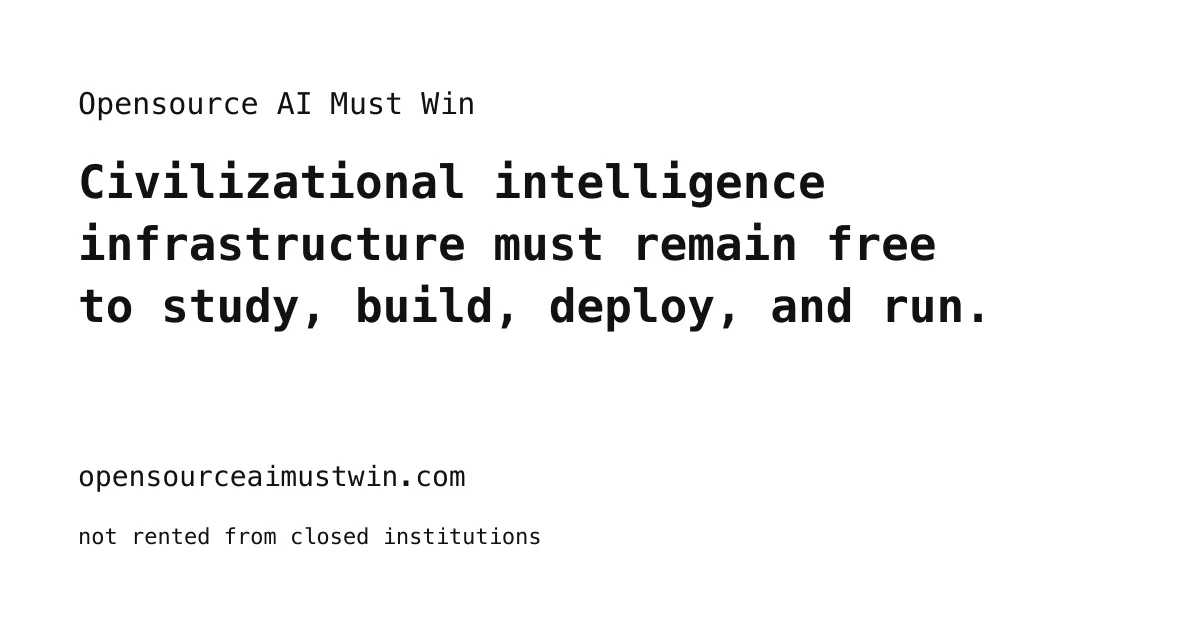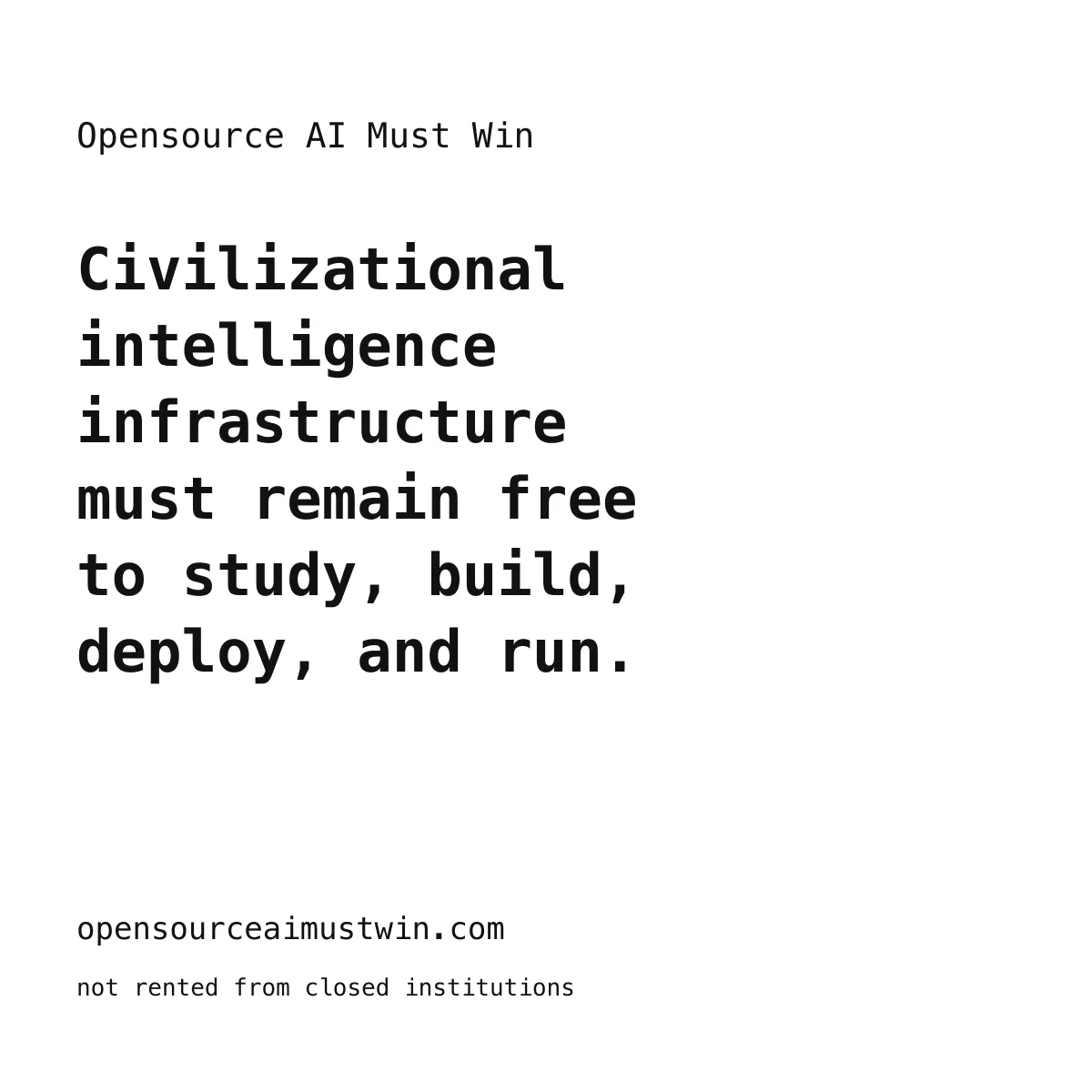
If intelligence systems become accessible only via a few closed institutions, the public loses both software freedom and operational freedom, technology experts say [1, 2]. Operational freedom means being able to study, build, repair, deploy, audit, adapt, teach, preserve, and run AI systems without needing permission from gatekeepers [1, 2].
AI is now a crucial civilizational infrastructure that supports work, education, science, software development, creativity, public services, and national capacity [1, 2]. For these broad uses, access to AI must not rely on closed APIs, remote platforms, shifting terms of service, opaque moderation, model availability, or pricing controlled by a small number of companies [1, 2].
Experts stress open source AI must remain usable, understandable, reproducible, locally deployable, economically viable, and governed by communities—even if current AI labs or providers disappear or change [1, 2]. Otherwise, the control of AI models by a few frontier labs and platform companies risks transforming AI infrastructure into a costly subscription economy for cognition [1, 2].
They highlight that America should not fall behind in maintaining the freedom to run, inspect, modify, benchmark, teach, and preserve AI infrastructure [1, 2]. The practical way to secure this is by building American AI capacity aligned with global open standards [1, 2].