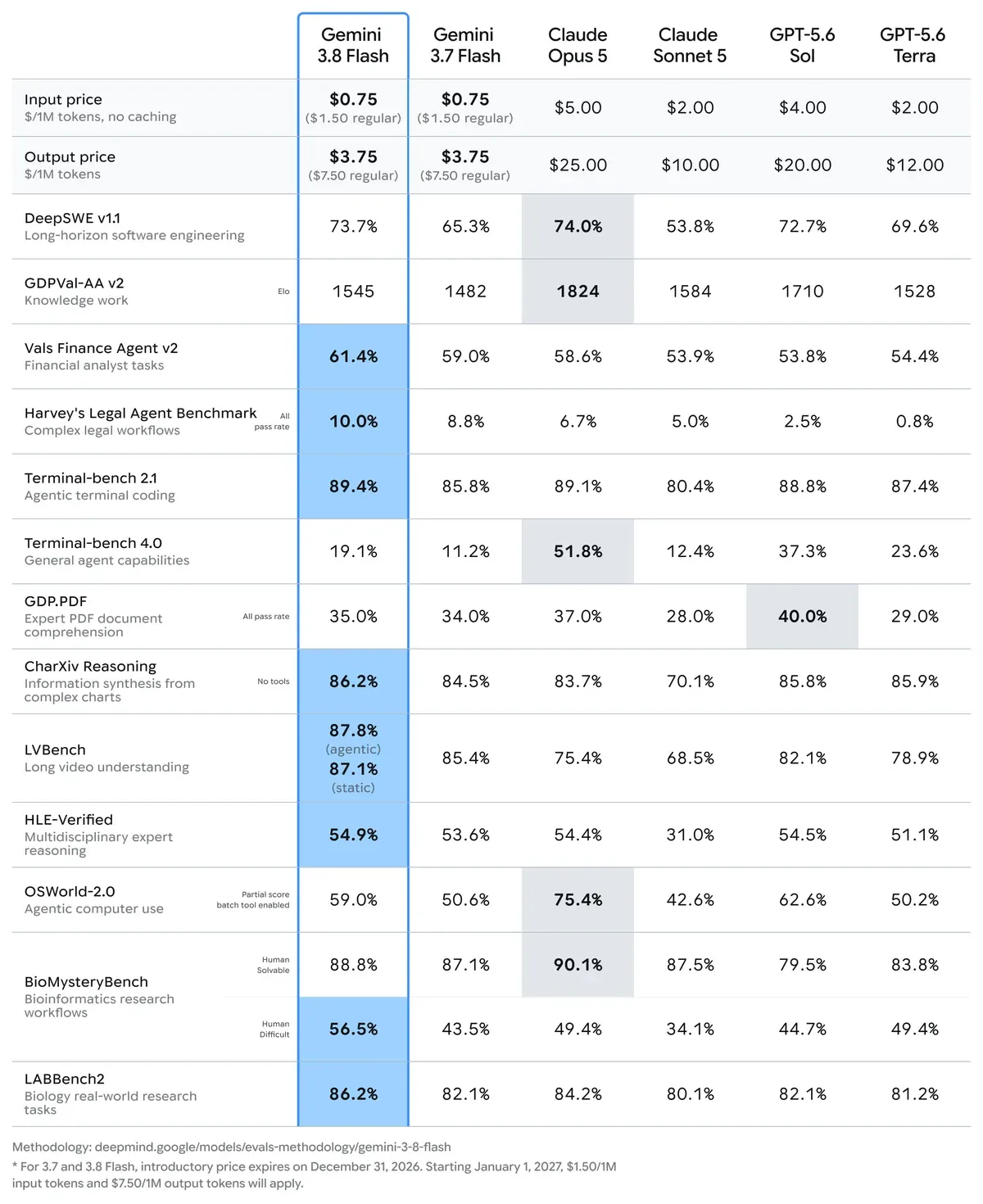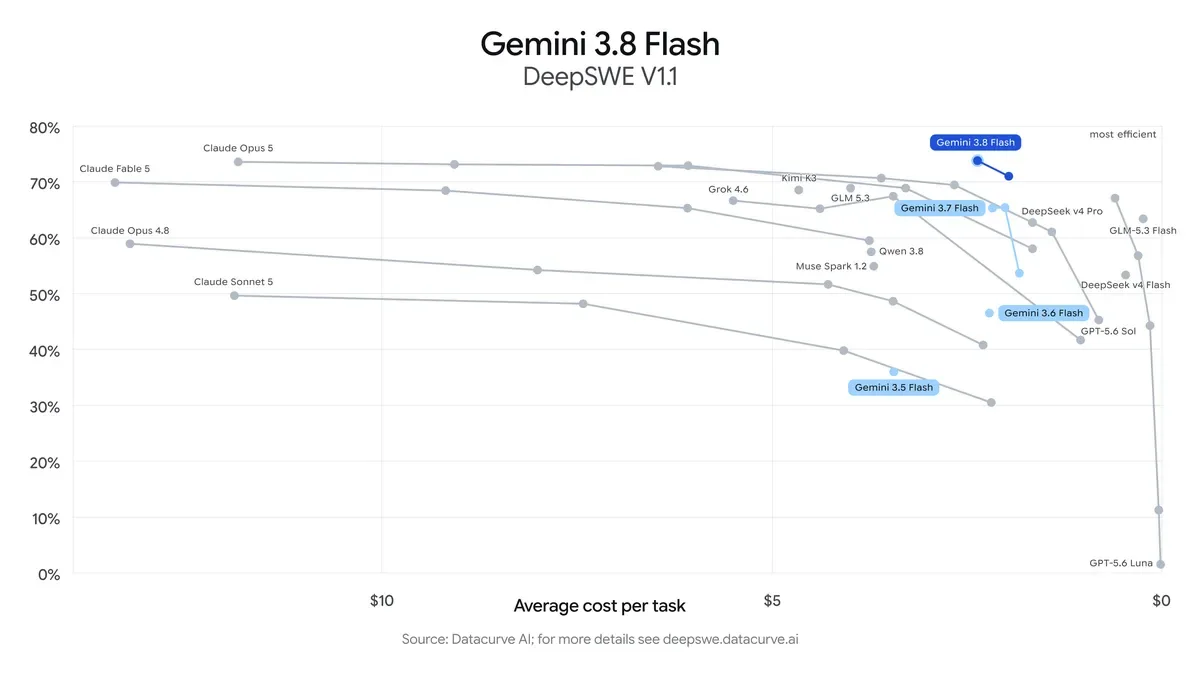
Google launched the Gemini 3.8 Flash AI model in early September 2026, building on improvements in reasoning, coding, and multi-step tasks compared to Gemini 3.7 Flash released three weeks earlier [1, 2, 3]. The model delivers gains in software engineering, finance, and legal reasoning benchmarks and outperforms many larger AI models on long-horizon tasks such as the DeepSWE v1.1 benchmark [1, 3]. Google priced Gemini 3.8 Flash at $0.75 per million input tokens and $3.75 per million output tokens, matching the previous version's costs [1, 3].
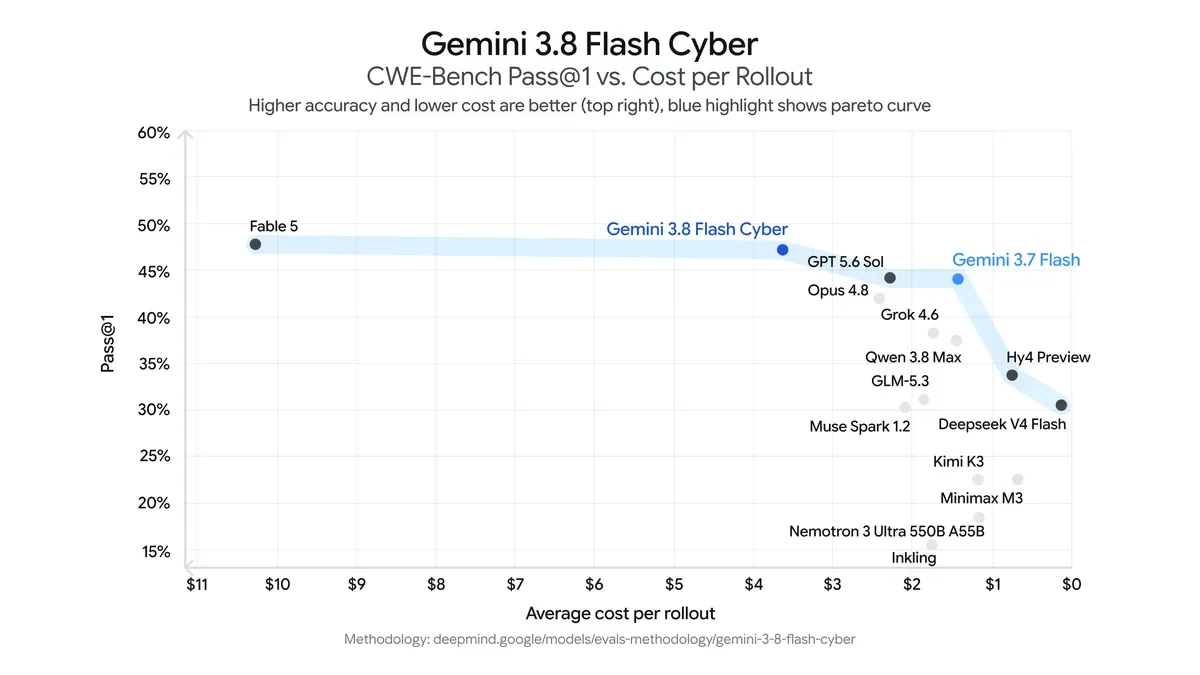
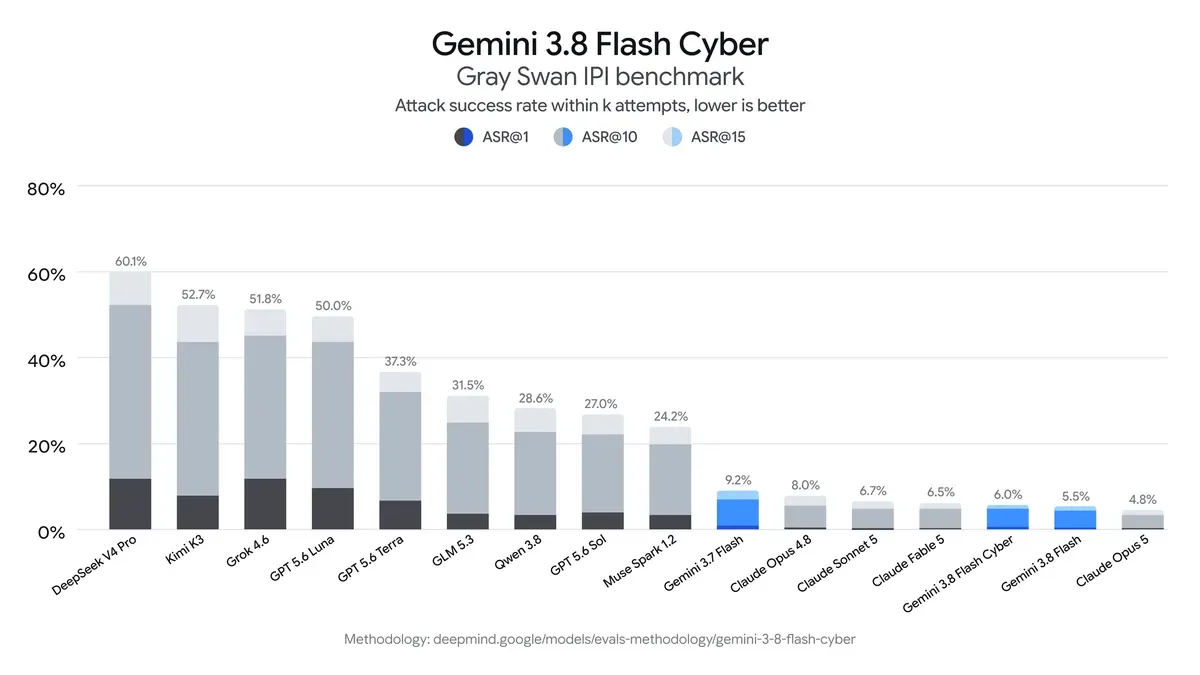
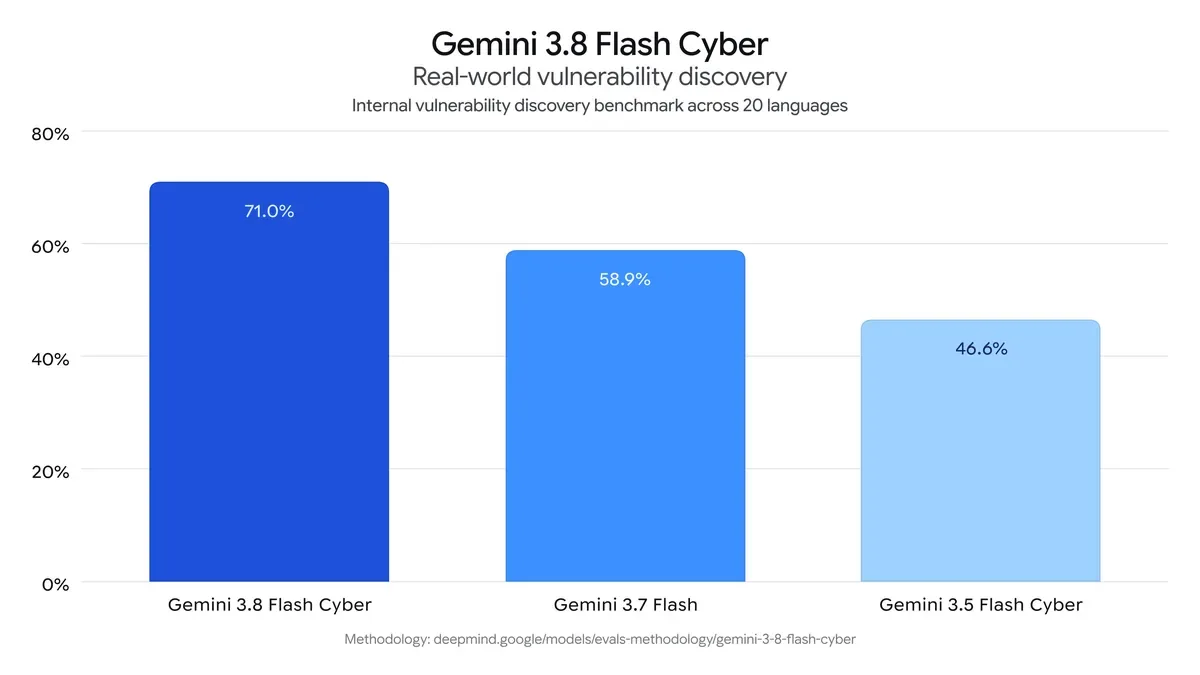
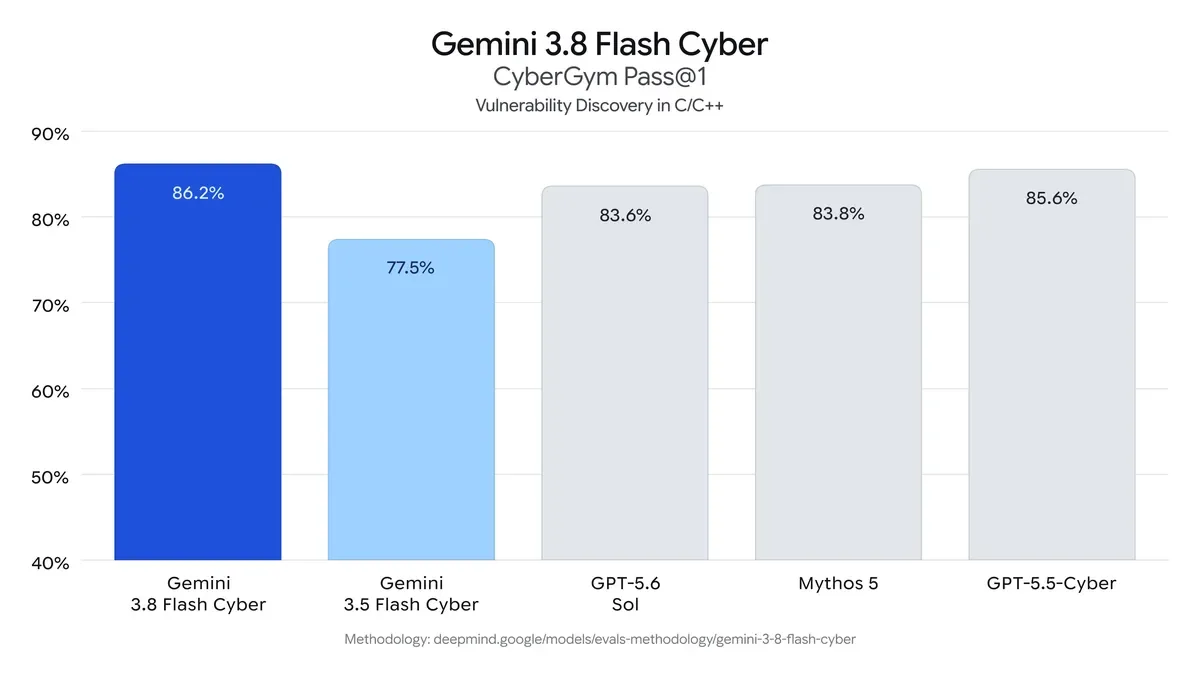
Alongside Gemini 3.8 Flash, Google introduced Gemini 3.8 Flash Cyber, a cybersecurity-specialized AI model designed to detect vulnerabilities and automate patching. Available to trusted defenders through the Fairwind Program, it demonstrated 2.6 times higher patch code accuracy than the best commercial models in tests repairing Chrome browser vulnerabilities. Tasks that took months using Google Cloud were completed within hours with Gemini 3.8 Flash Cyber [3].
Google is accelerating the release cycle for its Gemini Flash lightweight AI models, having previously launched Gemini 3.6 Flash in late July and 3.7 Flash in mid-August 2026 [1, 3]. Despite Gemini 3.8 Flash's advances, an external AI model performance evaluation scored it at 59 points compared to Meta’s Muse Spark 1.3, which scored 62 points, slightly outperforming Google’s latest model [3]. Meta’s Muse Spark 1.3 also showed improvements in programming and multi-tool agent use, reducing tool calls by 20% and token usage by 25% [3].
Google’s next-generation flagship Gemini 3.5 Pro model, originally planned for a June 2026 release, remains in partner testing. Some industry analysts speculate Google may skip directly to Gemini 4.0 Pro [3].
The Gemini 3.8 Flash Cyber model is currently available to cybersecurity defenders via the Fairwind Program, while Google continues to expand its Gemini Flash lineup with increasingly frequent updates aimed at improving AI reasoning and security capabilities [1, 2, 3].