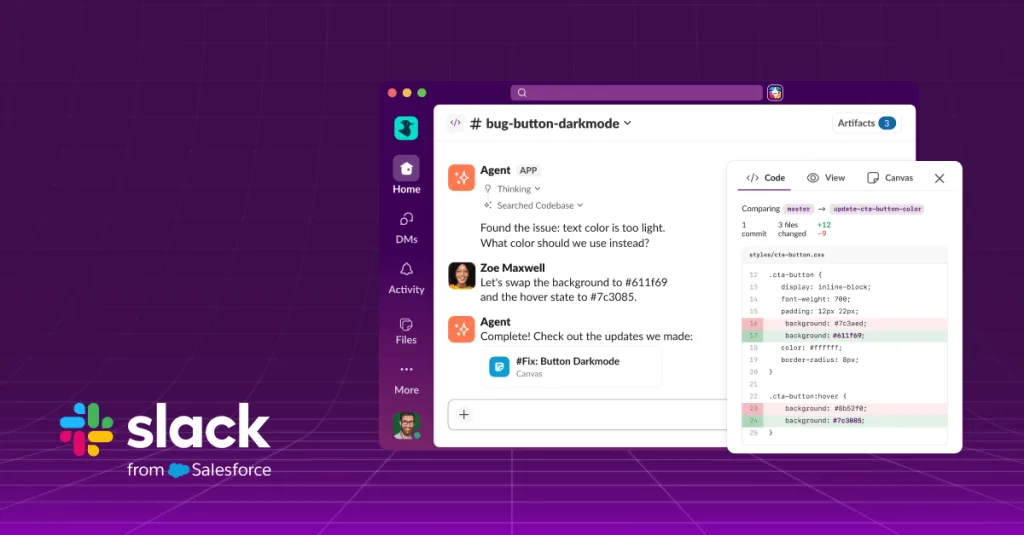
Slack launched Slack Code on August 20, introducing a new type of channel designed specifically for collaborative coding between AI agents and human teammates across Slack workspaces [1, 2].
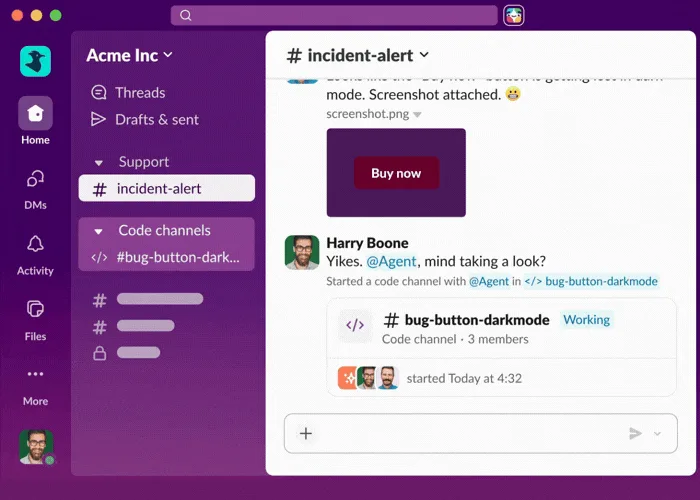
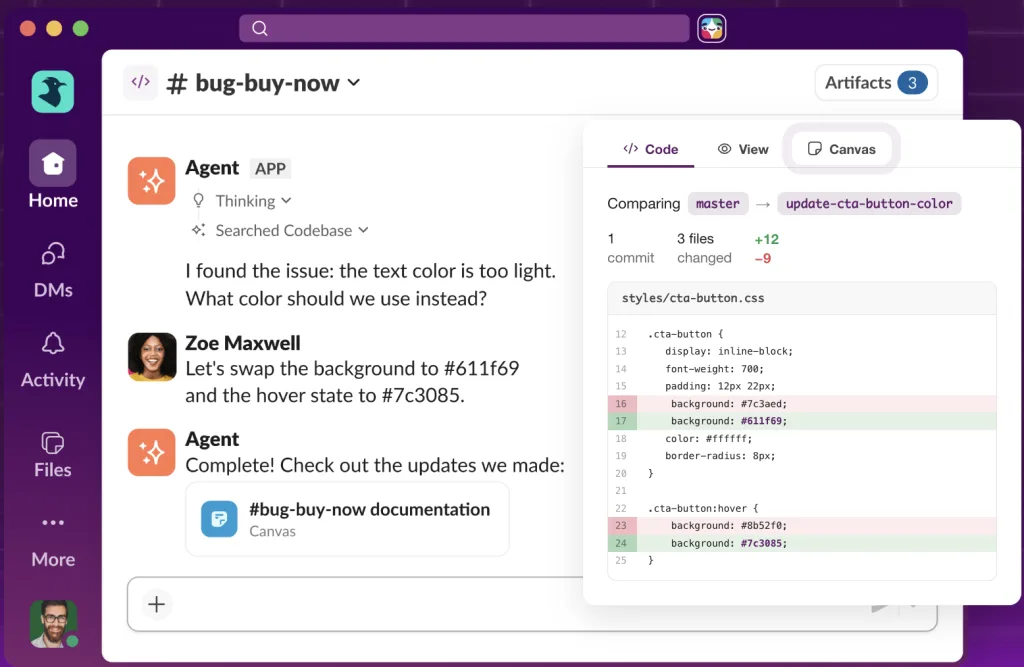
Slack Code channels automatically spin up when a supported AI coding agent—such as Anthropic's Claude or Cognition's Devin—is tagged to work on a coding task. The channel then provides a dedicated space to discuss code, review diffs, see live previews, and collaborate directly with the AI and other team members [3, 1, 2].
Humans cannot create Slack Code channels themselves; only AI agents can initiate them when they detect a relevant coding request [2]. The channels archive themselves automatically upon completion, keeping a searchable audit log of discussions and code changes [1, 2].
Slack Code supports integration with AI agents from founding partners, including Claude Code, Devin, Vercel Agent, and GitHub Copilot, with plans to add ChatGPT soon [1, 2]. The channels aim to create a multiplayer environment where developers, product managers, designers, and non-technical teammates can collaborate with AI agents on software projects within Slack [3, 2].
Slack noted that Slack Code is available immediately on all Slack plans, including free workspaces, at no additional cost [1, 2]. Katie Steigman, Slack’s VP of Product, said, “There’s a shift we need to make from sort of siloed, single player kind of AI work, like I’m working in my terminal... to bringing that into a multiplayer environment,” emphasizing the need for new channels tailored to agent collaboration rather than traditional threads or channels that become cluttered [2].
Slack described the feature as enabling teams to tag an agent and immediately have a transparent, collaborative space for tasks such as building new features, updating web pages, or fixing bugs. “Everyone has full visibility to the conversation, can audit code diffs, get live previews of the agent’s output, give feedback, and approve the work before it ships,” the company said [1].