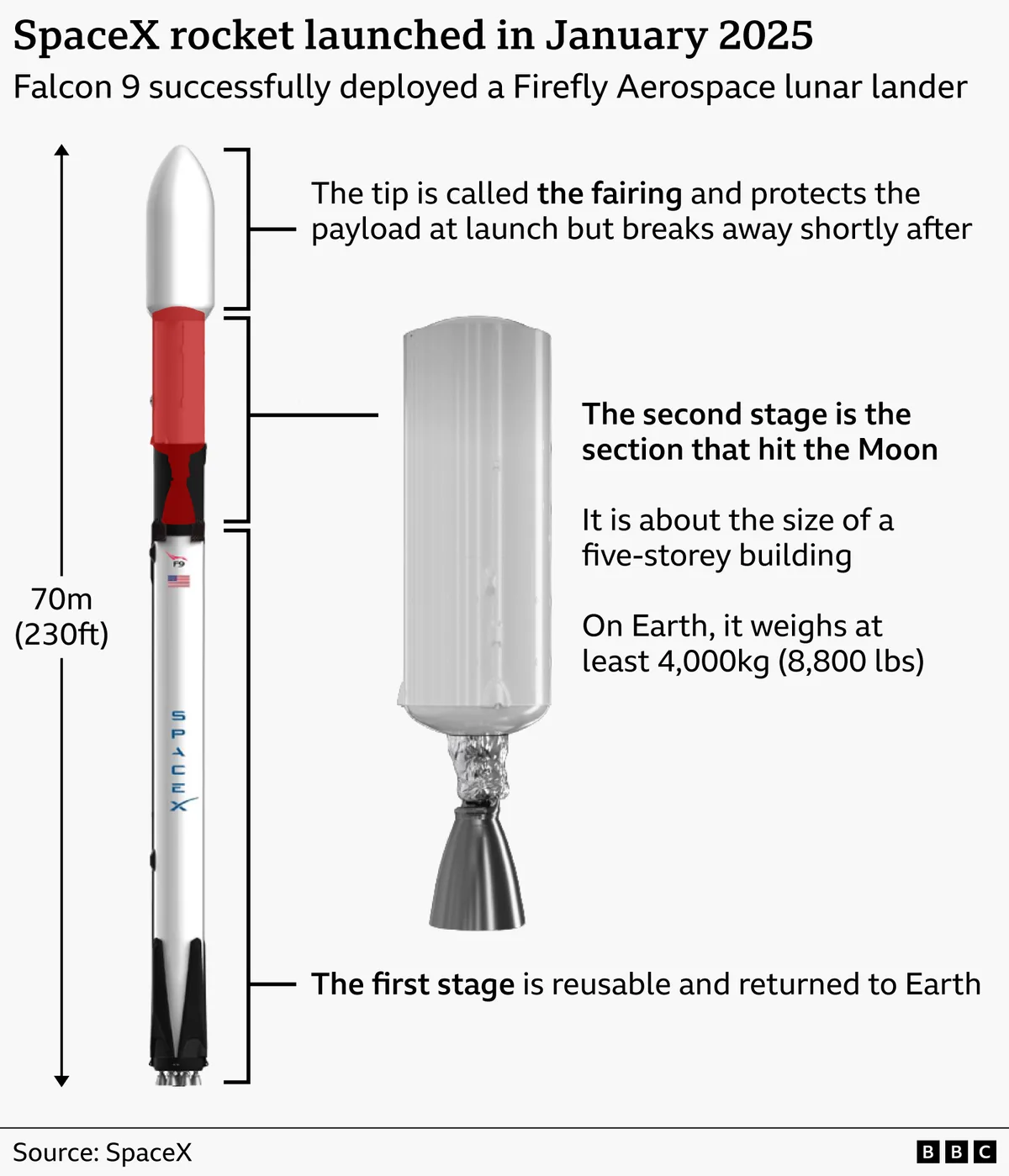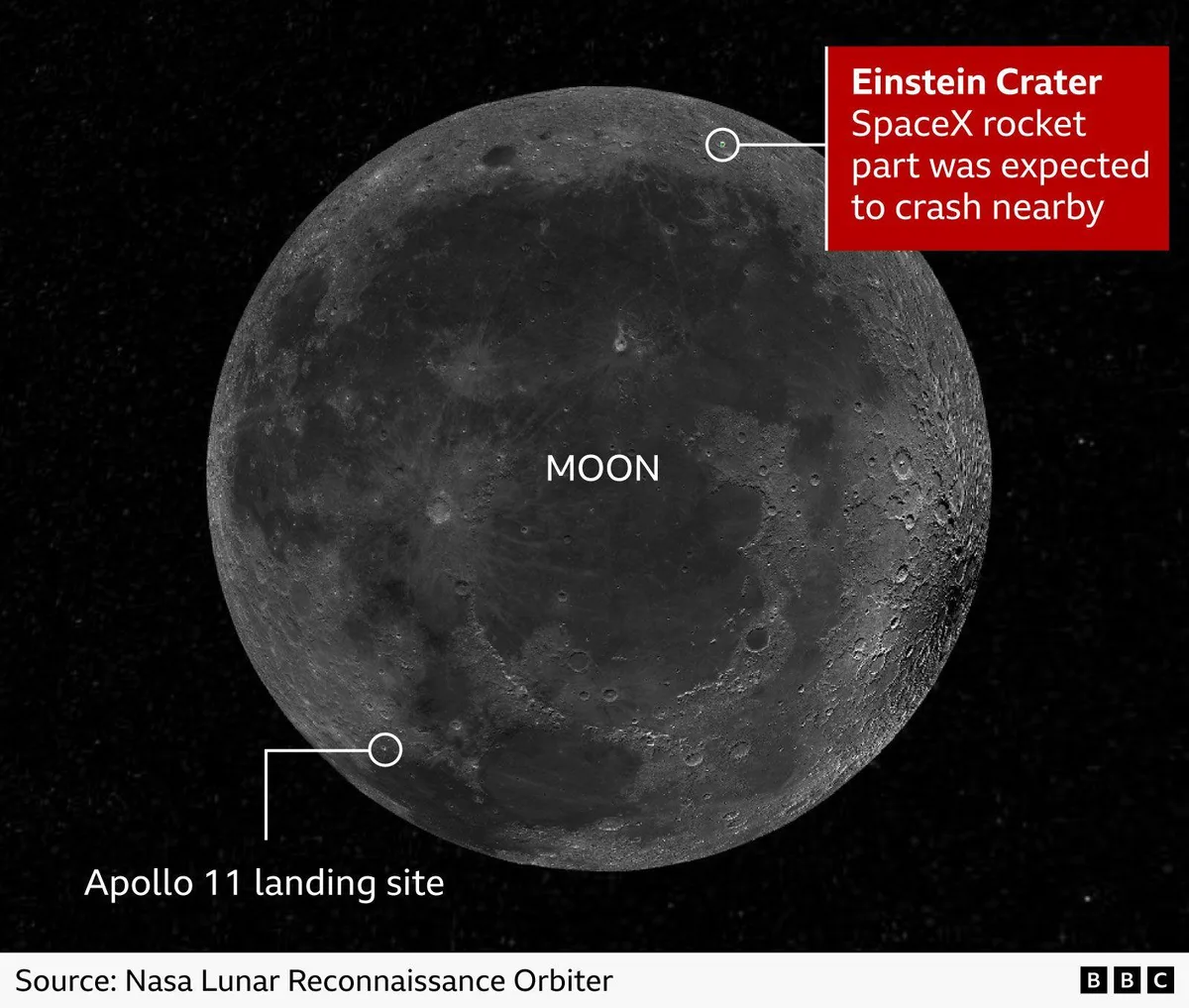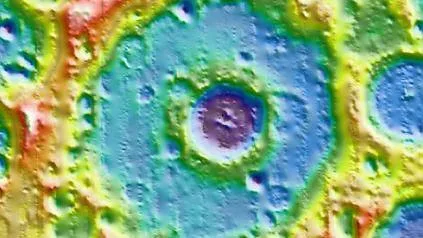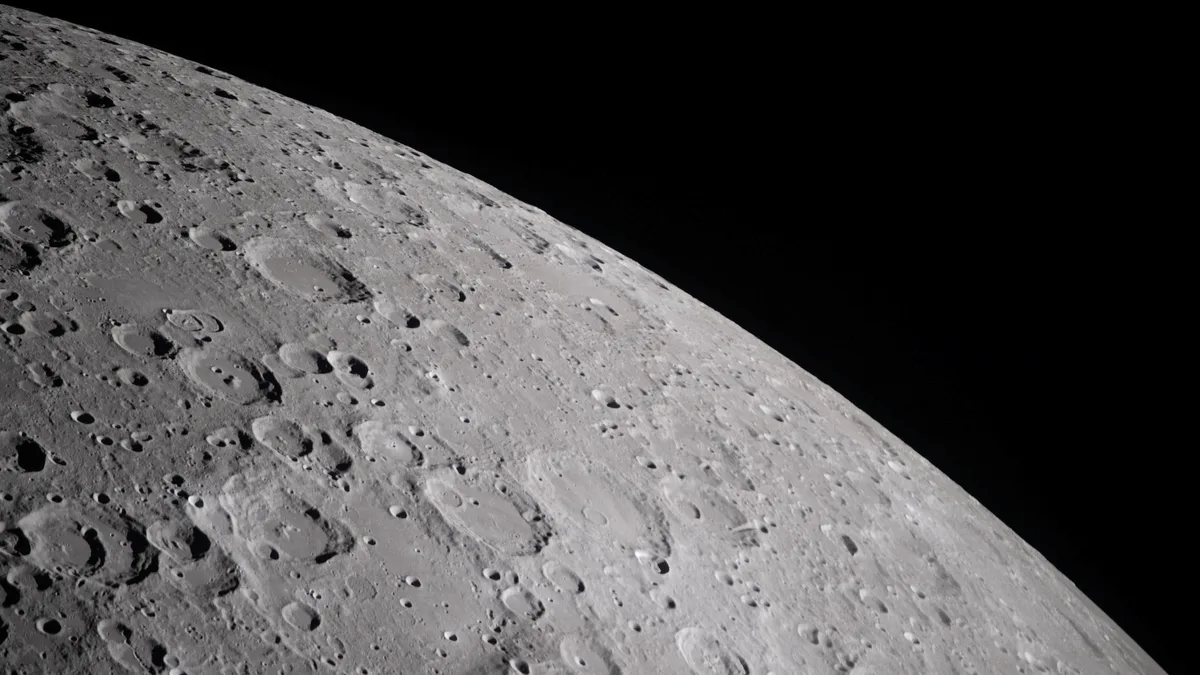
A stray upper stage from a SpaceX Falcon 9 rocket crashed into the Moon near the Einstein crater on August 5, 2026, at about 06:35 GMT (07:35 BST, 01:35 US Eastern Time) [1, 2, 3]. The upper stage hit the lunar surface at roughly 8,700 kilometers per hour (5,400 mph), creating a new crater [1, 2, 3]. The rocket stage is approximately the size of a five-storey building and weighs at least 4,000 kilograms [1, 2, 3].
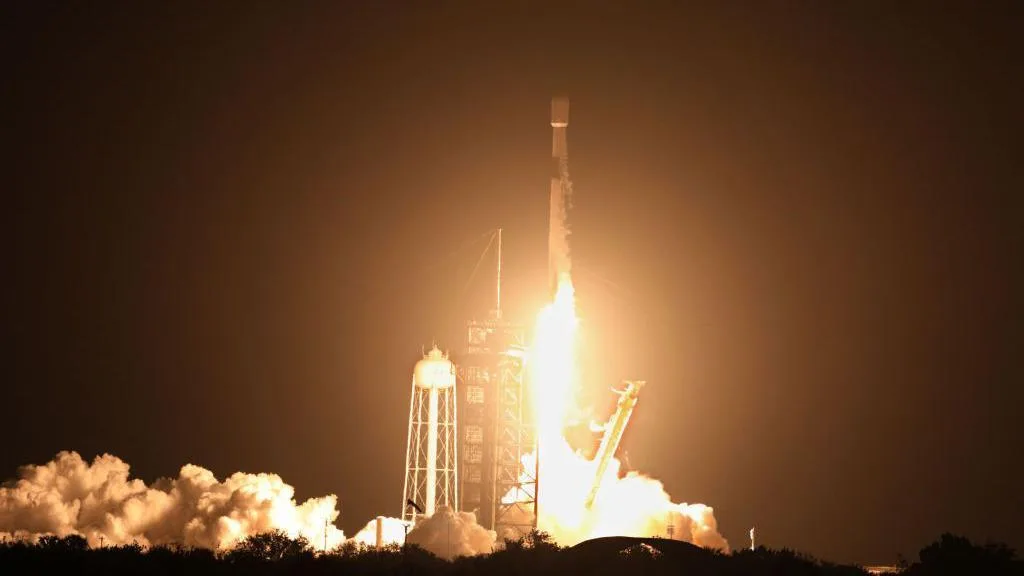
The Falcon 9 rocket had launched from Florida in January 2025 carrying two lunar landers, successfully sending them toward the Moon [1, 2, 3]. After separation, the empty upper stage remained in a long looping Earth-Moon orbit before gravitational forces and sunlight pressure nudged it onto a collision course over 18 months [1, 2, 3].
The impact produced a brief flash lasting only a fraction of a second, too faint to be observed even with high-end telescopes, making it unlikely that amateur astronomers saw it [1, 2, 3]. However, a dust plume extended up to 100 kilometers across and persisted for several minutes around the impact site [1, 2, 3].
No lunar orbiters were positioned to witness the impact live. South Korea's Danuri orbiter had the best chance to record it but, according to the Danuri team, “任何影像要等到研究人員完成分析後才會公開,” meaning any footage will be released only after analysis is complete [2].
NASA's Lunar Reconnaissance Orbiter will fly over the area in the days following the impact to photograph the new crater. It will compare these images with pre-impact shots to study the changes caused by the collision [2, 3]. Powerful observatories across the Americas also captured data during the event and are analyzing it now [1, 2, 3].
Scientists say the known size, speed, and location of the rocket stage impact provide a rare, quasi-controlled experiment to better understand how impact craters form and how surface ejecta spreads on the Moon [2, 3]. These insights are expected to help design safer lunar landers and bases by clarifying rock and dust ejecta travel distances and ground shaking intensity near impact sites [2, 3].
Artificial objects have hit the Moon many times since 1959, both intentionally and accidentally. The last confirmed accidental impact occurred in 2022, when a Chinese lunar mission rocket stage launched in 2014 struck the surface [3].
The upcoming arrival of NASA’s Lunar Reconnaissance Orbiter images of the crash site will provide the first detailed visual assessment of the crater formed by the Falcon 9 upper stage impact [2, 3].