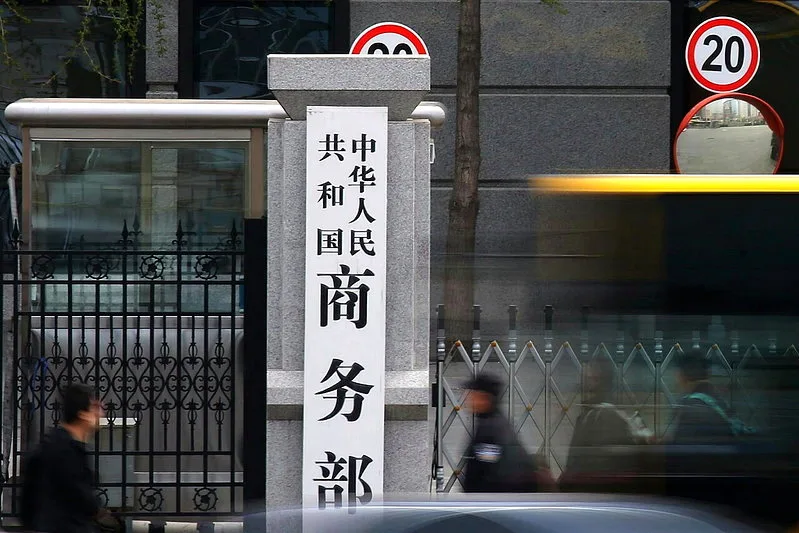
China’s Ministry of Commerce announced the launch of its first-ever national security investigation targeting imported printing and copying office equipment equipped with foreign-developed system software on August 5, 2026 [1, 2, 3]. The probe aims to assess whether these imports affect China’s national security interests related to foreign trade, founded on Articles 41 and 42 of China’s Foreign Trade Law [1, 3].
The investigation focuses on foreign system software defined as driver and embedded software developed, tested, or maintained by foreign individuals or entities [1, 2, 3]. Authorities will examine import volumes, import conditions, impacts on China’s domestic industries and demand, domestic production capacity, and relevant foreign government policies that may influence national security interests [1, 2, 3].
This move is part of a broader set of countermeasures implemented by China in response to U.S. restrictions, including tightened export controls on drones and key components, suspension of certification cooperation, and placing U.S. entities on a countermeasure list [2]. However, as of the announcement date, China has not imposed any restrictions, bans, or sales suspensions on foreign printing and copying devices [2].
Stakeholders have 30 days from August 5 to submit written comments on the investigation and its procedures to the Ministry of Commerce [1]. The investigation is set to last up to 12 months from the announcement date, with possible extensions under special circumstances [1, 2, 3].
Some experts express skepticism over the national security risk level posed by office equipment. Zhejiang cybersecurity engineer Zhao said the risk described exceeds what is warranted: “Most office devices are imported, and government departments operate within intranets, making security risks unlikely. The announcement does not list technical evidence, so it is unclear if the investigation targets security flaws or the foreign devices themselves” [2].
Private entrepreneur Hu Liren noted, “Claims that China’s military does not use U.S. systems but its own are misleading. China has no fully independent alternative system; many run on U.S.-based technology. Those familiar with the systems know the real situation.” He added that the investigation may be more symbolic: “The actions are more a political gesture aimed at those unfamiliar with the technology” [2].
Beijing independent scholar Qian Yungang observed that shared broad security concerns between China and the U.S. partly motivate these retaliatory steps. He said China is accelerating import substitution and indigenous technology development while protecting the domestic market through trade sanctions and countermeasures [2].