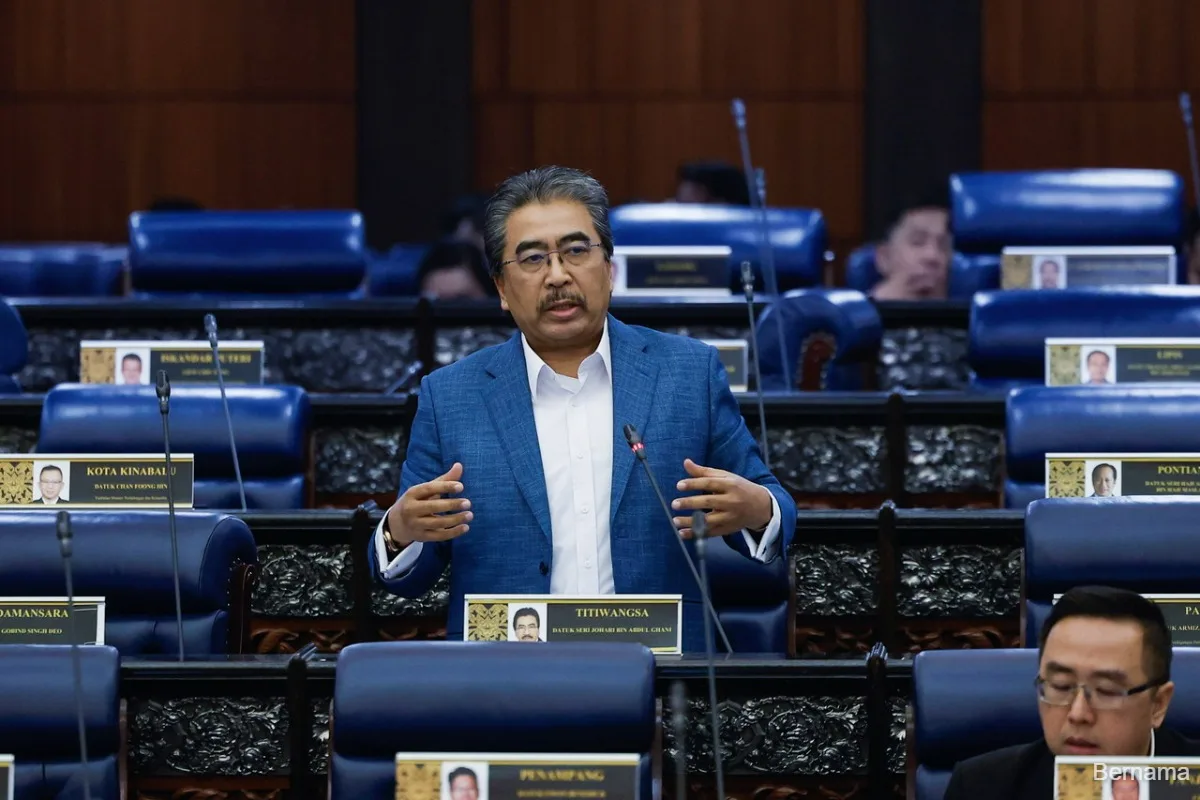
The Malaysian government is studying a proposal to impose a levy on every electric vehicle (EV) sold to create a dedicated fund for expanding the nationwide public EV charging network. Investment, Trade and Industry Minister Datuk Seri Johari Abdul Ghani said the measure is needed due to funding constraints for large-scale public charging infrastructure similar to China’s efforts [1, 2, 3, 4, 5, 6].
Since 2022, Malaysia granted four years of full import duty, excise duty, and sales tax exemptions on completely built-up (CBU) EVs, resulting in an estimated RM3.3 billion in foregone tax revenue. Exemptions for imported EVs will end after this four-year period, while locally assembled (CKD) EVs will continue to receive exemptions until December 31, 2027 [1, 2, 3, 4, 5, 6].
Johari noted that investment by industry players in public charging stations during the incentive period did not meet government expectations. "After four years, when we looked for public charging stations, the investment from EV industry players was simply not there," he said. Johari added incentives will only be given to companies that develop Malaysia’s automotive ecosystem by integrating local suppliers and supporting domestic vendors [1, 2, 4, 5, 6].
Malaysia currently has over 1,000 public EV charging points, which is insufficient compared to about 3,500 petrol stations nationwide. On May 31, 2026, the country had 6,416 public EV chargers, short of a previous target of 10,000, with a new target set at 30,000 chargers by 2030 [7, 6].
The government is exploring mechanisms for the levy, including whether costs should fall on manufacturers or consumers and the appropriate levy level. Johari stressed, "We did not say that we will impose the proposed EV levy on the public. We are still looking at the most appropriate mechanism. However, if those costs are imposed on manufacturers, they will ultimately pass them on to consumers" [3].
The proposal faces opposition. MCA Deputy President Datuk Seri Wong Kah Woh called the levy unreasonable, saying it shifts government responsibilities onto consumers and could undermine affordability for middle-income and young families. He noted delays in infrastructure completion and argued the government should accelerate charging station build-out rather than charge EV owners extra [7].
Johari also emphasized priorities to ensure EV investments support technology transfer, local vendor participation, and high-skilled job creation. Proton and Perodua have developed networks of about 733 local automotive vendors accounting for 72%-82% of Malaysia’s automotive component manufacturing activity [4, 5, 6].
The Ministry has not received official information about Chinese automaker BYD’s investment plans in Tanjung Malim as of early August 2026 [6].
No final decision on the proposed EV levy had been made as of August 5, 2026, with discussions ongoing on how to balance industry development, consumer costs, and public infrastructure needs [3].