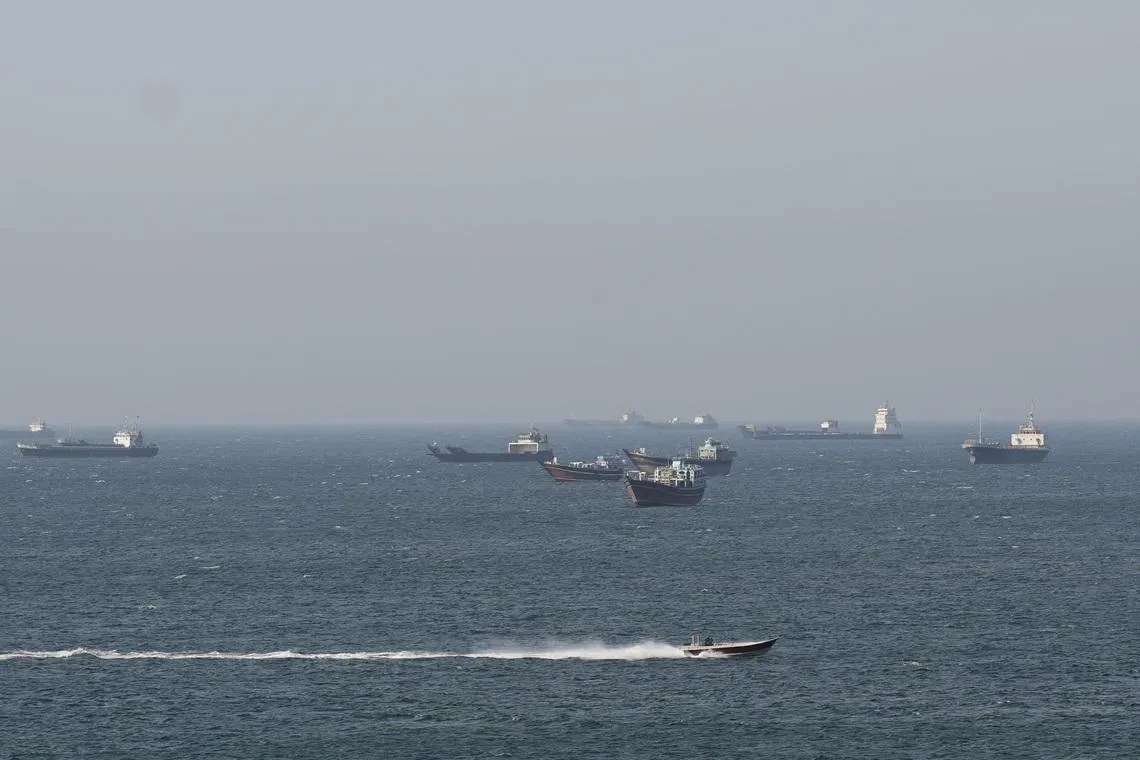
At least four oil and gas tankers attempted to transit the Strait of Hormuz but turned back following attacks near the strait on July 7 and 8, maritime sources reported [1, 2, 3]. The attacks damaged a Qatari liquefied natural gas (LNG) tanker and a Saudi-flagged crude oil tanker on July 7. After these incidents, maritime authorities raised the threat risk level for vessels transiting the strait to "severe" [1, 2, 3].
The three LNG tankers Al Ghariya, Duhail, and Al Ruwais, all controlled by QatarEnergy and en route empty to Ras Laffan to load cargoes, turned back on the evening of July 7 [1, 2, 3]. An Indian-flagged crude oil tanker carrying 2 million barrels of Kuwaiti crude, loaded late last week, made a U-turn near Oman on July 8 and did not transit the strait [1, 2, 3].
Despite this disruption, two crude oil tankers successfully exited the strait on July 7. The VLCC Tenjun, managed by Nippon Yusen and carrying 2 million barrels of Qatari crude loaded in late February, and the Pertamina Pride, managed by Indonesia's Pertamina and carrying 2 million barrels of Saudi crude loaded in early March, passed through. The Pertamina Pride switched off its transponder while exiting the strait [1, 2, 3].
Since the conflict began in late February 2026, at least 16 LNG cargoes from Qatar's Ras Laffan terminal and 10 LNG cargoes from Abu Dhabi National Oil Company's Das Island terminal have exited the Strait of Hormuz, though this is only a fraction of the roughly 7 million metric tons shipped monthly under normal conditions [1, 2, 3]. A queue of more than 10 ballast or empty vessels waiting to load at Ras Laffan built up by early July [1, 2, 3].
More than 50 QatarEnergy- and ADNOC-controlled ballast vessels are currently stationed around the Middle East Gulf, India, and the Malacca Strait. Some of these ships have switched off their Automatic Identification System signals for more than 10 days [1, 2, 3].
The region remains tense after the July attacks, and maritime traffic through the Strait of Hormuz continues to face significant risks. The situation will be closely monitored for any further impact on oil and gas shipments.