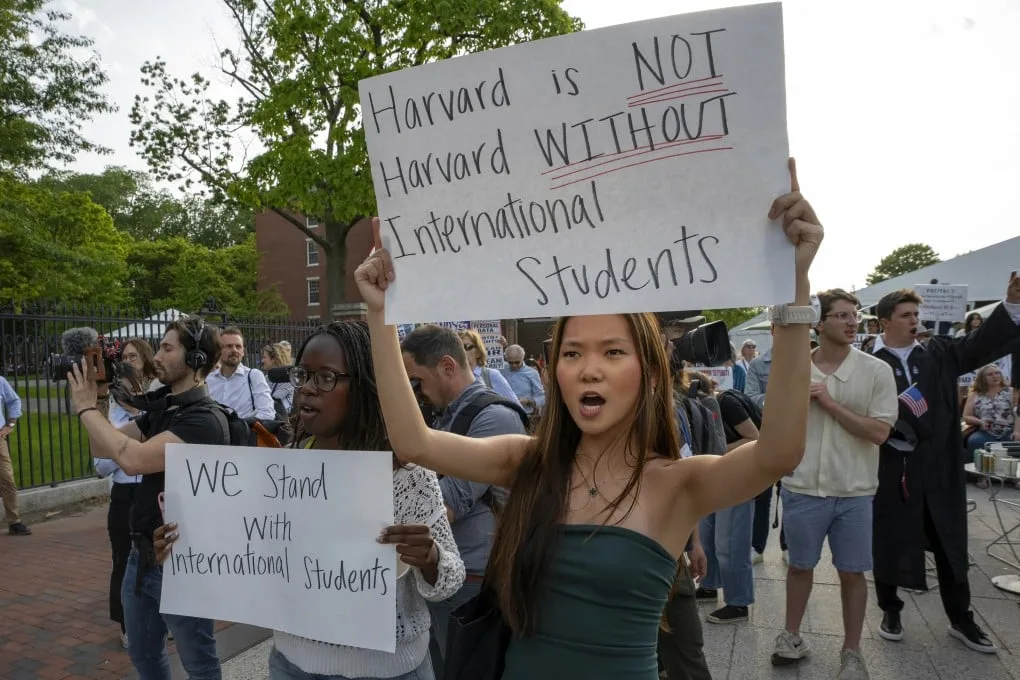
The US Department of Homeland Security (DHS) announced on July 16, 2026, new final rules imposing fixed limits on the duration of stays for foreign students (F visas), cultural exchange visitors (J visas), and foreign journalists (I visas). These rules replace the previous "duration of status" system that allowed indefinite stays tied to the length of academic or exchange programs [1, 2, 3].
Under the new policy, F and J visa holders will be restricted to a maximum stay of four years in the United States. This is a change from the prior system where students could remain as long as they were enrolled in their programs [4, 5, 6, 3]. Immediately following program completion or visa status changes, the grace period to depart the US will be shortened from 60 days to 30 days [5].
Journalists holding I visas will now have a maximum stay of 240 days, roughly eight months, per visa period. They may, however, apply for extensions. Chinese journalists face even tighter restrictions, with stays limited to only 90 days before they must seek extensions, a substantial reduction from earlier practices where journalist visas could be valid for up to five years [4, 7, 8, 9, 3].
DHS Secretary Markwayne Mullin said the changes address long-standing vulnerabilities in the immigration system. He stated, "For decades, foreign students have been admitted into the US indefinitely, allowing thousands to abuse our immigration system by perpetually enrolling in courses to avoid having to leave the US." He added that the outdated system has "compromised national security and created an environment ripe for immigration fraud." [7]
The new rules aim to increase government oversight and combat visa fraud following a surge in F, J, and I visa issuances, with over 1.8 million student visa entries approved in 2024 alone [3].
The Chinese government condemned the visa restrictions as discriminatory. Foreign Ministry spokesman Lin Jian said, "The US restrictions on people-to-people exchanges do not serve any party’s interest. China firmly rejects the US discriminatory move targeting certain countries." He warned that China reserves the right to take reciprocal measures and demanded the US revoke the policies affecting Chinese journalists [10, 8, 9].
The changes have also caused concern among other foreign student communities, including South Koreans, particularly those on or planning Optional Practical Training work authorizations that would be affected by the shortened visa durations [6].
The new visa policy is expected to take effect approximately 60 days after its publication in the Federal Register. This means the restrictions could be enforced starting in September 2026, pending the standard congressional review period [1, 4, 5, 3].