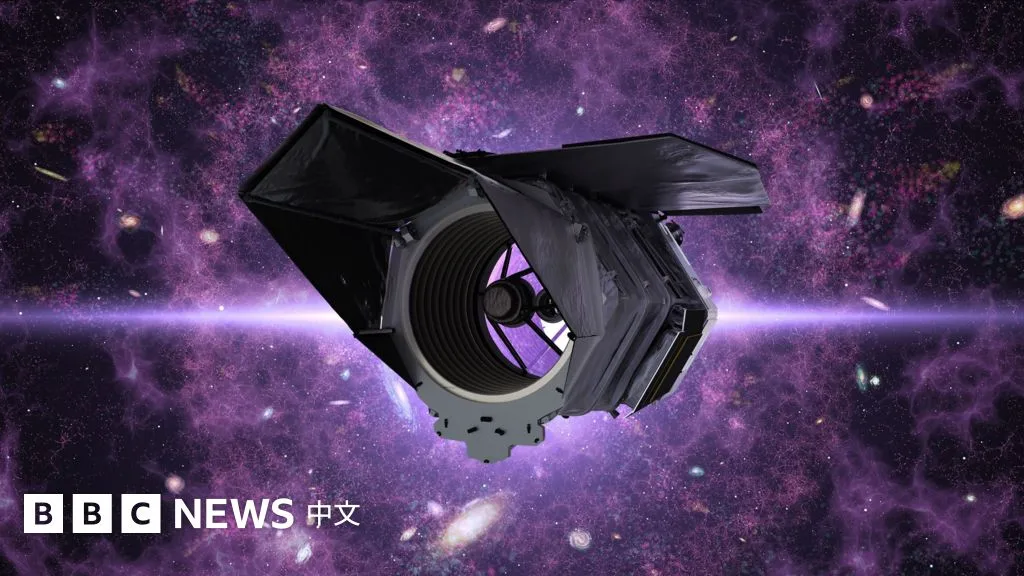
NASA launched the Nancy Grace Roman Space Telescope at 7:26 AM local time on August 30, 2026, from Kennedy Space Center in Florida aboard a SpaceX Falcon Heavy rocket [1, 2, 3, 4]. The telescope is named after Nancy Grace Roman, NASA’s first female chief astronomer and known as the "Mother of Hubble" [1, 2, 3, 4].
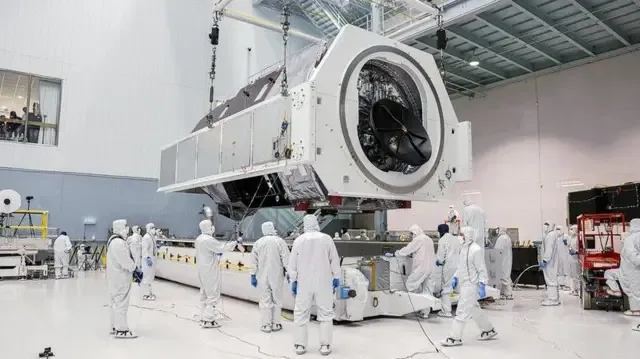
The telescope features a 2.4-meter diameter main mirror originally donated by the US National Reconnaissance Office in 2012 and modified for astronomy [1, 4]. Standing 12 meters tall, Roman carries a powerful 300-megapixel infrared camera capable of scanning large swaths of sky at once [1, 2, 4]. Its wide field of view is over 100 times larger than Hubble’s and significantly wider than the James Webb Space Telescope’s [2, 3].
Roman is designed to survey about 12% of the sky in under 18 months, dramatically expanding on past observations [1, 3, 4]. It is expected to catalog more than 20 billion stars and discover over 100,000 exoplanets in just one month—a huge leap from the roughly 6,000 currently known [1, 3, 4]. Dr. Julie McEnery, senior project scientist, stated, "We will conduct the largest survey of planets around other stars and use the Roman telescope’s precise instruments to study everything in the universe, including all galaxies, stars, and various unusual objects" [1].
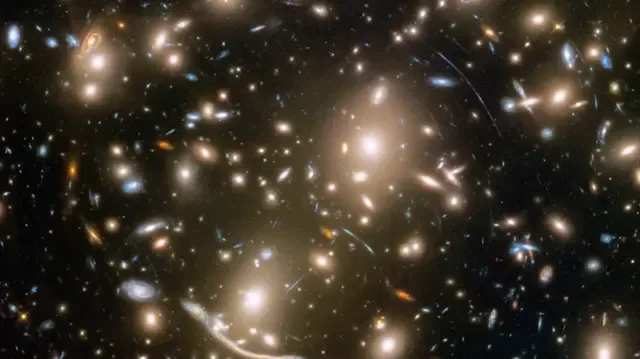
Roman will explore key astrophysical questions surrounding dark matter and dark energy, which together makeup about 95% of the universe’s mass-energy [1, 2, 3, 4]. It will also aid in precise measurements of cosmic expansion by observing Type Ia supernovae, whose standard brightness helps determine distances [1, 4]. McEnery explained, "If we can measure how bright a Type Ia supernova looks, we can precisely determine its distance and use the data to measure the universe’s expansion history" [1].
The telescope will operate in coordination with Hubble and James Webb, providing wide-field surveys while they deliver deeper, pinpoint observations [1, 2, 4]. To avoid infrared interference from Earth and the Moon, Roman will be placed in an orbit about 1.5 million kilometers from Earth—roughly four times the Moon’s distance [2, 3]. Roman is expected to reach this orbit about 100 days after launch [2, 3].
The mission’s planned lifetime is five years, with a goal to operate up to a decade [3]. NASA Administrator Jared Isaacman said, "Roman will give the Earth a new atlas of the universe" [2], and former US President Donald Trump remarked, "The Roman Space Telescope will help unlock the secrets of the universe" [2].