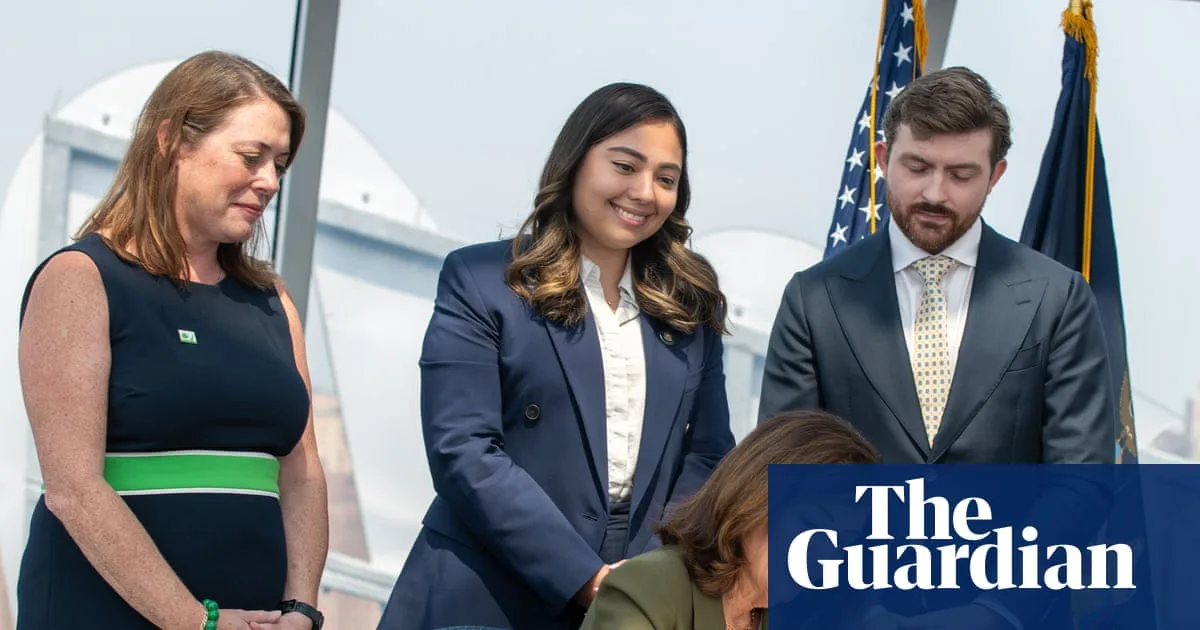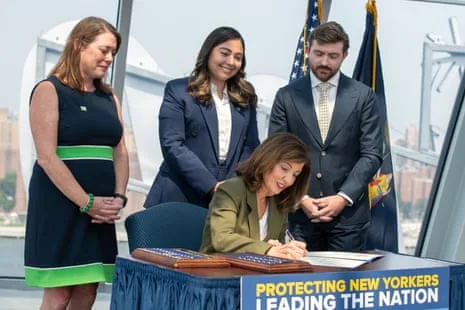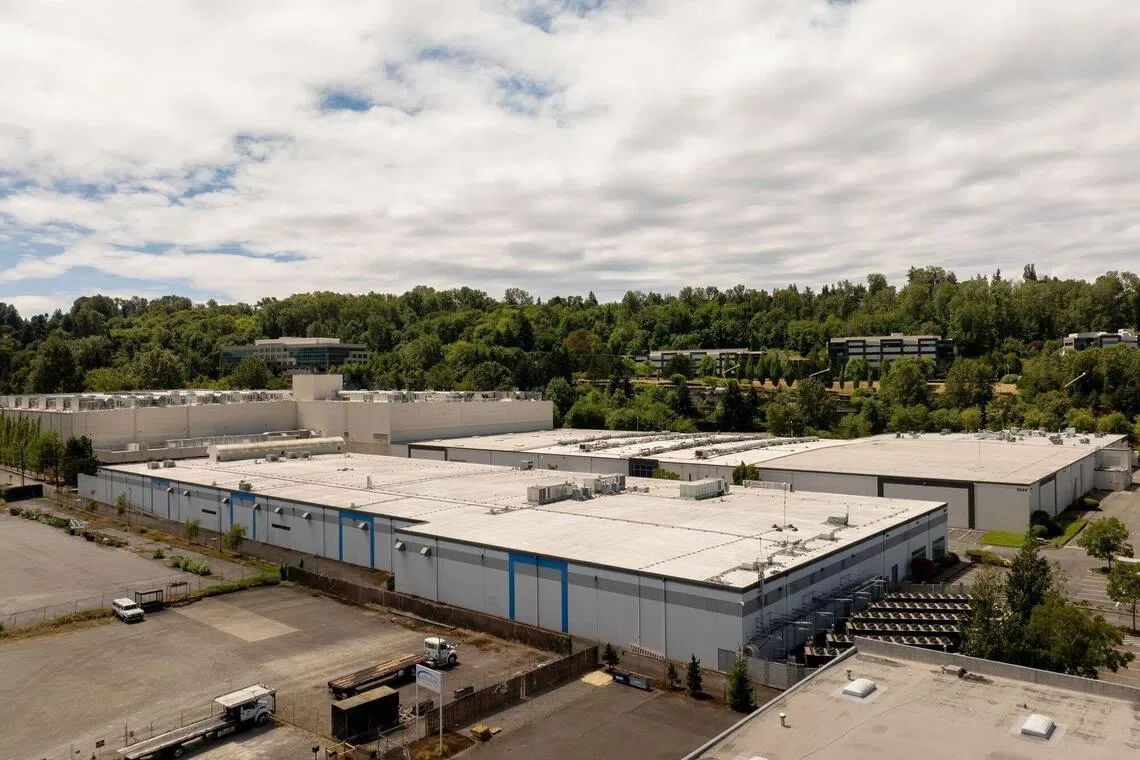
New York Governor Kathy Hochul signed an executive order on July 14, 2026, imposing a one-year statewide moratorium on construction and permitting of new hyperscale data centers consuming 50 megawatts or more of power [1, 2, 3]. The moratorium pauses discretionary environmental permits for these large data centers until the state develops consistent environmental standards through a Generic Environmental Impact Statement (GEIS) [1, 2, 3]. The order applies only to new data centers meeting or exceeding the 50 MW power threshold; smaller facilities and existing approved or operational centers are exempt [1, 2, 4].
Governor Hochul said, "As data center development threatens to hike up utility bills, deplete our natural resources, and create uncertainty for New Yorkers, it’s my responsibility to take action and lead" [1]. She emphasized the strain hyperscale AI data centers place on the electric grid, stating, "They drive up costs for local ratepayers, and I refuse to let those costs get passed down to New Yorkers" [5]. New York has seen nearly a 68% increase in average residential electricity prices since 2019 [5].
The statewide pause will remain until the state finalizes regulations addressing environmental, energy, and water usage impacts related to these data centers [1, 2]. These rules aim to mitigate rising electricity costs, water supply stress, and community impacts tied to rapid data center growth supporting AI technologies [1, 2, 5]. The state also plans to repeal sales tax exemptions for large data centers while requiring these facilities to help fund electrical grid upgrades and invest in clean energy [1, 6].
More than 130 data centers currently operate in New York, which ranks as the sixth-largest concentrated data center market in the US [6, 7]. Rapid expansion in this sector has raised national political and environmental concerns about utility bills, energy grid strain, water consumption, and neighborhood disruption [1, 2, 3]. A recent Heatmap poll found nearly 75% of Americans oppose having a data center near their homes [2, 8].
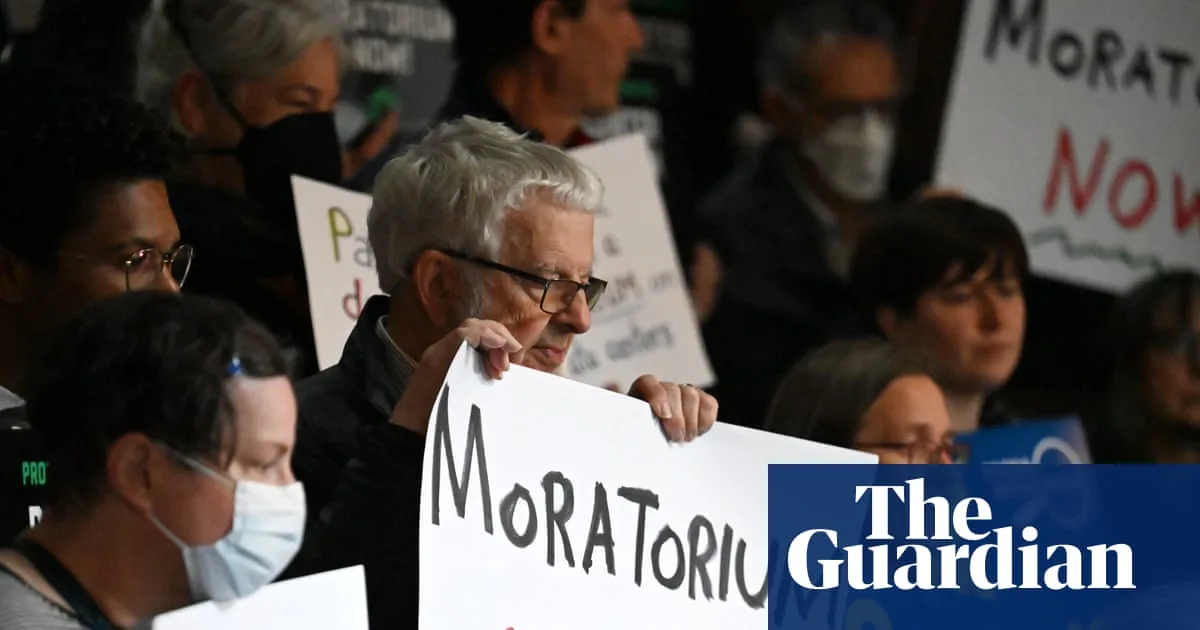
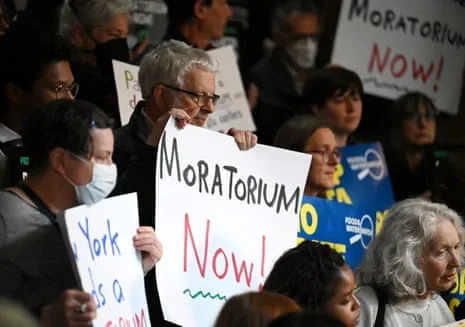
Opposition to the moratorium argues it may drive investment and jobs to other states like Texas or Virginia [9, 7, 10]. Former President Donald Trump criticized the policy as politically motivated and harmful to New York’s data center industry and AI leadership, saying, "New York state has made a terrible decision... should scrap the policy IMMEDIATELY" [8]. Meanwhile, supporters such as Senator Kristen Gonzalez praise the moratorium for protecting residents, calling it a "first in the nation moratorium on new large data centers" that balances development and community welfare [2]. Environmental groups also applaud it; Laura Shindell of Food & Water Watch described it as "a huge step forward for New York communities fighting against an onslaught of massive data center proposals" [5].
The New York legislature passed a bill in June 2026 imposing a similar moratorium on data centers over 20 MW, but Governor Hochul has not signed it, preferring the executive order’s 50 MW threshold [1, 2, 11]. Maine and Seattle have considered or enacted moratoria, but New York is the first US state to implement one at the executive level [2, 8, 4].
The moratorium remains in effect until New York finalizes its environmental and energy regulations for large data centers, expected within the next year [1, 2].