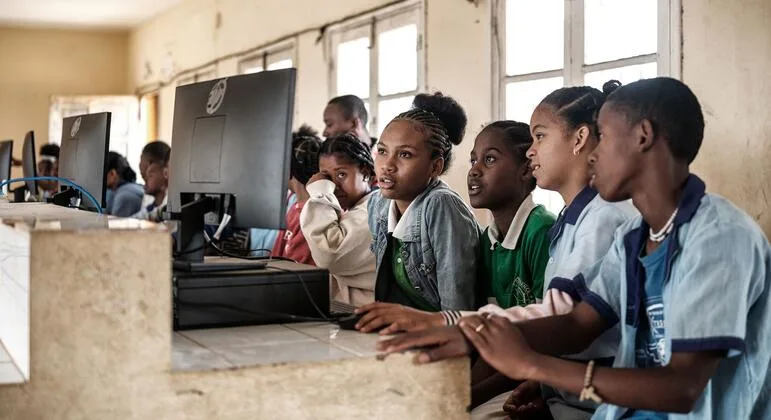
In 2025, 113 developing countries spent more on servicing foreign debt than on education, affecting 6.1 billion people worldwide, UNESCO revealed [1, 2, 3]. In sub-Saharan Africa, countries allocated 3.6 times more to debt servicing than education, with low-income countries nearly quadrupling education spending on debt alone [1, 2, 3].
Among the 18 most indebted nations, debt payments were at least five times the education budget, with Sri Lanka spending up to 16 times more on debt than schooling [1, 2, 3]. This financial imbalance undermines efforts to improve education access and quality.
The problem worsens amid drastic cuts to education aid. Low- and lower-middle-income countries lost 21% of education aid by 2023, and projections indicate losses could reach 30% by 2027 [1, 2, 3]. Afghanistan, Mali, Niger, and Liberia each experienced more than a 40% decline over three years [1, 2, 3]. Global aid to education fell 8% in 2024, with funding for basic education dropping 15%, while education's share of total development assistance hit a two-decade low at 7.5% [2, 3].
These declines coincide with rising debt payments triggered by shocks including the COVID-19 pandemic, escalating energy and interest costs, and climate disasters. Tim Jones, policy director at Debt Justice, said these pressures "are leading to cuts in spending on essential services such as health and education" [1]. UNESCO’s education division director, Min Jeong Kim, added that current approaches trap countries in cycles of austerity and underinvestment, weakening their economies and reducing their capacity to manage debt [1].
UNESCO Director-General Khaled El-Enany said, "Education is the most powerful investment countries can make, yet it is being systematically underfunded" [2]. Director-General Audrey Azoulay echoed concerns, citing the decline in global education aid as exacerbating inequality and stagnation [3].
To address the crisis, UNESCO advocates expanding debt-for-education swaps, where debt repayments are converted into education investments [2, 3]. Examples include a 2023 Ivory Coast-France agreement to build over 30 schools and a Spain-Peru program funding 50 education projects over 10 years [2, 3]. Egypt signed a 29 million euro debt swap with Germany in 2024 to improve school meals, nutrition, and services [3].
At the Transforming Education Summit+4 in Paris in July 2026, UNESCO launched global guidance on implementing these debt-for-education swaps [2, 3]. UN Deputy Secretary-General Amina J. Mohammed emphasized the urgency with just five years left to meet the 2030 Sustainable Development Goal 4 for inclusive, quality education, calling education ‘‘the foundation for all sustainable development goals’’ [3].